There’s a thesis spreading right now in go-to-market circles. It says the CRM should swallow the entire sales stack. Sequencing. Enrichment. Lead discovery. AI agents. The argument is that splitting these jobs across separate tools forces the team to become the integration layer. The CRM already holds the relationship history, so everything else should live inside it.
That argument is right.
For someone.
It’s the most persuasive case I’ve read for what the next generation of sales platforms looks like. Anyone running a high-volume outbound team should listen carefully. But there’s a quieter buyer who reads the same argument and feels something is off. They can’t quite name it. They know the consolidation logic is sound. They also know, in their gut, that adding more features to their CRM is exactly the opposite of what they need.
That gut reaction isn’t wrong. They just have a different job.
Why the consolidation argument actually works
Start with a fair concession. The case for an all-in-one CRM is genuinely strong for sales teams.
Here’s the shape of it. A modern outbound team uses five or six tools: a CRM, a sequencing platform, an enrichment provider, a contact database, an AI assistant, sometimes a meeting transcriber. Each one holds a slice of the relationship. Data leaks at every handoff. The team writes glue code, runs Zapier flows, exports CSVs, and prays the field mappings hold. A team of six can spend an entire week per quarter doing nothing but maintaining the seams.
If everything lives in one tool, those seams disappear. You can run a campaign without exporting anything. You can enrich a list without leaving the page. You can tell an AI agent to find candidates and push them straight into a sequence. The data compounds. Every new feature gets the full relationship context for free.
This is a real win. For a sales team running volume, it’s the right answer. The CRM-as-platform thesis is earning its airtime.
But it carries a hidden assumption.
The assumption hiding inside the argument
The assumption is that the user’s job is volume.
Look at every feature the all-in-one CRM thesis champions. Multi-step campaigns. Bulk enrichment. Lead discovery and import. Autonomous agents that run sequences on your behalf. Every one of them serves a single shape of work: send more, find more, qualify more, hand more to the rep. The whole platform exists to make activity faster.
For a sales team, this is correct. A sales rep is measured on activity. Emails sent. Sequences run. Meetings booked. Their job description, written honestly, is “produce more touchpoints.” Tools that consolidate that work are doing their job.
Now picture a different buyer.
The buyer this argument forgets
Picture a fractional CMO. They have twelve people in their network who could refer them at any time. Their next $80k contract probably comes from one of those twelve, or from someone those twelve introduce. They aren’t measured on activity. They’ve never sent a sequence in their life. They would sooner quit consulting than write the words “Hey, just wanted to circle back.”
Picture a consulting principal. Eight years of deep work for the same anchor client. Three other long-term clients who renew quietly. A network of fifty people they’ve helped in some real way. Their pipeline isn’t a sales funnel. It’s a constellation of warm relationships that flicker on and off depending on what’s happening in those people’s lives.
Picture a small agency owner. They win work through referrals, talks at industry events, and the occasional client who comes back two years later with a bigger budget. They tried HubSpot once. They felt nauseous looking at the deal stages.
These people aren’t running an outbound team. They are an entire business, alone, who happen to need a tool that respects how they actually work. They don’t want more campaigns. They don’t want sequences. They don’t want a bigger sales-shaped tool. They feel slightly ill when a piece of software talks to them in pipeline language, because that language belongs to a job they don’t have.
For this buyer, “the CRM should do more” is exactly the wrong direction.
Two different jobs disguised as one
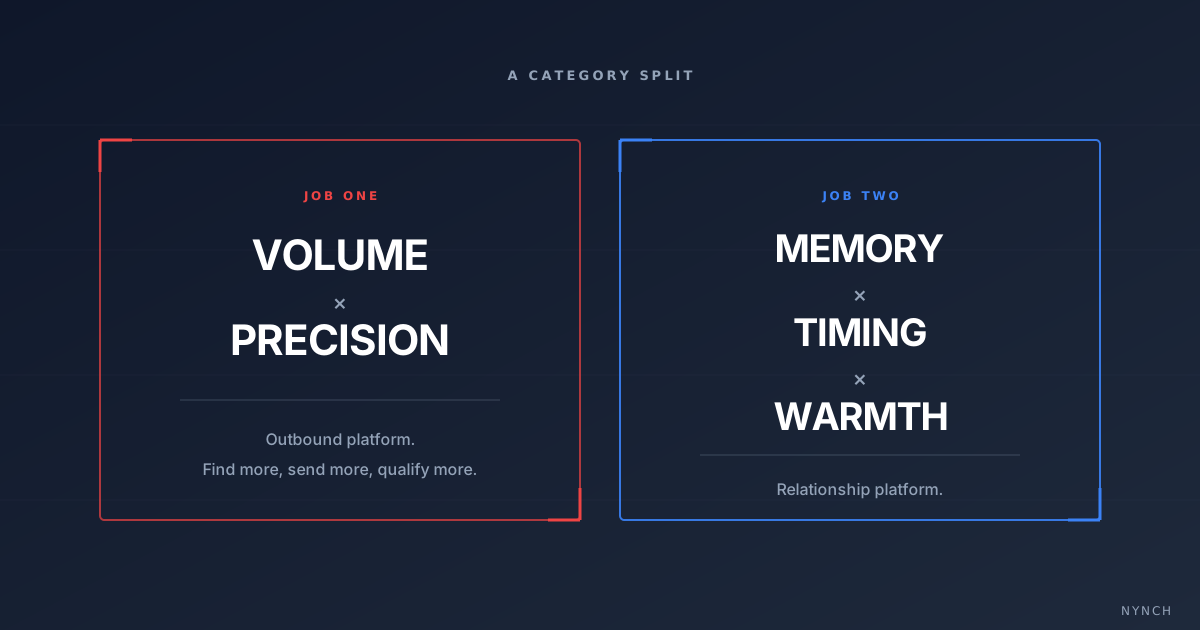
This is a category split. Two completely different problems wearing the same costume.
The first job is volume and precision. Find more of the right people, contact them more efficiently, qualify them more accurately, hand them off cleaner. An all-in-one CRM is the right tool for that job. The data really does compound. The seams really are the bottleneck.
The second job is memory, timing, and warmth. Remember everyone the user has ever helped. Watch the slow temperature change of those relationships. Notice when something has gone quiet that shouldn’t be quiet. Surface the right person at the right moment. Make it easy to reach out in a way that sounds like the user, not like a sequence.
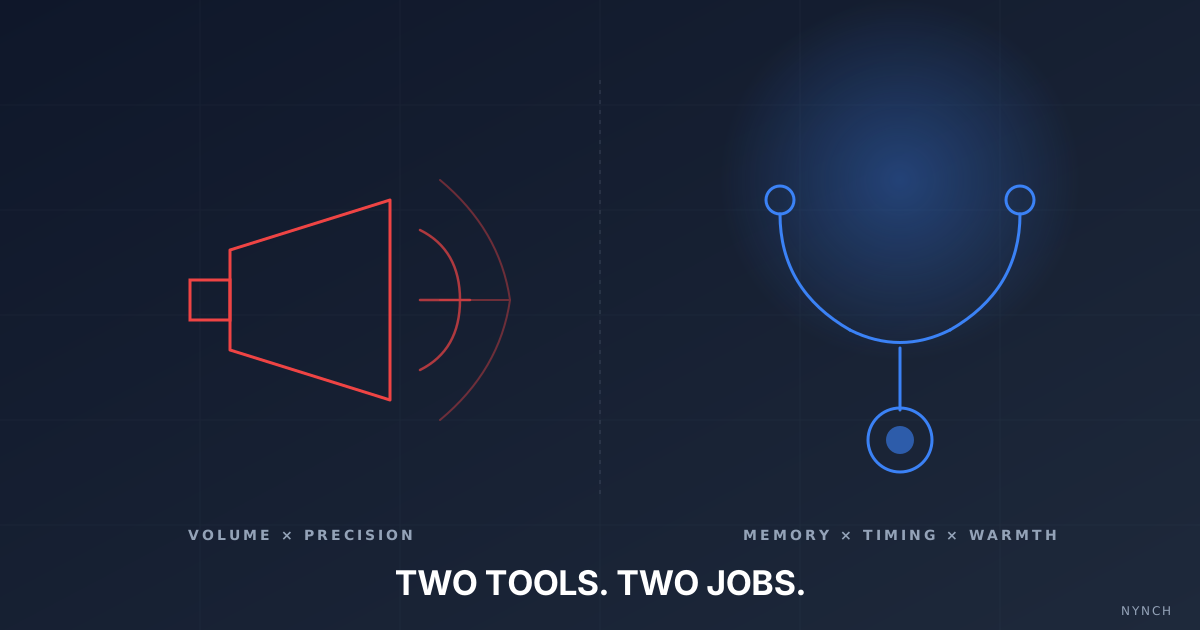
These are not two flavours of the same product. Adding sequencing to a memory-and-timing tool isn’t an upgrade. It’s a category mistake. It’s like adding a megaphone to a stethoscope. You no longer have a tool that listens. You have a tool that talks over the patient.
The expert needs less, not more. They need a quieter tool that pays attention.
What “paying attention” actually looks like
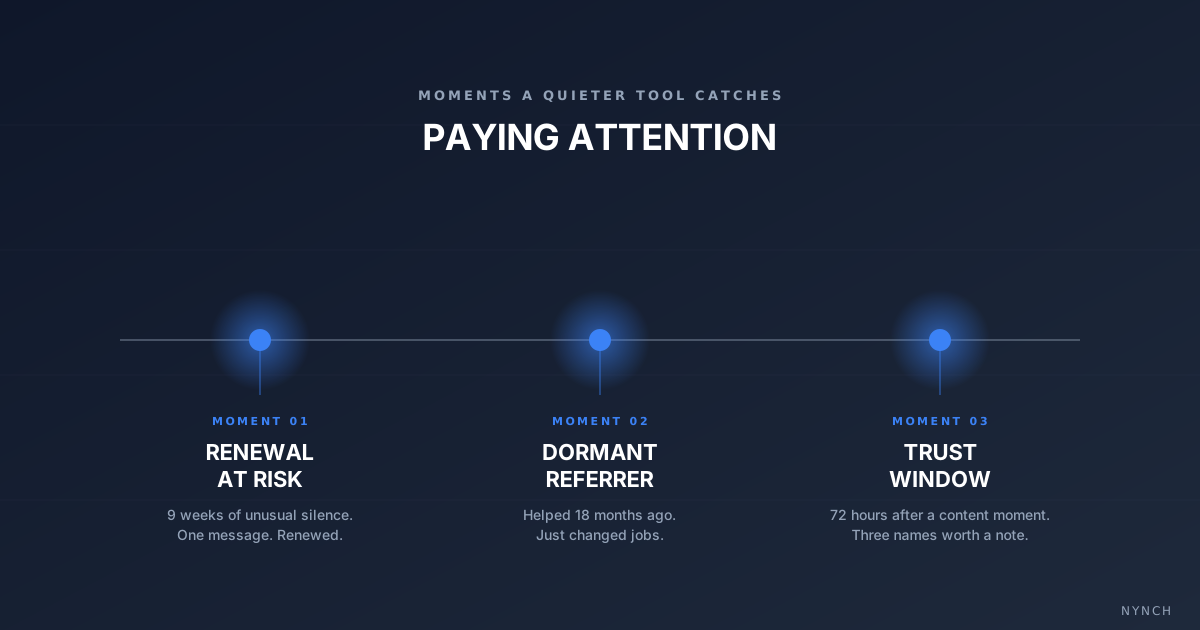
Here’s what that looks like in practice. Three quick stories. None of them are about sending more.
The renewal that almost died. A fractional COO had been working with the same client for three years. Steady invoices. Quarterly reviews. Every contract renewed without much thought. Then a quiet stretch. Nine weeks went by with no real conversation. Not unusual on its face. The platform noticed it anyway, because for that specific client, nine weeks was twice the normal cadence. It surfaced the gap as a small, calm prompt. One message on a Tuesday morning. The client wrote back inside the hour. The contract renewed for another twelve months. Nobody had to send a sequence. Nobody had to “circle back.” Someone just had to notice.
The dormant referrer. A consultant had helped someone eighteen months earlier with a tricky board situation. The work was good. The relationship was warm. Then life moved on. The consultant forgot. A year and a half later, the platform noticed the same person had just changed jobs to a company that fit the consultant’s exact profile. It surfaced the change with one line of context: “You helped Jamie with X. They just joined Y, where they’d hire you again.” One quiet message. New project. Six-figure engagement.
The trust window. After a big content moment (a podcast, a viral post, a panel appearance), a professional’s network pays attention for about seventy-two hours. Inboxes are open. Replies feel natural. After that, attention closes. Most consultants miss the window because they don’t know when it’s open. A relationship platform watches who engaged with the content and surfaces three names worth a personal note while the window is still warm. No campaign. No sequence. Just three people, one note each, in the user’s own voice.
None of these are about producing more activity. All of them are about paying attention to signals the user couldn’t watch on their own.
The three jobs of a relationship-led platform
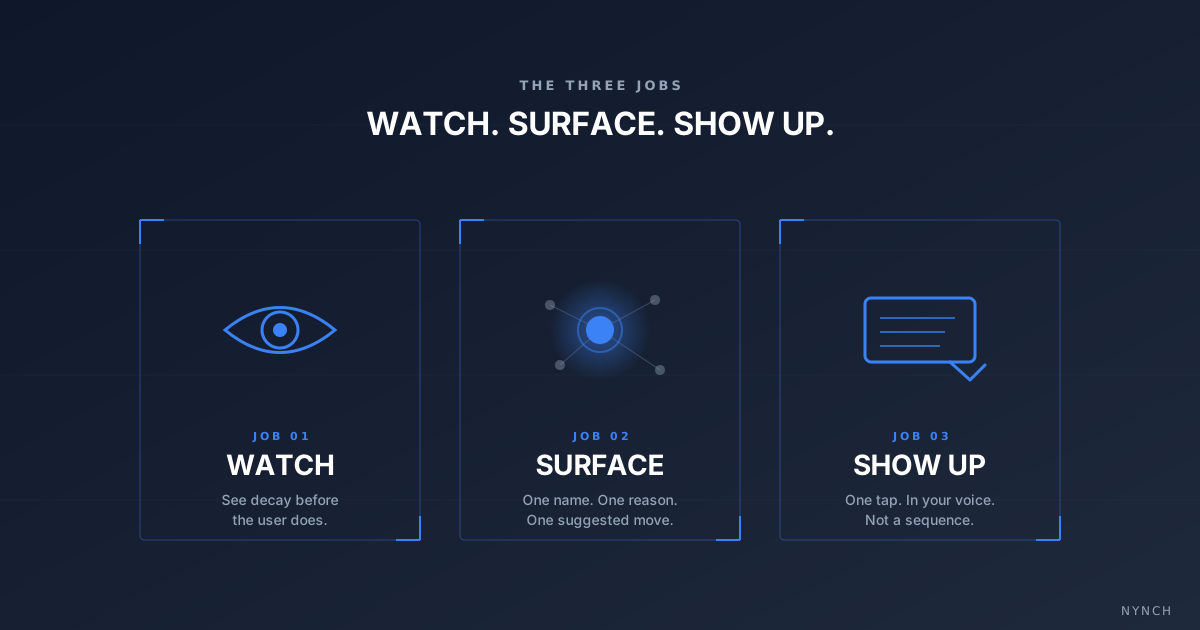
Strip the category down to the work it actually does. Three jobs, in plain language.
Watch. See decay before the user does. A relationship that used to talk every two weeks and now goes two months silent. A renewal date sliding closer with no recent conversation. A long-quiet referrer who just had a public event in their life. The platform watches for these and raises the kind of quiet alarm an attentive assistant would raise. No noisy dashboards. No vanity metrics. Just real signals from real life.
Surface. The right person at the right moment. One name, one reason, one suggested move. Not a list of ninety contacts to blast. Not a sequence to launch. A specific human being and a specific reason to reach them today.
Show up. Make the reconnect feel like the user, not like a tool. The platform should make the reach-out one tap, with context and a draft that already sounds like the user’s voice. Not a templated sequence. A real message that respects the relationship being touched.
That’s the entire job. Watch, surface, show up. A platform that does these three things well replaces no fewer than five tools the expert is currently failing to use.
This is the work an AI CRM for relationship-led work is built around. Not a bigger pipeline. A different category entirely.
The closing reframe
The consolidation argument is right. The CRM should do more. It should also be honest about which user it’s doing more for.
If your business is built on volume, the next generation of sales platforms is going to be very good for you. Consolidate. Use the all-in-one. Let the data compound. Run the agents. Send the campaigns. The argument applies cleanly.
If your business is built on trust instead of transactions, the answer isn’t a bigger CRM. It’s a quieter one that pays attention. A different category entirely. Built for memory, not pipeline. Built for timing, not throughput. Built for the kind of expert who would rather lose a client than send a sequence.
Two different buyers. Two different tools. One of them is having a loud, exciting moment in the GTM press. The other one has been waiting a long time for someone to build the right thing.
If you’re the second buyer, your tool isn’t supposed to do more. It’s supposed to do the right things, quietly, and remember everything you can’t.
That’s the difference.
Related reading
If this argument lands, three companion pieces go deeper on the same idea:
- Why Your CRM Failed You (And What to Use Instead) covers why traditional CRMs break down for consultants in the first place.
- The consultant’s guide to relationship-led business development lays out the full framework for growing a practice through trust instead of throughput.
- How to track client relationships without a CRM is the practical companion for anyone who wants to start working this way today.
And if you want a number on what it costs you to leave dormant relationships unattended, the Dormant Value at Risk calculator puts a real figure on the gap.
Read next
- The best AI CRMs for consultants, a side-by-side comparison of every serious option for solo consultants and boutique firms.
- Wake up your dormant network, fill your week with warm conversations from people you already know.
- The intent radar, exactly who to call today, read buying signals so your pipeline runs on intent, not guesswork.