01Account context
Start with the client’s business.
Review the Client Canvas and the work connected to the account.
Keep the commercial view tied to the actual engagement.
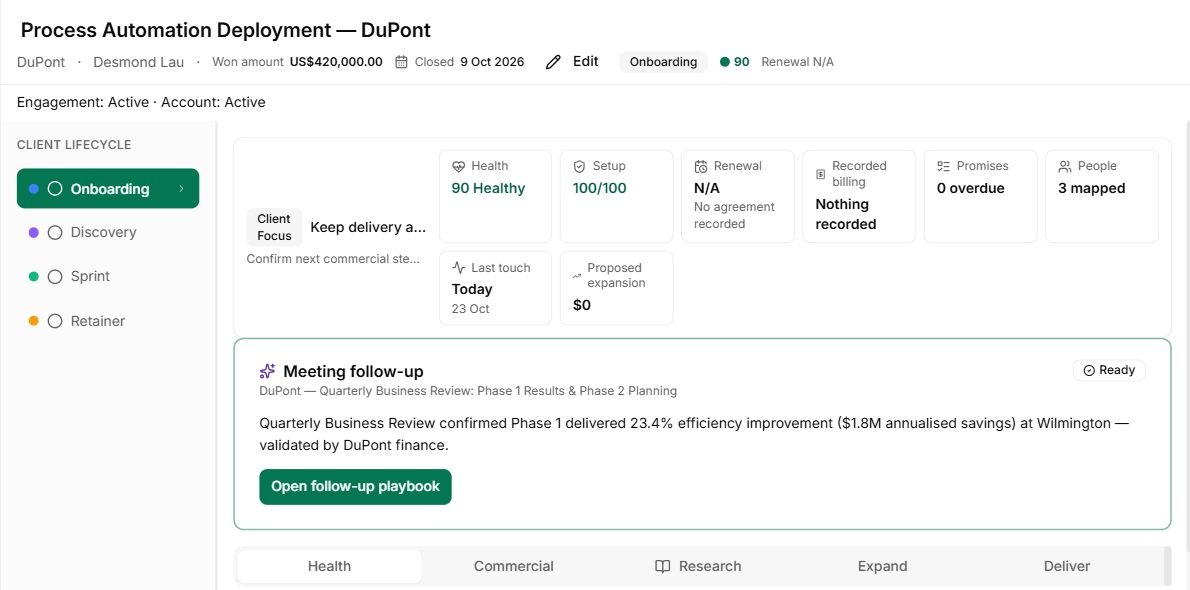
Client relationships
Bring the people, history and commercial context of an existing client together. Prepare the next review with a clearer picture of what has happened and what needs attention.
Client relationship management, inside the complete Nynch business development platform.
See how it works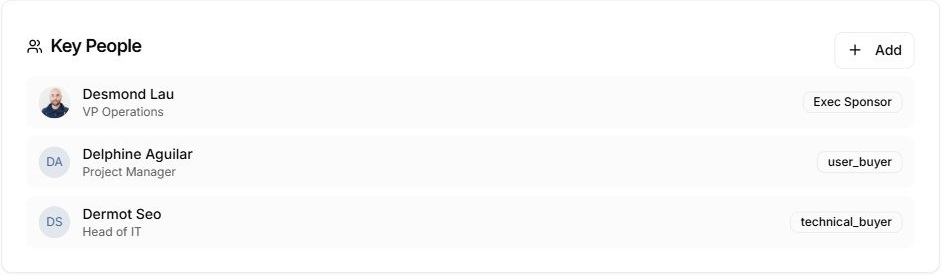
What gets in the way
You are busy doing a good job, but the wider buyer group, future needs and open promises still need attention.
You know your main contact well but have limited context about the wider team.
You wait until the engagement is ending to discuss what comes next.
Important follow-up sits across meeting notes and messages.
How Client relationships works
Review the company, the people and the next conversation together.
Review the Client Canvas and the work connected to the account.
Keep the commercial view tied to the actual engagement.
Review the people and buyer roles connected to the client.
Identify where a conversation with another stakeholder would be useful.
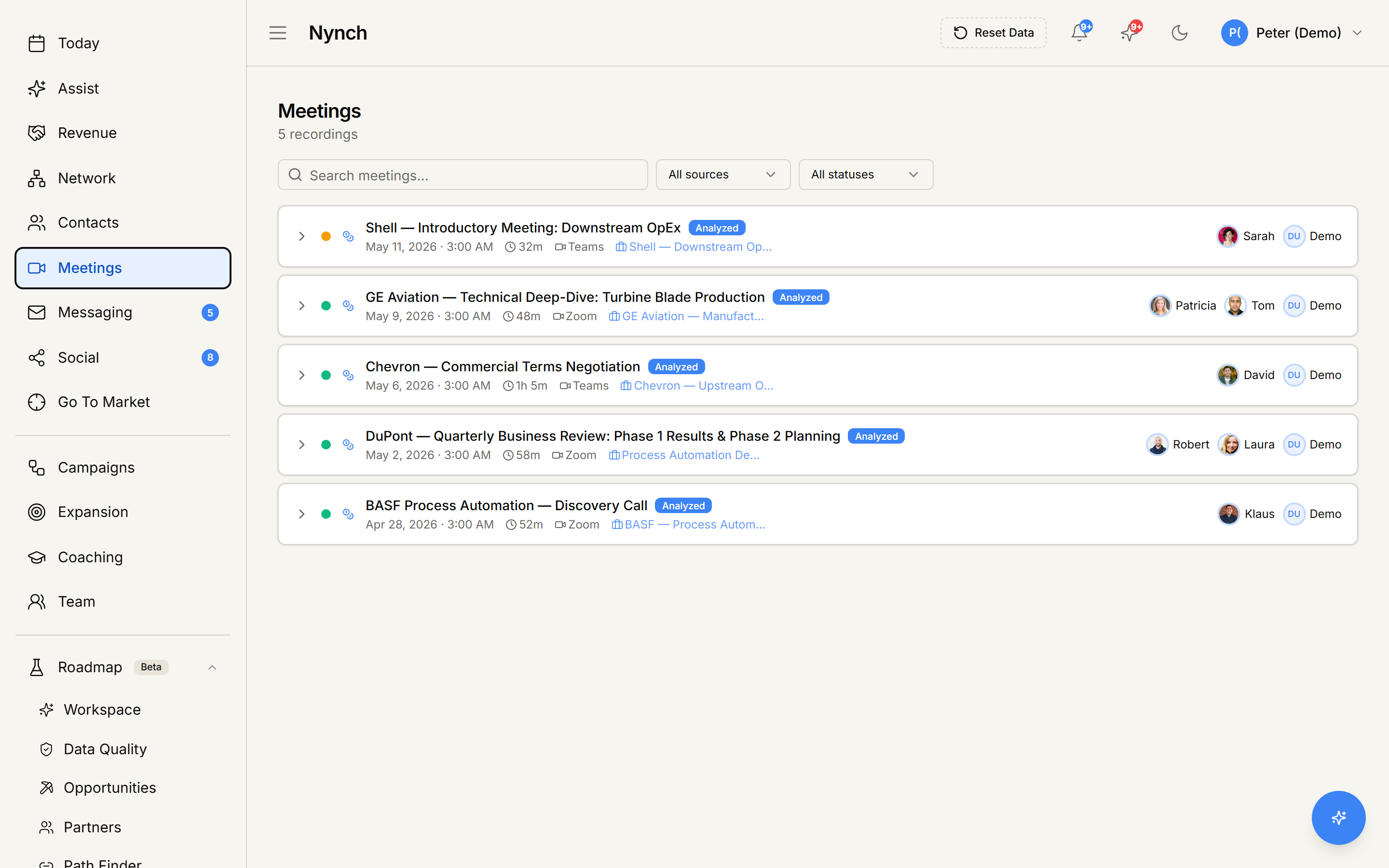
Return to meetings and recorded activity to understand commitments and changing priorities.
Check facts before making a recommendation for more work.
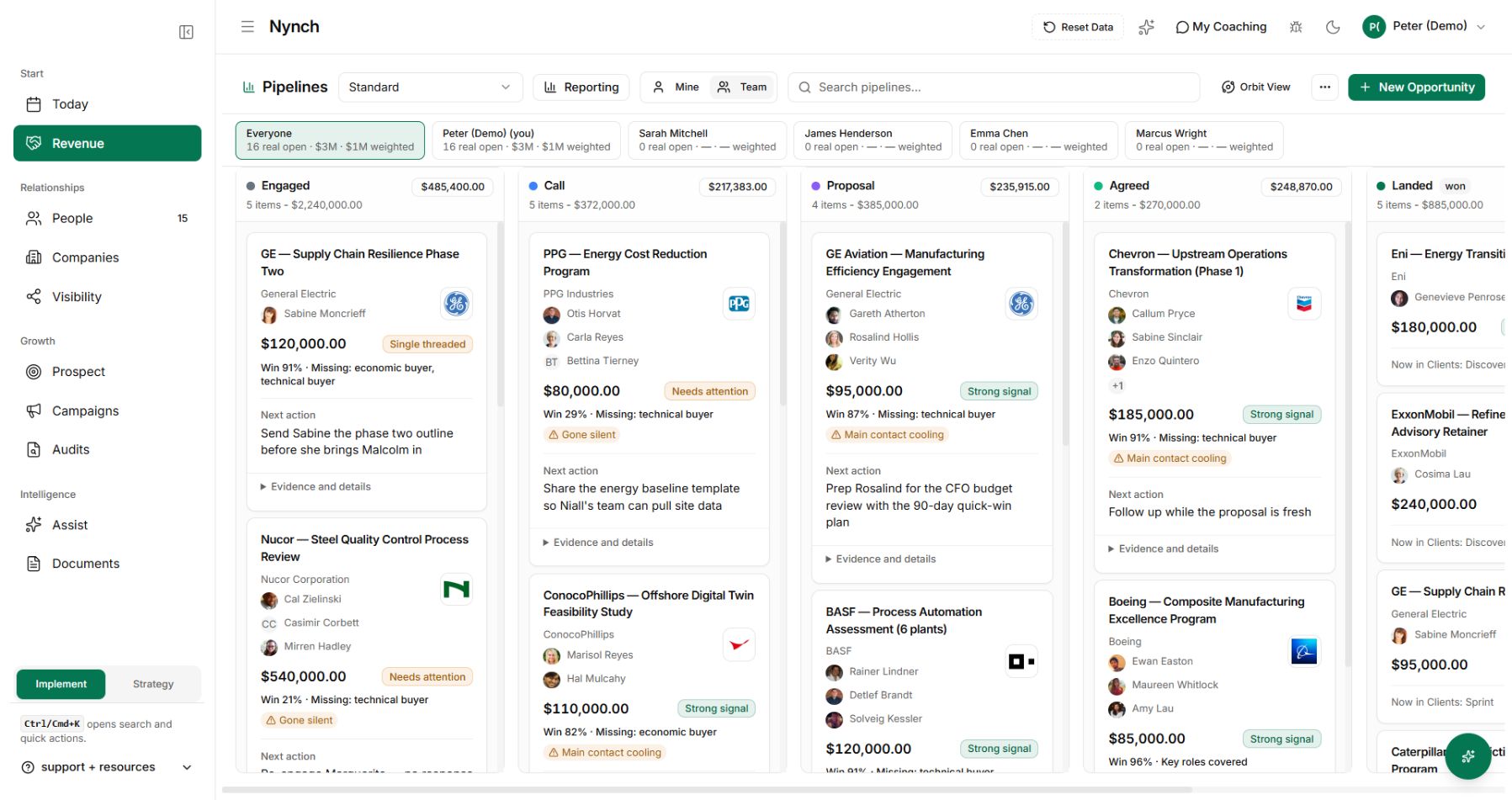
Bring a credible opportunity into Revenue when the client conversation supports it.
Keep delivery commitments and new commercial work clear.
One connected Nynch platform
Prospecting, relationships, meetings, proposals, Deal Rooms and client growth work together in Nynch. Start with the job you need to do today. Keep the context as the relationship develops.
The relationship continues after the deal. Use the client history to prepare reviews and explore the next problem you can help solve.
The details
No. Existing clients need relationship attention during delivery as well as before a new sale. Use the company, people and conversation records to prepare ongoing account reviews.
Company and contact records let you keep the people around an account together. Review their roles and relationships rather than relying on a single point of contact.
Check the recent meetings, open commitments, delivery context and any question about future work. Separate confirmed progress from assumptions.
No. Silence can have many causes, including missing records. Use it as a prompt to check the relationship rather than a diagnosis.
Start with a real client problem or change in priorities. Review the evidence and discuss it before treating the possibility as an opportunity.
Create or update the relevant opportunity in Revenue once there is work to discuss, keeping it connected to the client and people involved.
See the account history and commercial next steps together.