01Stakeholders
See the people around the decision.
Review who is involved in the opportunity and what responsibility each person has.
A role is context, not proof of a private concern.
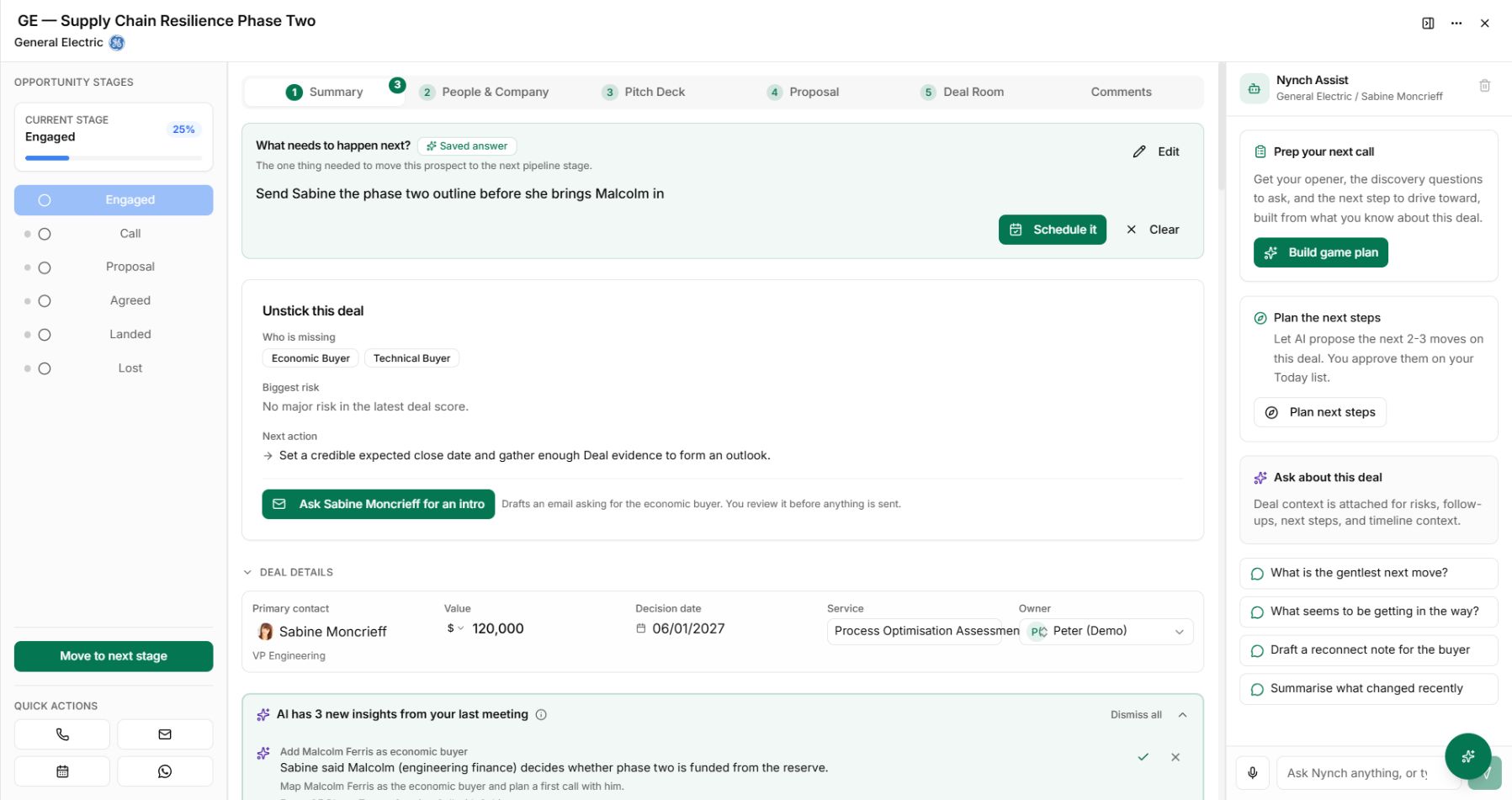
Stakeholder Risk Map
Review the concerns behind a complex decision. Use stakeholder and conversation context to prepare better questions about changing, waiting and moving forward.
See how it worksWhat gets in the way
The value may be clear while the risk of making the change feels personal. Different people in the decision can have different reasons to hesitate.
The wider buyer group’s concerns stay out of view.
You treat a pause as a pricing objection without asking.
You chase the decision instead of helping resolve the uncertainty.
How Stakeholder Risk Map works
Use the evidence to prepare questions, not to claim you know what someone is thinking.
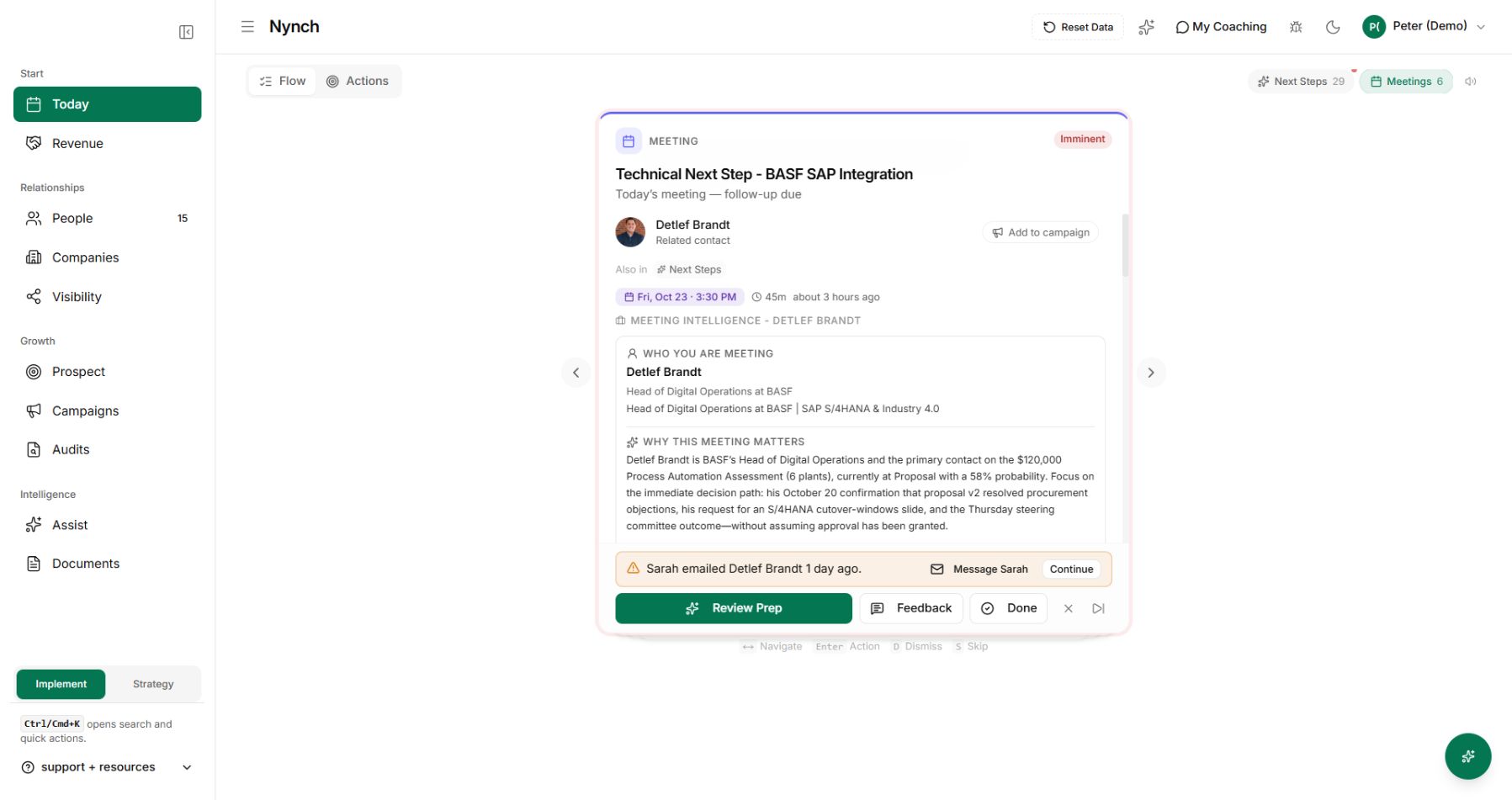
Review who is involved in the opportunity and what responsibility each person has.
A role is context, not proof of a private concern.
Return to meeting notes and recorded objections to understand the buyer’s words.
Separate an expressed concern from your interpretation.
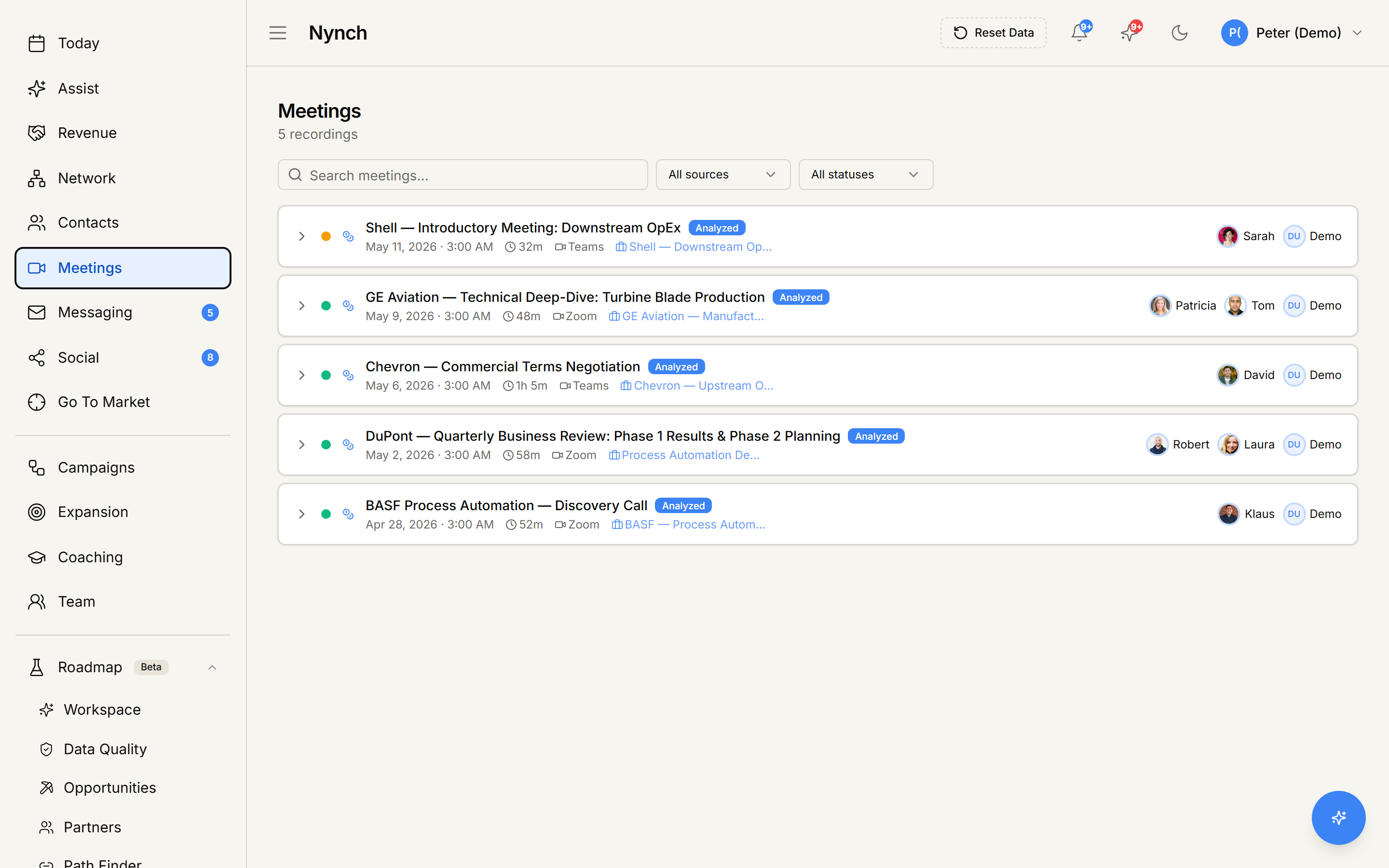
Review the decision with the available account and opportunity context.
Identify the question you need to ask directly.
Prepare a conversation that addresses the concern with evidence, options and a clear next step.
Avoid treating hesitation as something to manipulate.
What Nynch decided, and why
The map scores the four worries that can hold a buying decision back, person by person. These are the rules about who sets the scores, how the worries are grouped and why a blank is not read as a low score.
Each person gets a level for change, conflict, work and failure, set on a slider and saved to their own record. The deal-analysis functions read those levels, and they do not write them. A score is only as good as your reading of the conversation, so the map asks you to make it.
Doing it yourself: You would need to keep notes on each person’s worries and check them against every meeting before a decision review.
When a person has no level for a worry, the analysis leaves that worry out, so a blank does not look like reassurance. A worry only counts once it has been scored.
Doing it yourself: You would have to remember which worries you had not yet asked about for each person, and avoid treating silence as a no.
Change, conflict and failure are tagged as emotional friction, and work as intellectual friction. A worry about disruption, disagreement or personal risk is answered differently from a worry about the effort of delivering, so the kind of answer you prepare can match the worry.
Doing it yourself: You would have to sort every objection into emotional or practical friction yourself, and keep that sorting consistent across everyone in the deal.
One connected Nynch platform
Prospecting, relationships, meetings, proposals, Deal Rooms and client growth work together in Nynch. Start with the job you need to do today. Keep the context as the relationship develops.
The details
It helps structure a review of stakeholder concerns around a decision. Use it to prepare better questions about the change and the consequences of waiting.
No. Recorded statements and behaviour do not reveal private thoughts. Treat interpretations as hypotheses to check through conversation.
Different people carry different responsibilities and may need different information to make a decision. A concern raised by one contact does not necessarily represent the whole group.
Use the buyer’s actual questions, objections and commitments from meetings and messages. Keep the source context available when reviewing the interpretation.
Prepare an open question rather than assigning a motive. Ask what they would need to feel comfortable with the proposed next step.
It can identify where the buyer needs clearer scope, evidence, options or implementation detail. Improve those elements instead of simply chasing approval.
See stakeholder context alongside the opportunity.