The six-step backbone behind every Nynch AI surface.
Services. Buyer profiles. Point of view. Most firms have all three, documented in three different docs, saying three slightly different things. The GTM Spine makes them one canonical record, walked through six numbered steps, and feeds every AI surface in Nynch from the same source of truth.
Six steps. One spine.
The spine isn’t a doc you write once and forget. It’s a numbered workflow inside Nynch. Each step is its own working surface, with the GTM Coach guiding you through what to fill in and why. The output of one step becomes the input of the next.
GTM Coach
An always-on coach that walks you through every step in order, surfaces what is missing, and stops you from skipping ahead before the foundation is solid.
Problem I Solve
The market problem your firm exists to solve. Written tightly enough that a stranger could repeat it. Used by every downstream surface that needs to name what you do.
Buyer Profiles
The people who buy that problem. Firmographics, seniority, the language they use, the alternatives they considered. ICP scoring across your whole network runs from this.
Services
How you solve the problem. Each service mapped to the buyer profile that buys it, the typical deal size, and the methodology checkpoints that qualify it.
Point of View
The defensible angle your firm owns. The case against the status quo, the principles you teach, the manifestos that feed your authority motion and your outbound voice.
Use It
The spine wired into every working surface. Smart Draft, Assist, Expansion, Coaching, proposals, deal rooms, and the daily briefing all read from the same record.
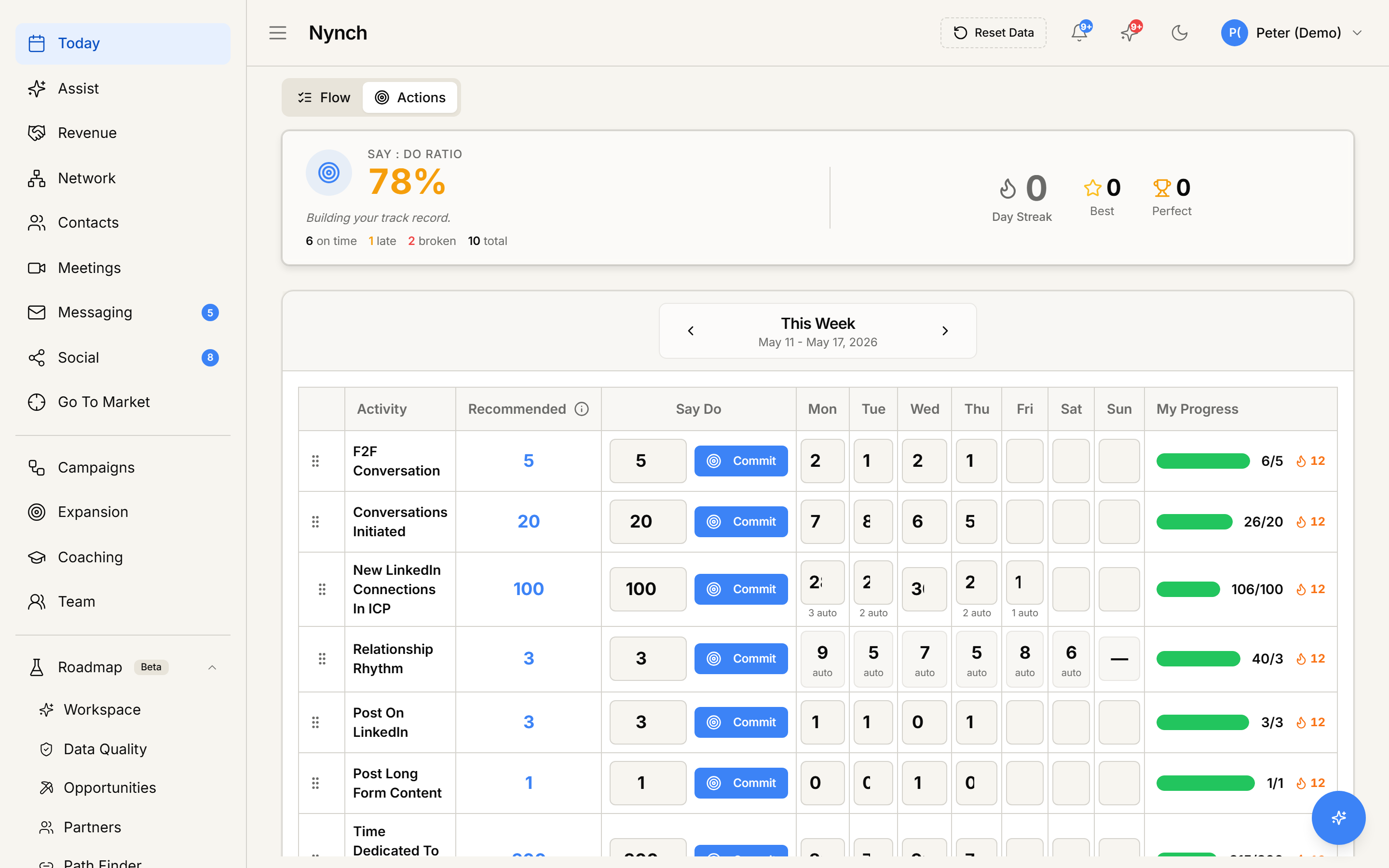
A Go To Market workspace with its own numbered structure behind it: Services, ICPs, Intelligence, Manifestos, Activation. The Pipeline View above is what is rendered when the GTM context is active and the day starts.
The hidden tax on inconsistent positioning.
Every consultancy has a services list, an ICP description, and a sales pitch deck. They almost never agree. The services list says you do five things. The ICP doc says you serve three industries. The pitch deck adds a fourth. The proposals quote a fifth.
When AI starts drafting on top of this, the inconsistency multiplies. Smart Draft picks one version. Assist picks another. The proposal generator picks a third. Buyers feel the lack of coherence and lose confidence, usually attributing it to “the consultant’s style” rather than the underlying chaos.
The Command Centre is a single relational record: each service mapped to the buyer profiles that buy it, the buyer problems it solves, the typical deal size, the qualifying methodology checkpoints, and the case studies that prove it. One change updates everywhere.
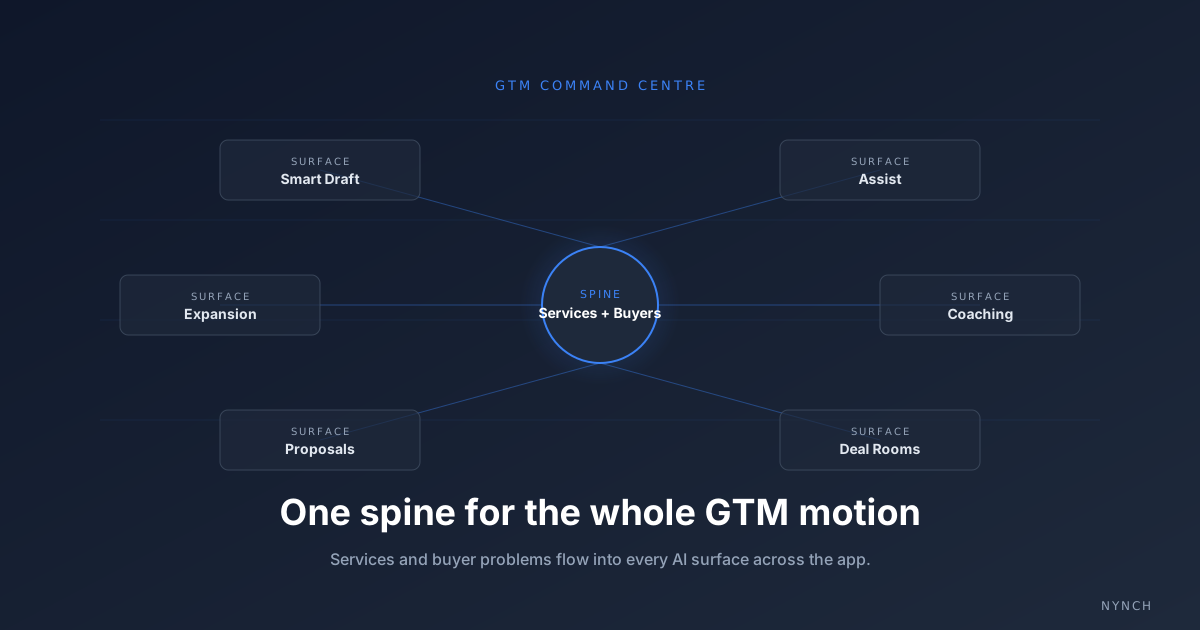
Six AI surfaces, one source of truth.
Once the spine exists, every AI feature in Nynch draws from it. The features stay separate, while the underlying context stays consistent.
Smart Draft
Drafts emails referencing the right service for the right buyer problem. Tone matches the buyer profile’s seniority. Case study references match what the prospect can actually use.
Assist
Recommends next-best actions per deal based on the service being sold, the buyer profile, and the buyer problem at stake. No more generic “send a follow-up” nudges.
Expansion
Spots which existing accounts could buy other services. The spine knows which services solve which buyer problems, so the expansion engine surfaces real opportunities, not random cross-sells.
Coaching
Flags deals where the rep is positioning the wrong service for the buyer profile. The coach knows what should be on the table and surfaces the gap before the deal stalls.
Proposals
Service descriptions, scope language, pricing ranges, and case studies pull directly from the spine. Update the spine, then review the proposal changes before they are used.
Deal Rooms
Per-deal microsites surface the right case studies, methodology overlays, and stakeholder briefs based on which service and buyer profile the deal is mapped to.
For relationship-led businesses.
Same spine. Three different scales.
Stop re-explaining what you do
One canonical service description that flows into every email, proposal, and deal room. The cognitive overhead of “how should I describe this engagement?” disappears.
Different spine per portfolio
Fractional executives running multiple practices keep separate spines for each. Your Fractional CRO motion stays clean from your advisory motion.
The whole agency on one playbook
New account leads onboard against the spine, not the founder’s memory. The agency’s positioning stays consistent as the team scales.
See the GTM Spine on your real services.
Book a 30-minute walkthrough. We’ll ingest your services list and ICP doc, walk you through the six steps, and show you what Smart Draft, Assist, and the Expansion engine look like running on top of the spine.