01Commercial overview
See the opportunities together.
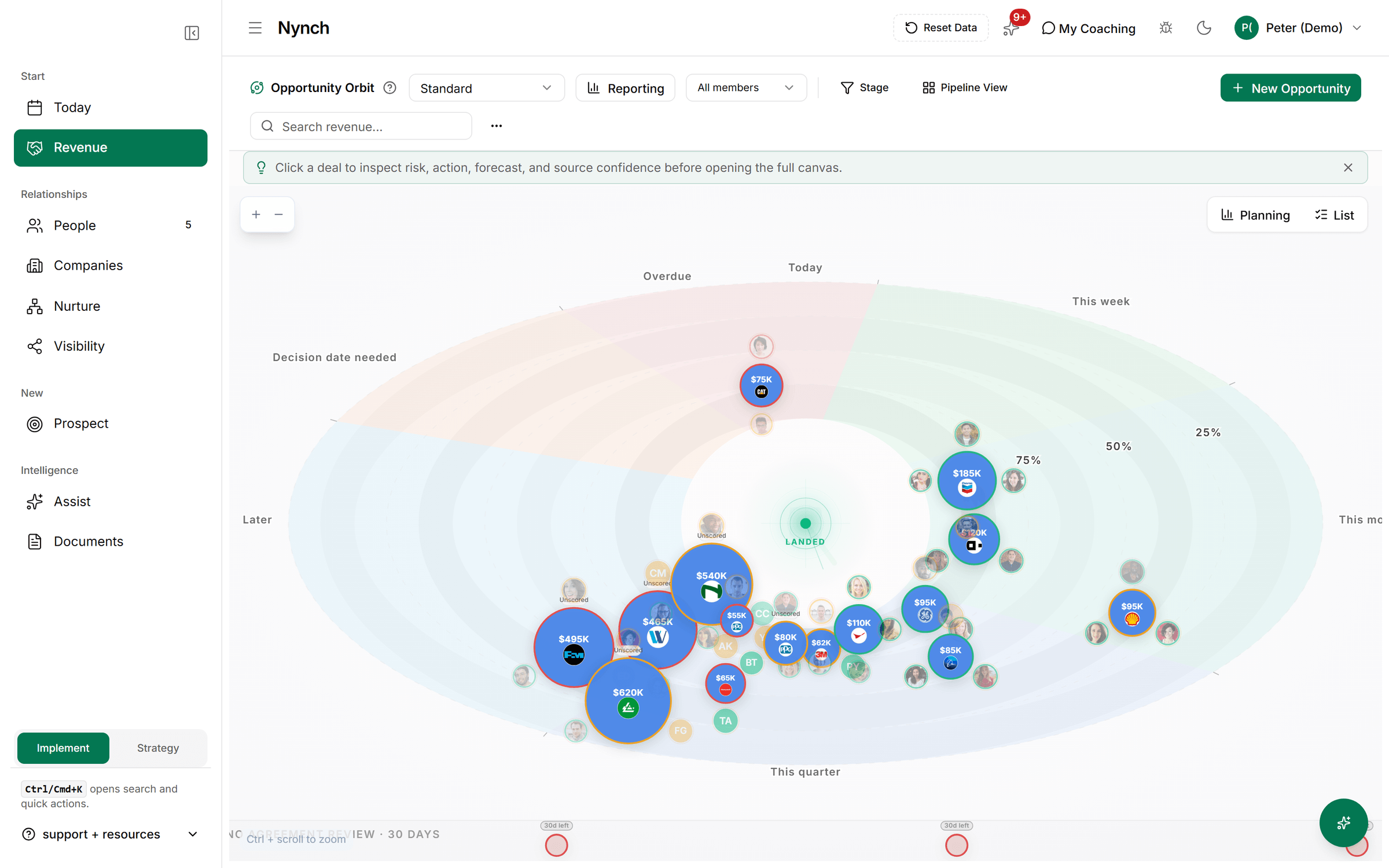
Use Orbit to look across the work in motion and identify where to focus your review.
The overview is a starting point for questions, not a promise of future revenue.
Opportunity Orbit
Bring open opportunities, deal values and next actions into a clear commercial view. Move between the wider picture and the individual conversation that needs attention.
Consulting sales pipeline management, inside the complete Nynch business development platform.
See how it works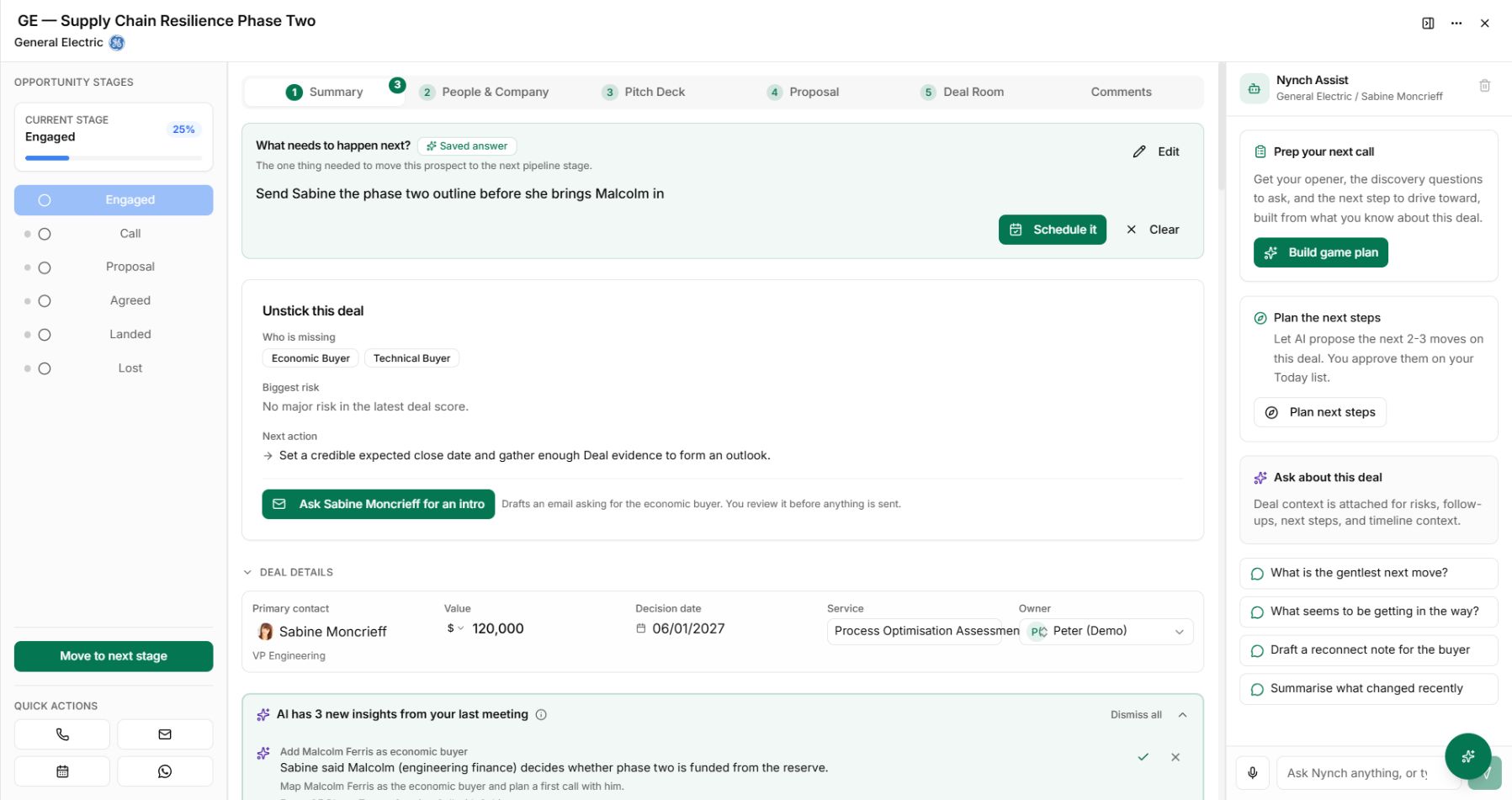
What gets in the way
You have several opportunities in motion, but each sits at a different stage with different people and unanswered questions.
One deal has a proposal and another only a friendly conversation.
The pipeline value looks reassuring while important conversations stall.
You know the deal matters but have not made the next step concrete.
How Opportunity Orbit works
Use the overview to decide where to look, then return to the evidence behind each deal.
Use Orbit to look across the work in motion and identify where to focus your review.
The overview is a starting point for questions, not a promise of future revenue.
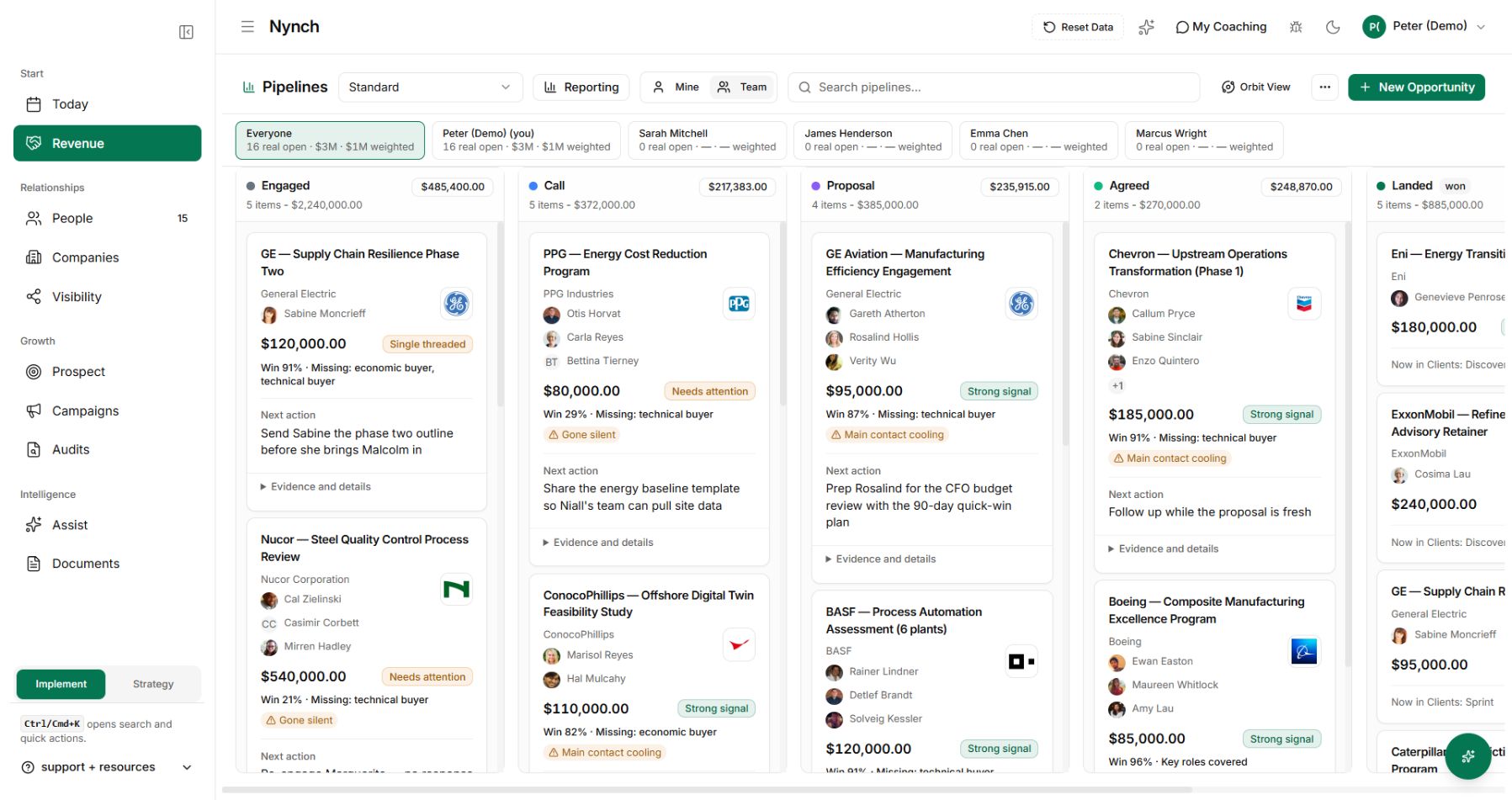
Review opportunities by stage alongside the value and people involved.
Keep stages aligned with what has actually happened.
Bring the relationship and opportunity context into view before deciding how to move the deal.
Check the buyer, timing and open questions.
Choose the conversation or commitment that moves the work forward and bring it into your day.
Review quiet opportunities rather than leaving them in the total indefinitely.
What Nynch decided, and why
The orbit is a picture of work that is still open. These are the rules that decide what appears on it, where each deal sits and why won and lost work is kept apart.
Won work gathers at the centre, and recent outcomes without an agreement sit in a separate review strip, so the rings show only what can still be decided. A closed deal left in the open picture would make the pipeline look bigger than it is.
Doing it yourself: A picture kept by hand goes out of date the day a deal is marked won and nobody moves it, so won and open work drift together.
A large deal is easy to spot because its node is bigger, but size does not move it towards the centre. Distance reflects the estimated probability gap, and place around the rings reflects the timing of the decision. The orbit is where to start a review, not a forecast.
Doing it yourself: You would have to plot every open deal on value, estimated gap and decision timing, and redo it each time one of them changed.
One connected Nynch platform
Prospecting, relationships, meetings, proposals, Deal Rooms and client growth work together in Nynch. Start with the job you need to do today. Keep the context as the relationship develops.
Work the opportunity with the people and conversations behind it, then prepare the proposal and buyer-facing Deal Room.
The details
Orbit provides another way to see your opportunities together. The pipeline organises work by stage. Use the view that best supports the review you are doing, then open the underlying opportunity for detail.
No. Open opportunity value is not contracted work. Review stage, timing, buyer engagement and the underlying assumptions before using a pipeline figure in a forecast.
Opportunity records connect the deal to its people and company. Review those relationships to understand who is involved and where important roles are still unclear.
Review the last meaningful conversation and the next agreed action. Decide whether to re-engage, revise the timing or close the opportunity with an accurate outcome.
They sit with the opportunity. Use the proposal to make the case for the work and the Deal Room to share the buyer-facing material and next steps.
Yes. Review the commercial picture, check changes in individual deals and choose the next actions. The useful outcome is a clearer plan for the week, not simply a larger pipeline number.
See the opportunities, people and next steps together.