01Conversation history
Return to what the client actually said.
Review meeting records and the problems or future work mentioned in the conversation.
Keep the original context in view.
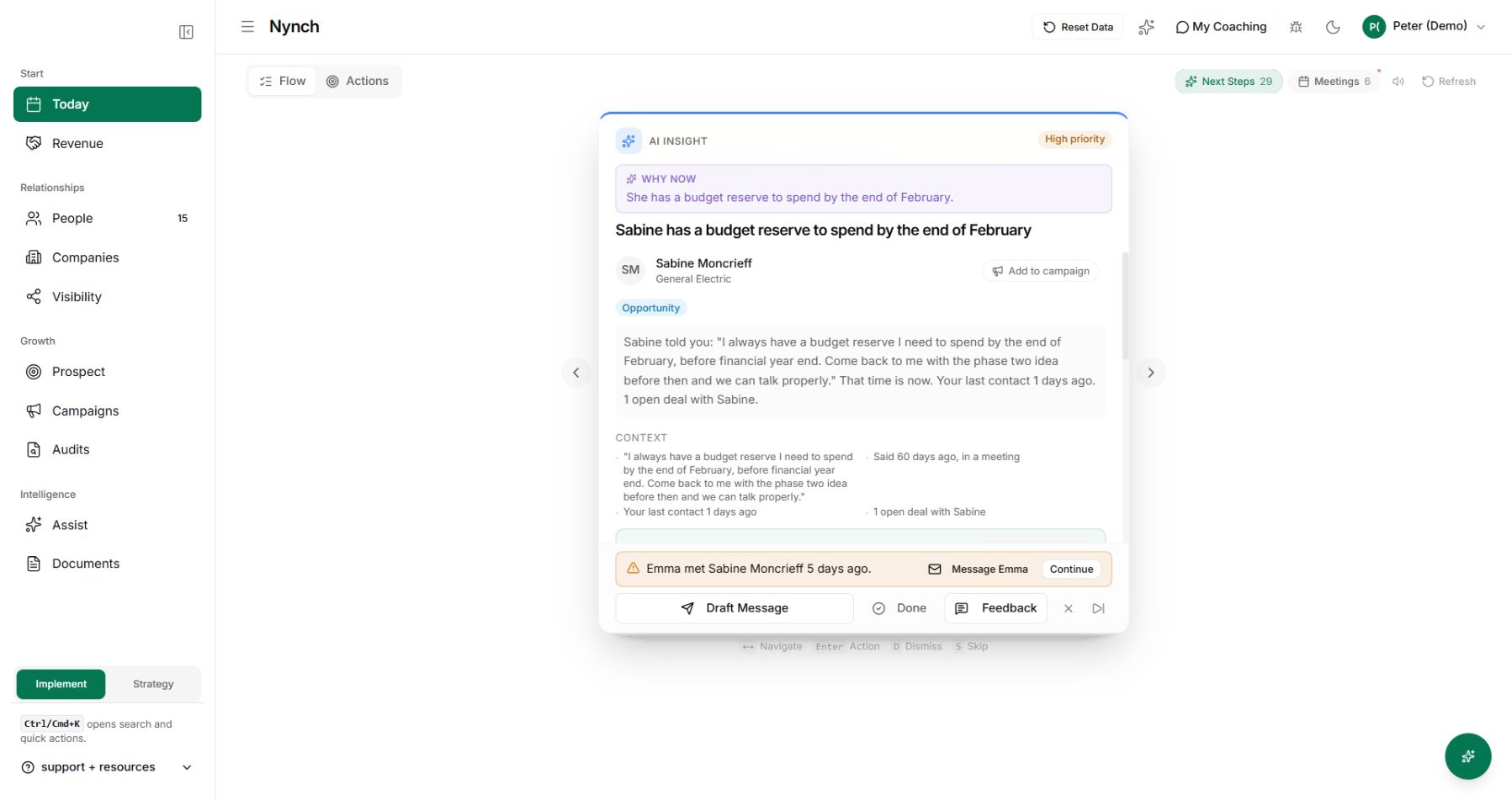
Revenue opportunities
Use relationship history to find problems, future projects and open threads worth discussing again. Turn the relevant ones into a deliberate next conversation.
Client account expansion, inside the complete Nynch business development platform.
See how it works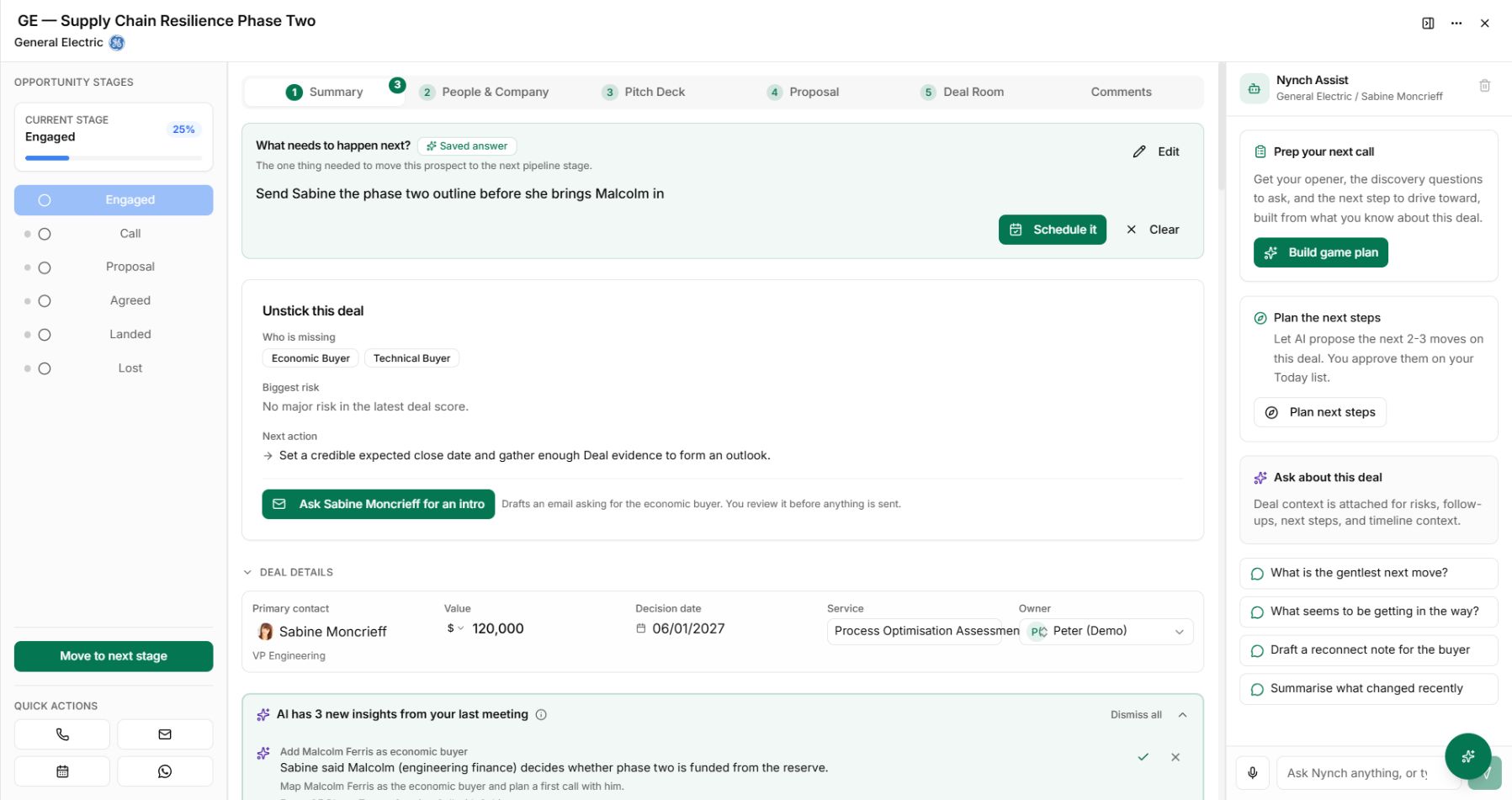
What gets in the way
A client mentions another problem while you are focused on delivery. Months later, the detail is difficult to find and the opening is forgotten.
A project mentioned in passing never becomes a follow-up.
You remember the interest but not when it was worth revisiting.
You need to distinguish a useful question from a qualified opportunity.
How Revenue opportunities works
Use recorded context to guide a useful discussion, then qualify the work with the buyer.
Review meeting records and the problems or future work mentioned in the conversation.
Keep the original context in view.
Review recent activity and the people involved before assuming the old need remains current.
Treat a past mention as a reason to ask, not proof of a budget.
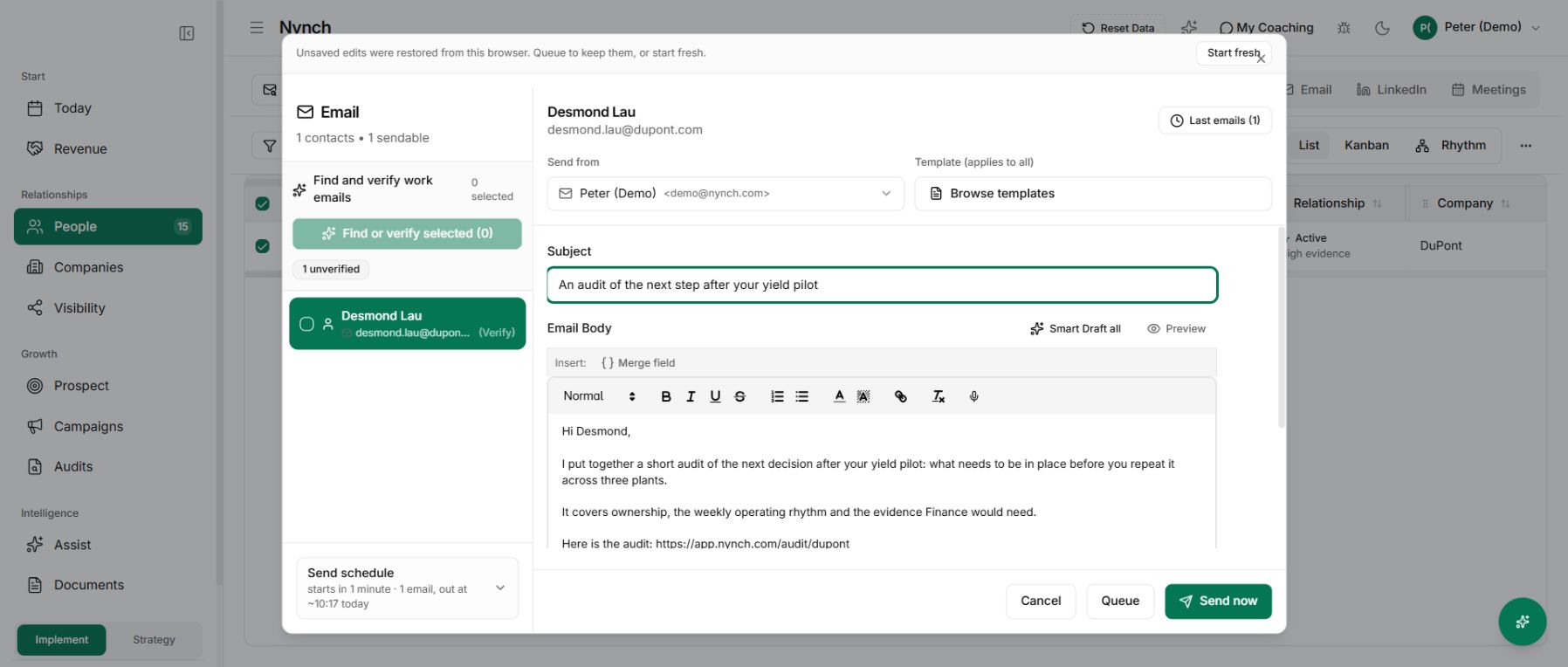
Prepare a personal message that refers to the problem and checks whether the timing has changed.
Review the wording before sending.
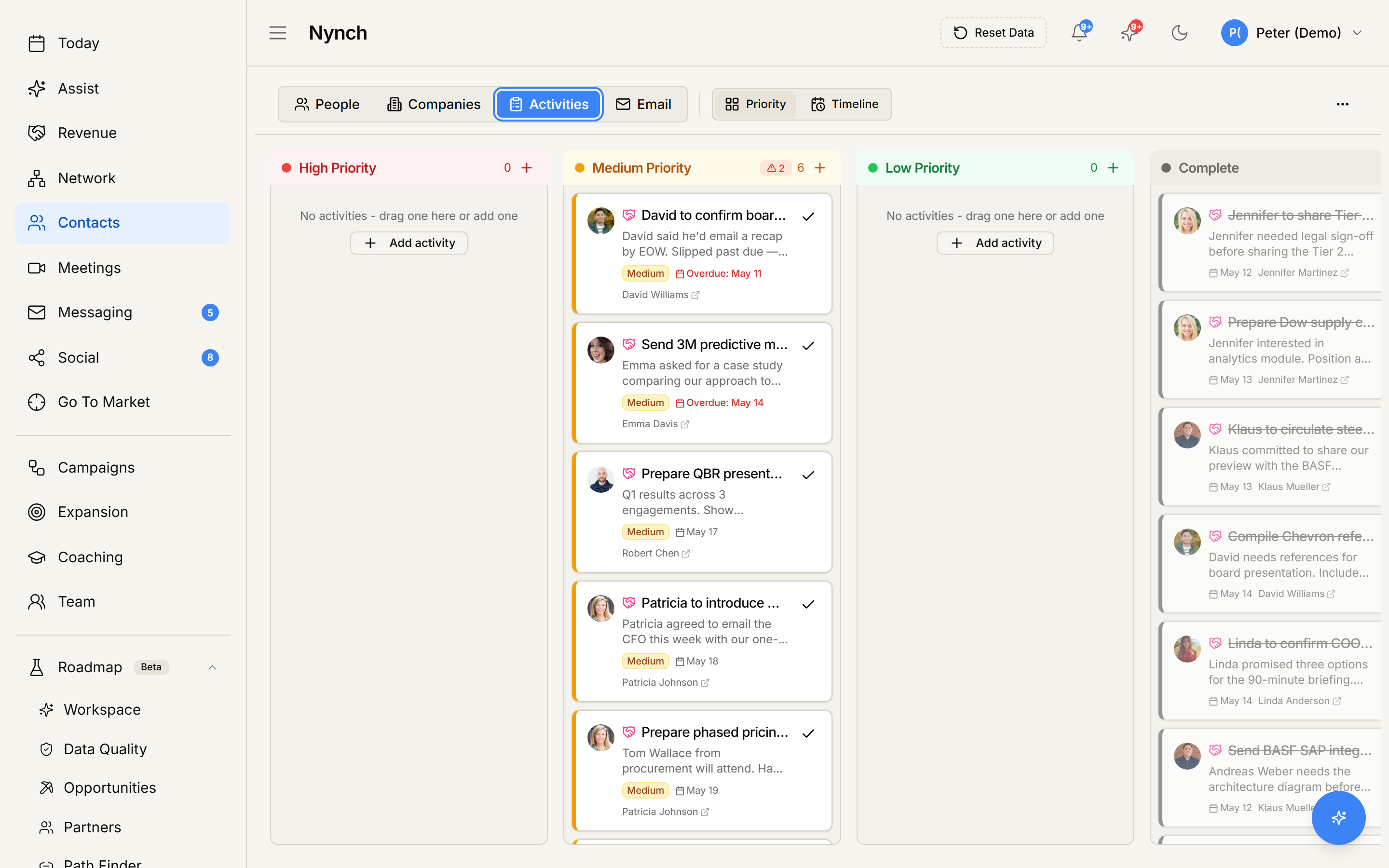
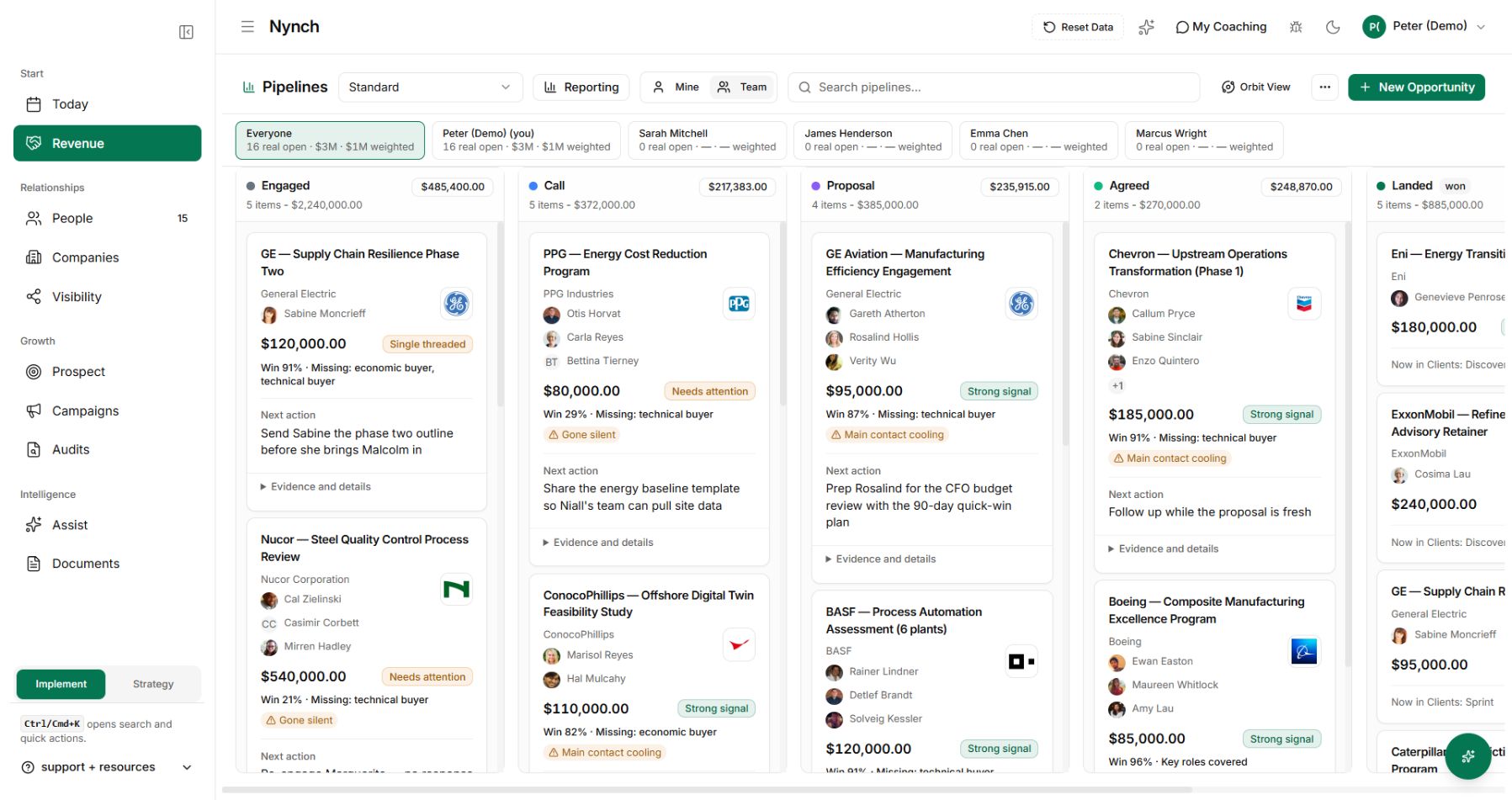
Once the conversation establishes a credible opportunity, keep the people, value and next action together in Revenue.
Update the record as you learn more.
What Nynch decided, and why
Revenue ideas are found in what people have already said, so each one has to trace back to words the buyer wrote. These are the rules for what counts, how far back Nynch looks and why each would be slow to keep by hand.
Ideas about expansion, upsell, referral, renewal, a new service, budget or a pain point are kept only with a direct quote from that person. An idea without one is discarded, so a passing comment is not turned into a sales opportunity.
Doing it yourself: You would have to reread each thread, find the exact line that proves the idea and drop anything without one.
Only words the buyer wrote count as testimony. Something you wrote to them, or a summary a model produced, cannot back a revenue idea on its own. Quoted replies and forwarded text are removed before the words are checked, so an old message someone quoted back is not read as their new view.
Doing it yourself: You would have to tell apart, every time, the lines the buyer wrote, the lines you wrote and the lines quoted from earlier mail.
The default window is six months, so a remark from two years ago is not presented as current. Run across the whole network, it covers the 60 contacts with the most recent activity, not every name in your address book. If you choose a person or a company, it reads only that person or that company’s contacts.
Doing it yourself: You would have to decide, contact by contact, how far back to read and which of your contacts had been active lately.
One connected Nynch platform
Prospecting, relationships, meetings, proposals, Deal Rooms and client growth work together in Nynch. Start with the job you need to do today. Keep the context as the relationship develops.
A new client need can become another opportunity, proposal and Deal Room, with the relationship history still available.
The details
A mentioned project, unresolved problem, timing change or introduction can be worth revisiting. None of these alone proves that the buyer has budget or intends to buy.
Yes, when the history is available. Check whether the problem and timing are still current before framing an old comment as a present need.
A signal should first help you decide whether to have a conversation. Qualify the work before treating it as a real opportunity in the pipeline.
Refer to the specific problem and ask what has changed. Offer something relevant rather than pretending that the original conversation was a commitment.
Yes. Existing client conversations often contain context about adjacent problems or future work. Keep the discussion rooted in the client’s needs and your ability to help.
Use the gap to prepare a question. Do not fill missing budget, ownership or timing with assumptions.
See how remembered context becomes a relevant opportunity discussion.