01Signal
Notice what makes this moment different.
Review the reason for reconnecting and check whether the event is relevant to your work.
A signal is a prompt to investigate.
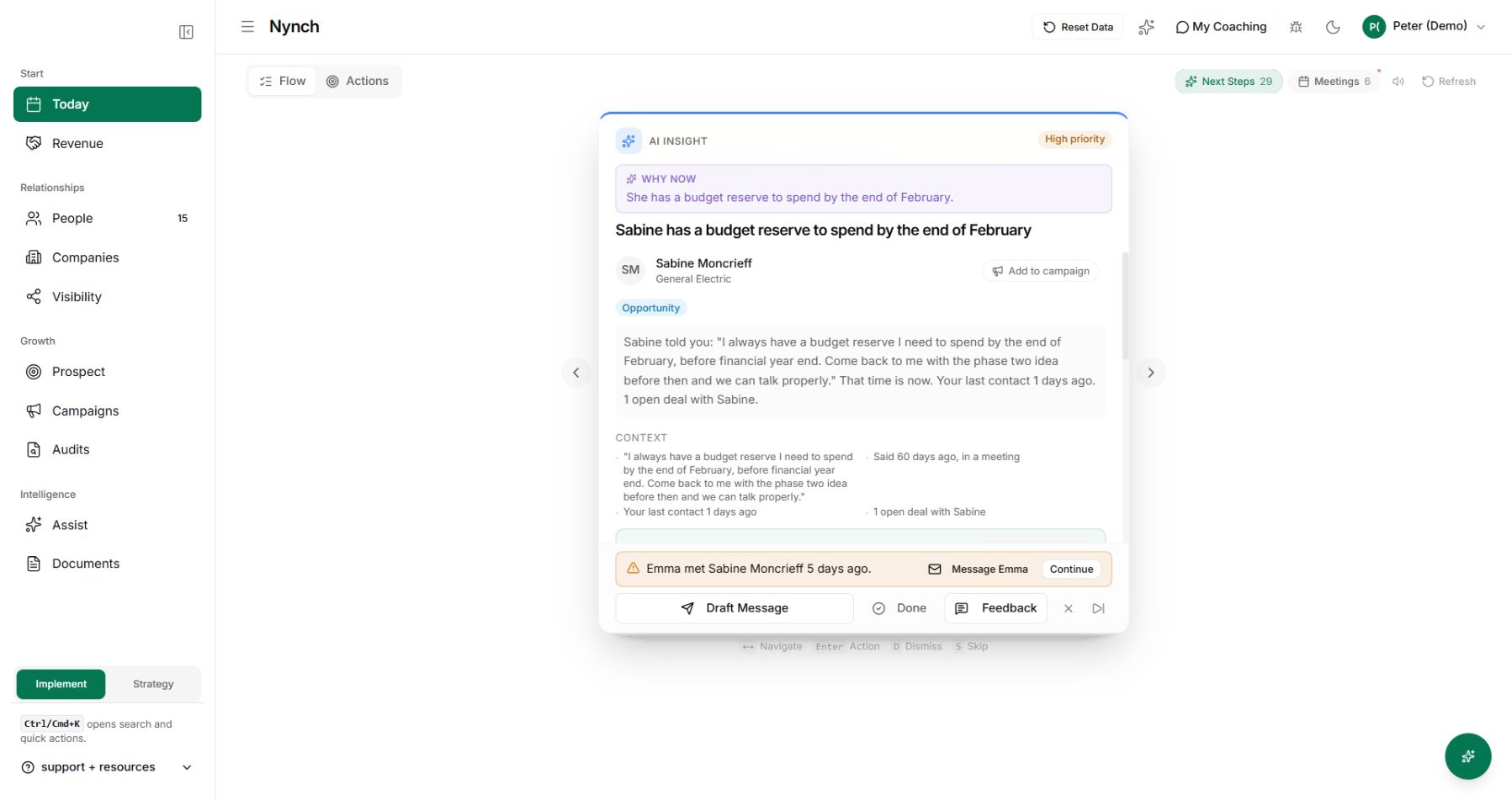
Conversation angles
Bring a current signal together with the relationship history and your expertise. Choose an opening that makes the next conversation useful.
See how it works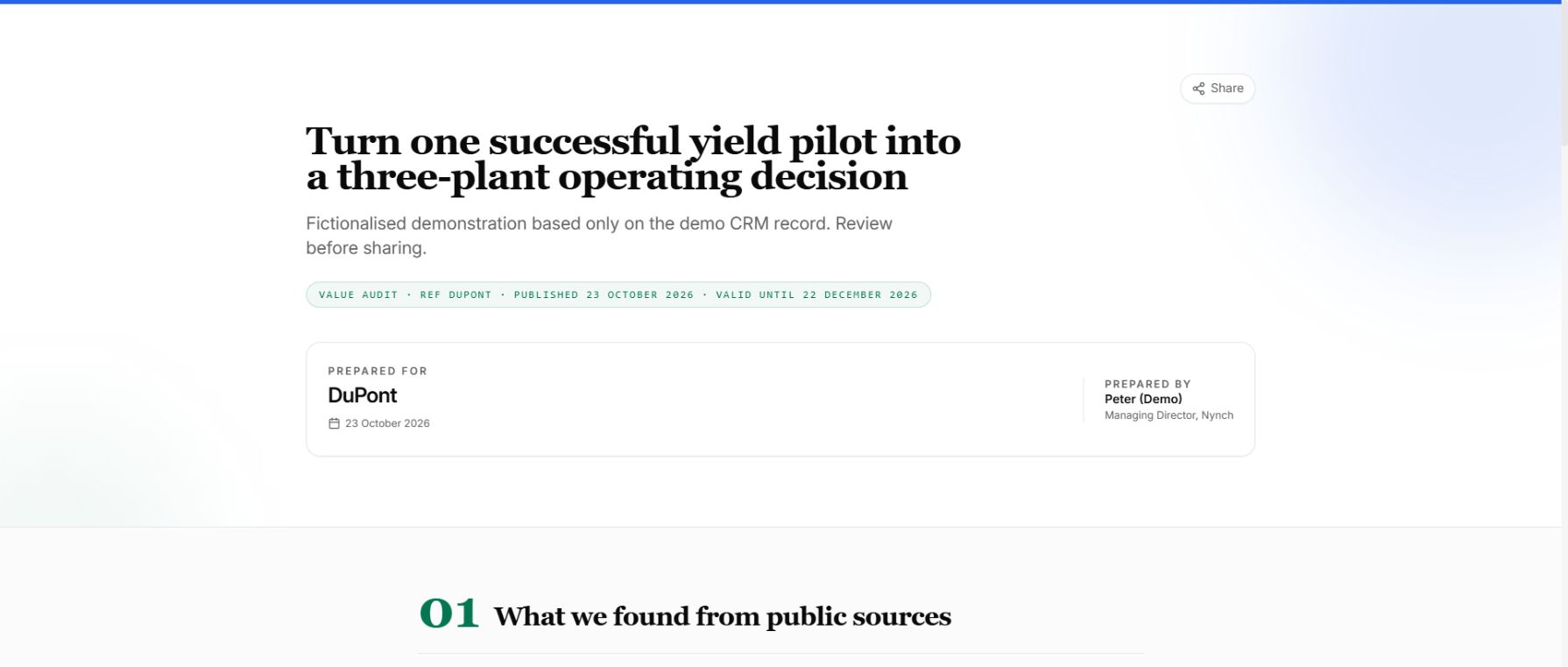
What gets in the way
You still need a reason that matters to the other person. A generic check-in gives them little reason to respond.
A company update is interesting but you have not connected it to a real problem.
The opening sounds as though you have never spoken before.
You request a meeting before showing why the conversation is useful.
How Conversation angles works
Review the signal and the person, then make the opening specific.
Review the reason for reconnecting and check whether the event is relevant to your work.
A signal is a prompt to investigate.
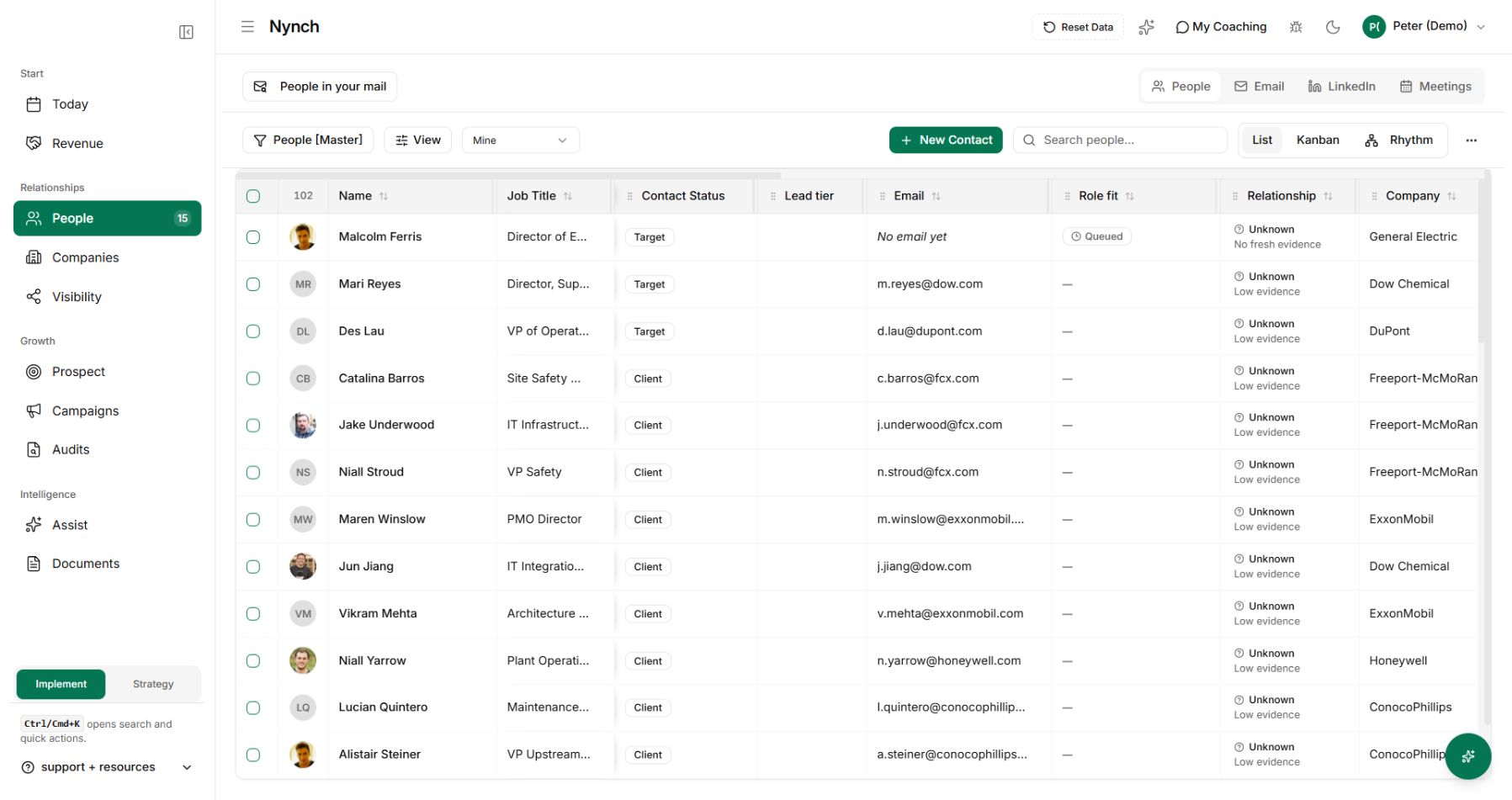
Look at the person’s history and current role before choosing the angle.
Do not treat a familiar contact like a cold name.
Prepare an observation, a question or a Value Audit that relates to the problem.
Check the facts and keep the claim proportionate.
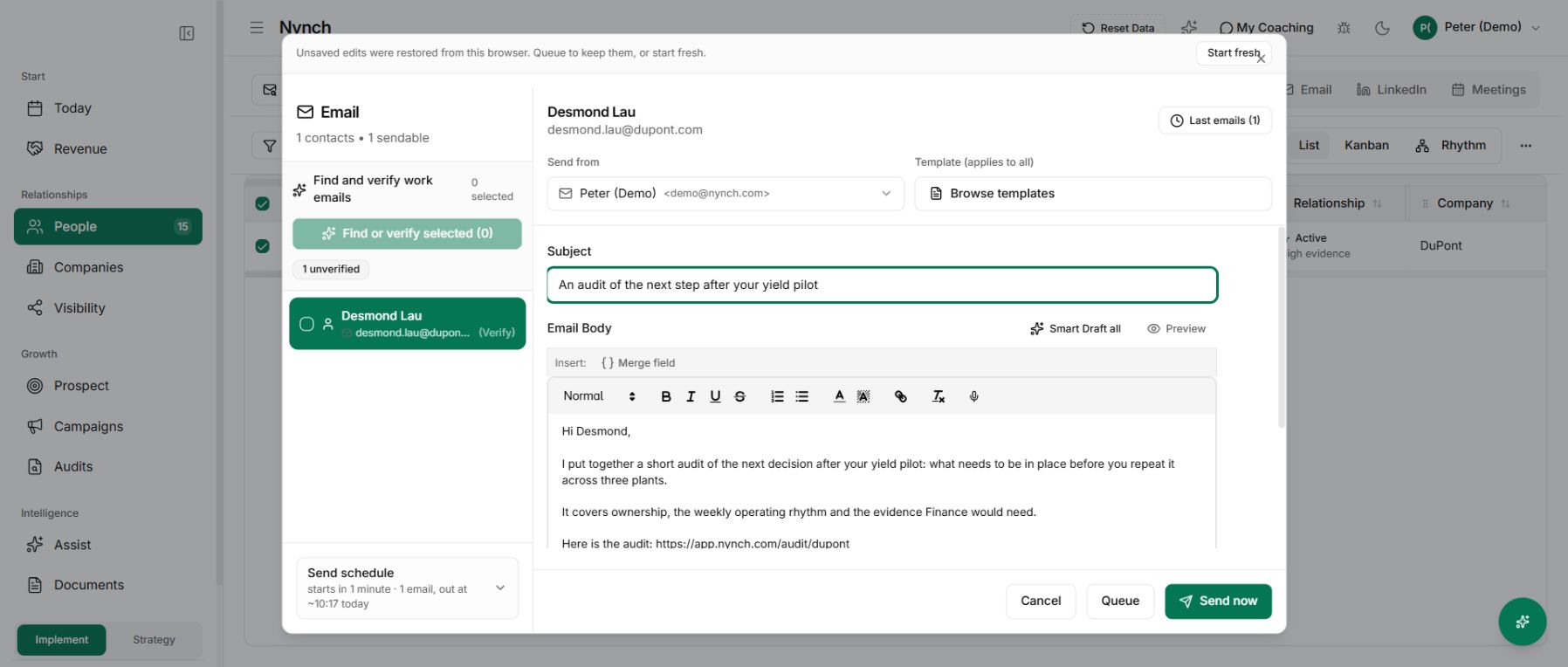
Draft a short message that connects the reason, the useful contribution and a reasonable next step.
Review it in your own voice.
What Nynch decided, and why
An opening only works if it is current, true and about the person reading it. These are the rules Nynch applies to a reason before it appears on a person’s card, and to the draft that follows it.
The reason card for a person keeps only what happened, or was spotted, in the last 90 days, and anything older is left off. A funding round from last spring does not become a reason to write this month, even if it was interesting at the time. In a campaign the reason only shapes the opening when AI personalisation is switched on for that campaign, which is off unless you turn it on.
Doing it yourself: You would have to know the date of every signal for every person, and remove the old ones before each message you write.
Nynch uses a date from the source only when the source gives a real, past date for the event itself. Without one, the card says the change was spotted on that day, so a check is never passed off as the event. A wrong date in an opener undermines the rest of the message.
Doing it yourself: You would have to open each source, decide whether its date is the event or only the page date, and label it honestly every time.
In a template you pick the source of each AI-written sentence, such as the person’s job title, your notes or the company description. If that field is empty, Nynch does not guess, and the send is refused until the gap is filled or the sentence is removed.
Doing it yourself: Checking each recipient’s record before every personal line goes out, and rewriting the ones with nothing behind them, takes longer than most people allow for.
A draft comes with a short reason for its wording, so you can see which fact or past reply it relied on. Nynch uses the emails you sent that got a reply as its guide, and emails with no reply are not used as a model. That lets you keep the line that is right and change the one that is not, rather than rewriting the whole email.
Doing it yourself: Matching your past replies to the openings that caused them means keeping a record most people never start.
One connected Nynch platform
Prospecting, relationships, meetings, proposals, Deal Rooms and client growth work together in Nynch. Start with the job you need to do today. Keep the context as the relationship develops.
The details
A relevant connection between the person’s situation, your relationship and something useful you can contribute. It gives the introduction a purpose.
Not always. Check whether the event creates a question or problem you can credibly help with. Repeating a headline is not the same as adding value.
Yes. An unresolved question or future plan can be a useful starting point when you check that it is still relevant.
A clear service and buyer profile help you judge which changes matter to your expertise. Keep the opening related to work you can actually do.
Give the person a reason to care first. The right next step may be a question, a shared resource or a short discussion, depending on the relationship.
No. It gives you a reason to start a conversation. The buyer still needs to tell you whether the problem, timing and proposed help fit.
See the signal, relationship and personal draft together.