01Opportunity
Start with the work being discussed.
Review the current stage and the specific problem this opportunity is meant to address.
Ground the review in a real deal rather than a generic checklist.
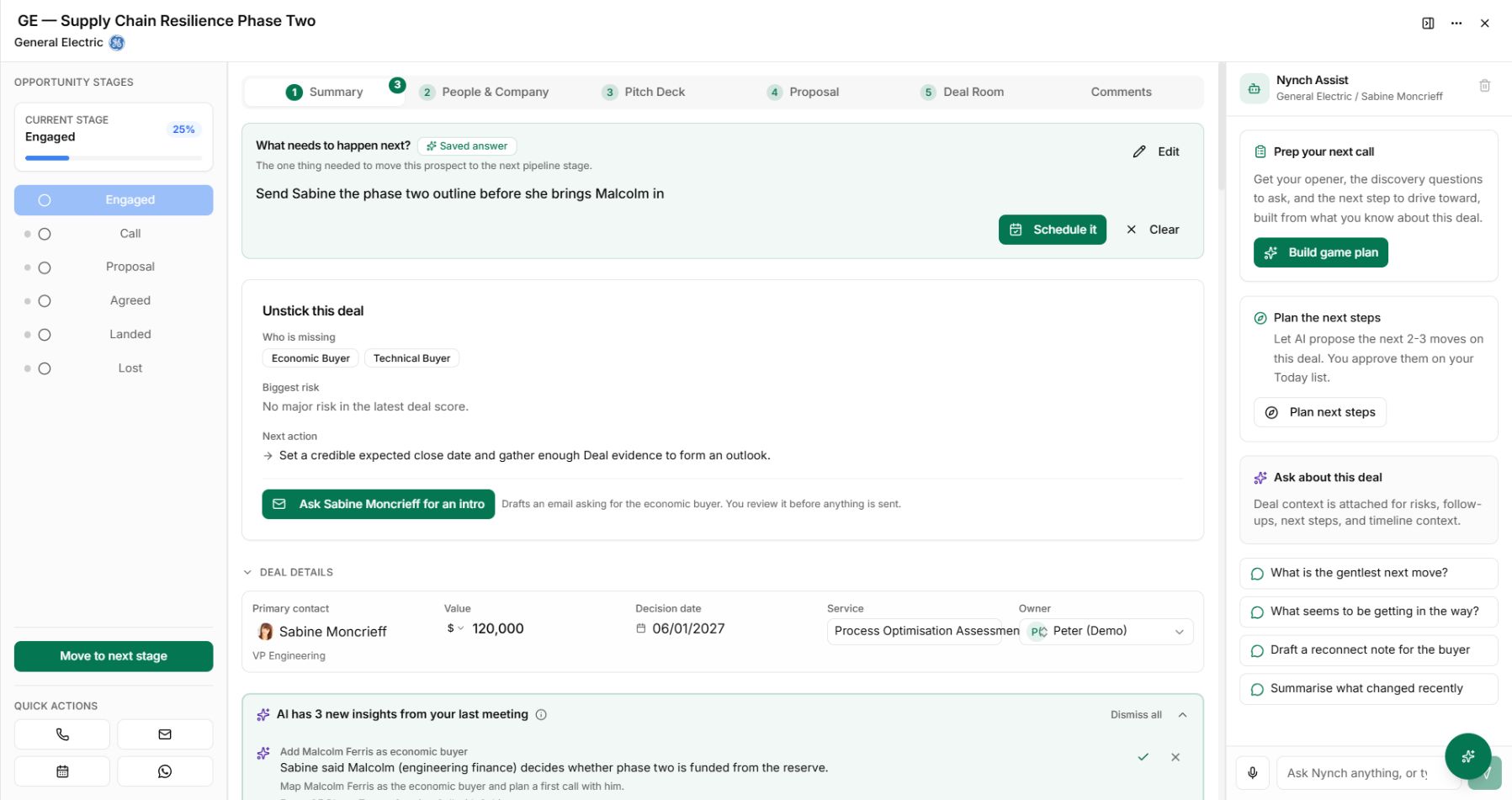
Sales Methodologies
Use a structured approach to review the buyer, problem and decision behind an opportunity. Keep the unanswered questions close to the deal.
See how it works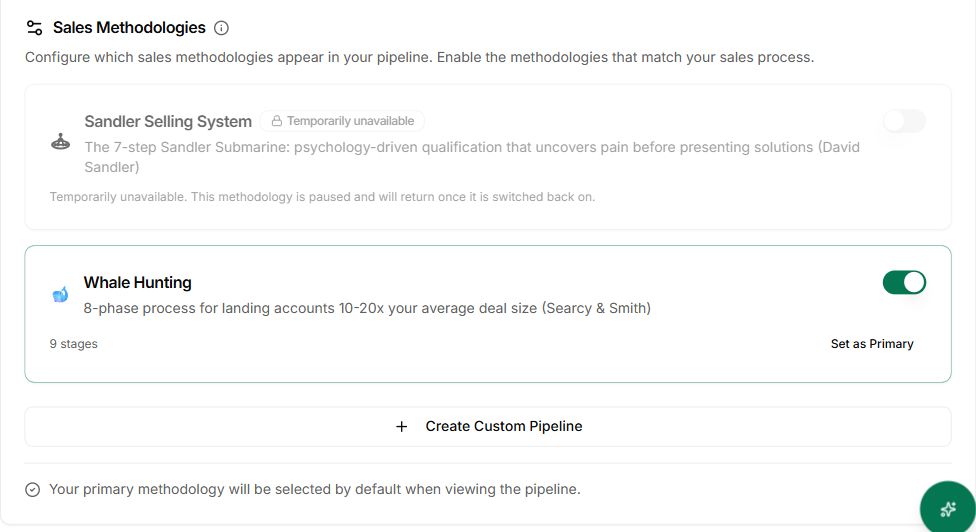
What gets in the way
Complex consulting deals involve several people, a problem worth solving and a decision process. Progress depends on understanding each of them.
A helpful contact is not necessarily the person who can approve the work.
A possible budget or deadline becomes part of the forecast without confirmation.
The questions you meant to use are separate from the opportunity.
How Sales Methodologies works
Use the framework to guide evidence gathering and the next buyer conversation.
Review the current stage and the specific problem this opportunity is meant to address.
Ground the review in a real deal rather than a generic checklist.
Review the people connected to the opportunity and the roles you still need to clarify.
Ask how the decision will be made instead of inferring authority from a title.
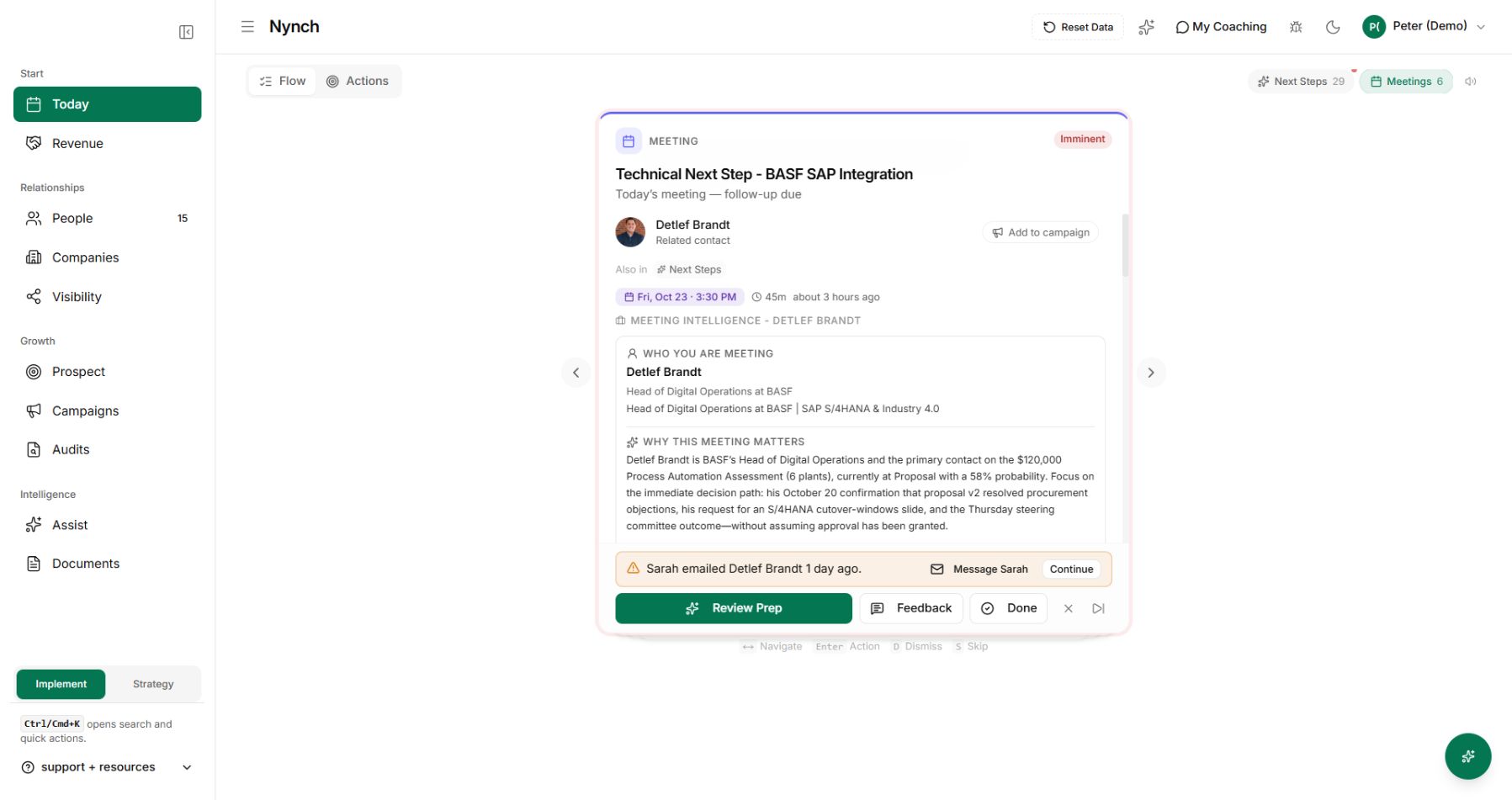
Use meeting and activity context to review the facts behind your qualification.
Keep unknowns visible until there is evidence.
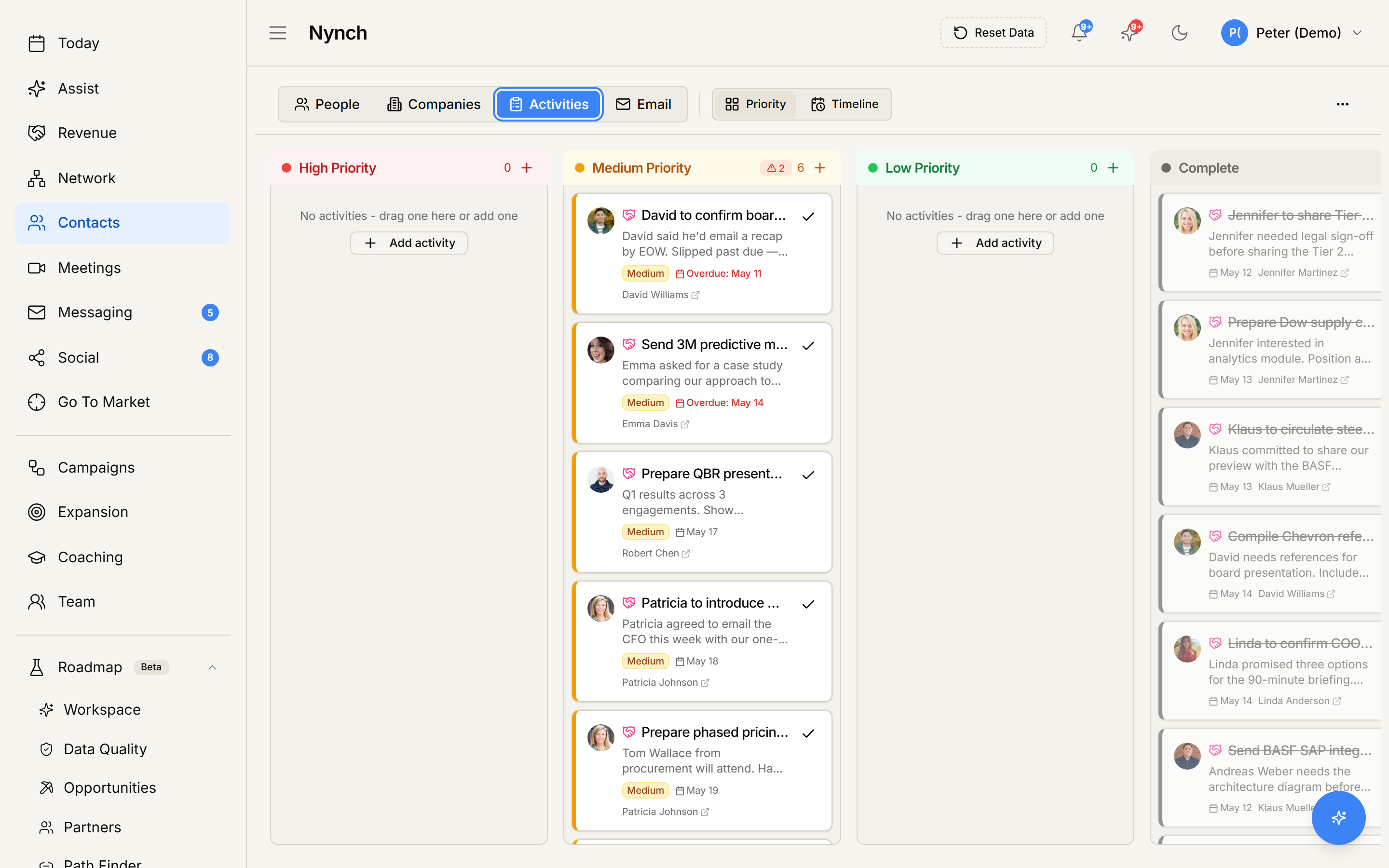
Prepare the next call around the issue that prevents a clear decision.
Update the opportunity after the buyer answers.
What Nynch decided, and why
A stage label is only a claim until its checks are done. These are the rules that say which methods Nynch uses, what stops a stage from moving and what each stage asks you to answer.
Each built-in method has its own stages and a detailed canvas, and a custom pipeline uses that canvas too. A deal is worked through the method it belongs to, not through one generic list of stages for every opportunity.
Doing it yourself: You would need to keep two sets of stages, checks and canvases in step, and apply each method’s checks to each deal yourself.
The Lead stage needs a fit with your ideal client and a named key contact before it moves on, and Qualified needs the pain point confirmed. Until the required checks are ticked the move stays unavailable, and the card says what is missing. Optional checks are reminders, so they never stop a deal moving.
Doing it yourself: You would need to check each stage’s required items before moving a deal, and remember which optional items you had skipped.
At the Lead stage the question is whether the opportunity is worth pursuing and fits your ideal client. At Qualified it is whether the person has a real problem you can solve. The question sits on the stage, so moving a deal is a decision you can defend rather than a label you have typed.
Doing it yourself: You would need to write a checklist for each stage, decide what counts as ready and keep the same standard for every deal.
One connected Nynch platform
Prospecting, relationships, meetings, proposals, Deal Rooms and client growth work together in Nynch. Start with the job you need to do today. Keep the context as the relationship develops.
The details
It helps make the questions behind a complex sale explicit. Use it to understand the buyer and decision, rather than treating qualification as a score to maximise.
Whale Hunting and the Sandler Selling System are built in, and you can also build a custom pipeline. Choose the one that fits how you sell and how your buyers decide. No framework suits every opportunity, and you can turn the ones you don’t use off in your settings.
Available meeting and relationship information can support the review. Confirm each interpretation before treating it as evidence of budget, authority or commitment.
Keep it unknown and prepare a question for the buyer. A filled field is not valuable if it conceals a guess.
No. Qualification helps you understand whether and how to propose the work. The proposal sets out the scope, value and commercial terms for the buyer.
Review it when the people, scope, budget or decision path changes. A useful framework develops with the opportunity.
See qualification and relationship context together in Nynch.