01Weekly targets
Decide what a useful week looks like.
Set targets for the business development activities you want to maintain, including conversations and relationship touchpoints.
Choose a level you can sustain around delivery.
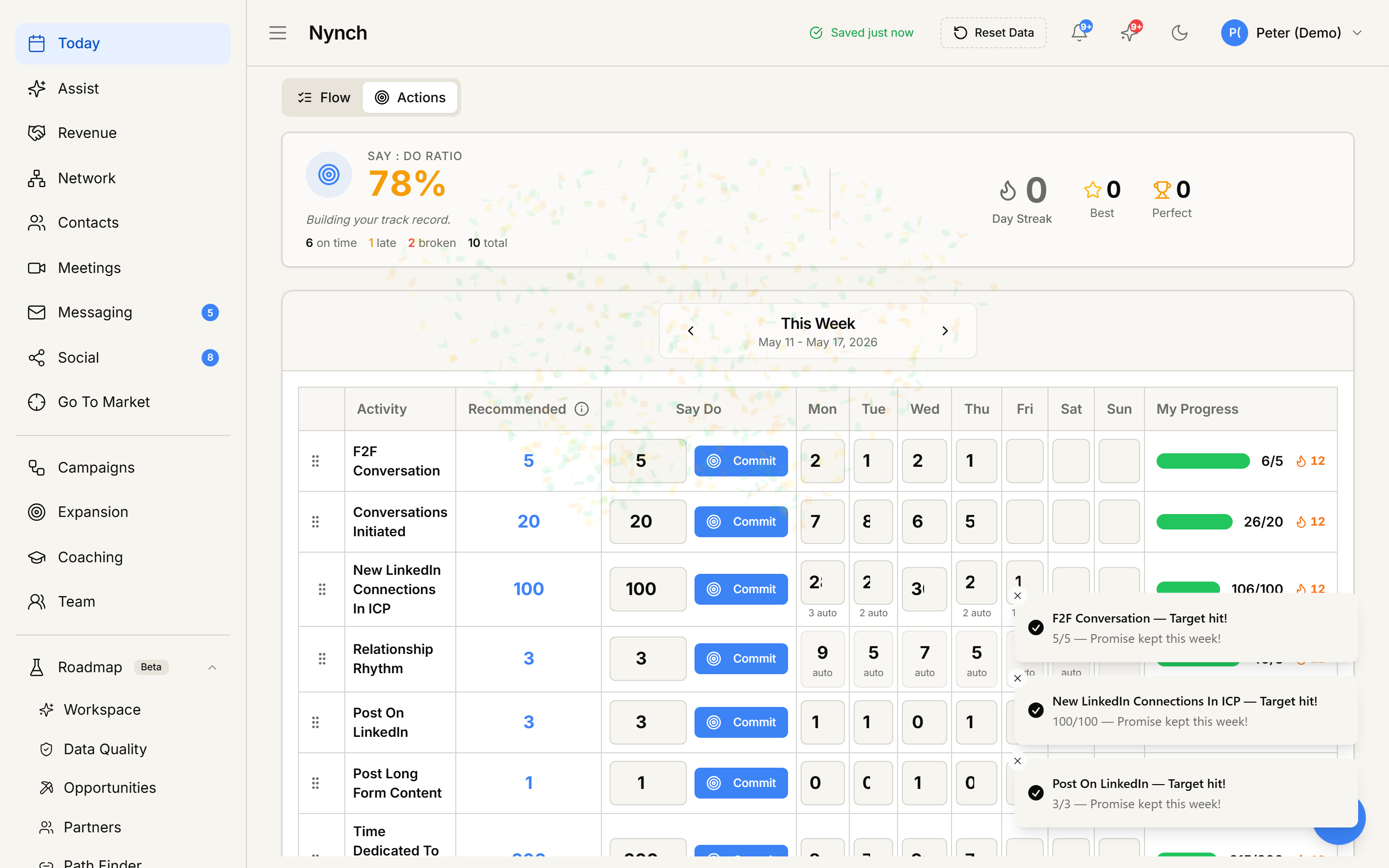
Say/Do Ratio
Set your weekly business development targets and see how much you complete. Keep conversations, introductions and relationship work moving alongside client delivery.
See how it works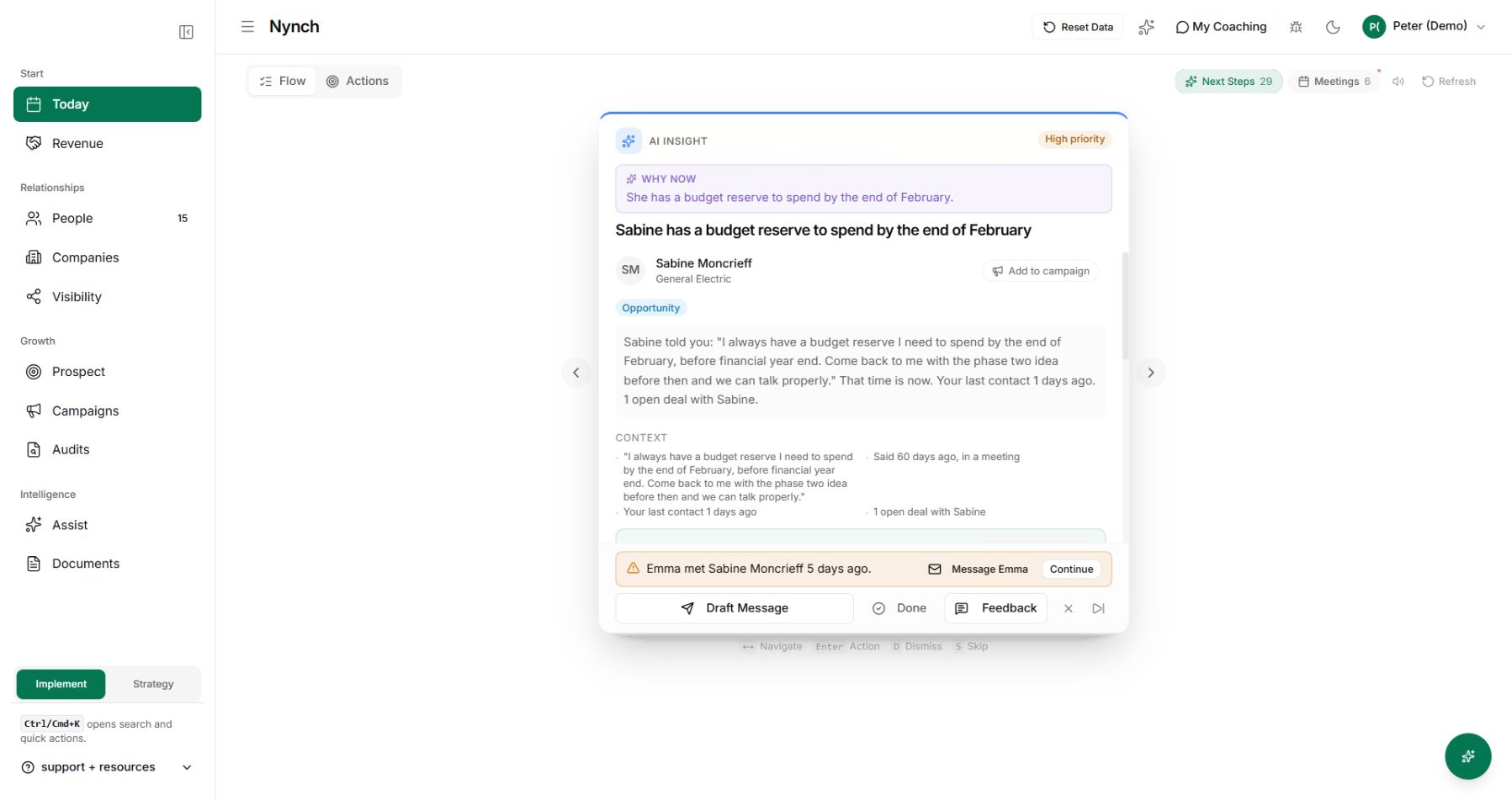
What gets in the way
You intend to have more conversations and stay close to your network. Without a specific plan, delivery takes the time and the week ends with the same intention.
Do more business development does not tell you what to do on Tuesday.
You commit to more activity than the week can hold.
You remember being busy but cannot see what actually happened.
How Say/Do Ratio works
Give relationship work a practical target, then use the result to plan a more realistic next week.
Set targets for the business development activities you want to maintain, including conversations and relationship touchpoints.
Choose a level you can sustain around delivery.
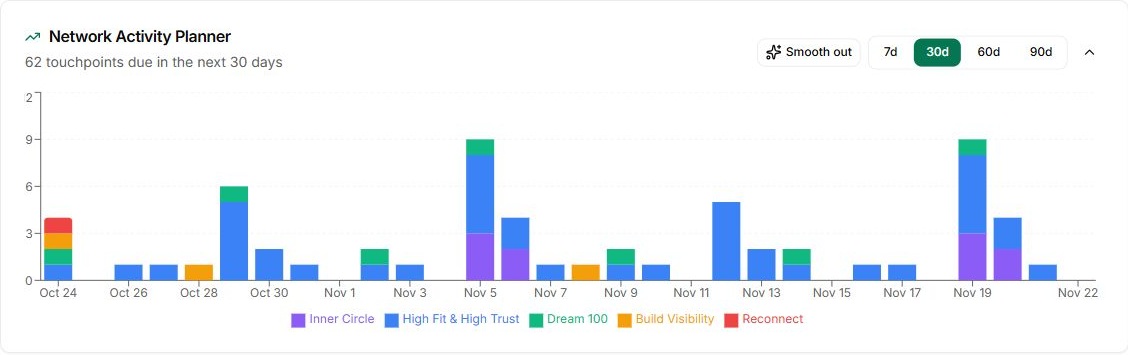
Review upcoming touchpoints so the activity target connects to relationships worth developing.
Use the planner to spot an overloaded day.
Open Today to choose a relevant person, review the context and take the next step.
A useful conversation matters more than filling the count.
Compare completed activity with your targets and review your Say/Do result.
Adjust the next week when delivery or priorities change.
What Nynch decided, and why
The Say/Do ratio sets the activity you planned against what you actually did. These are the rules about which activities count automatically, when a week is judged and how a streak is kept, and why each is hard to keep by hand.
Face-to-face conversations, new LinkedIn connections in your ideal client profile and relationship rhythm touchpoints come from what Nynch can see. Any other activity needs a number you enter. If you type a number for a day, that number is used for the day instead of the automatic count.
Doing it yourself: You would have to count those touchpoints yourself each day and write them into your planner.
A streak is consecutive weeks in which an activity hit its target, and only settled weeks decide it. A week still in progress is skipped, so a streak is not broken on a Monday morning and is not awarded before the week has finished.
Doing it yourself: You would have to keep each week’s targets and results yourself, and decide on Monday morning whether a streak still stood.
One connected Nynch platform
Prospecting, relationships, meetings, proposals, Deal Rooms and client growth work together in Nynch. Start with the job you need to do today. Keep the context as the relationship develops.
The details
It compares your completed weekly activity with the targets you set. The Actions view shows the targets, progress and overall result so you can see where you followed through.
Open Today and choose Actions. Review the activity categories and targets there alongside the recorded progress for the week.
Business development actions you can influence, such as conversations, connection requests and relationship touchpoints. Choose activities that support your current commercial priorities.
It shows follow-through against your activity plan. It does not measure the quality of every conversation or guarantee a commercial outcome. Review the resulting relationships and opportunities as well.
Start with the time available after delivery commitments. Use the relationship planner to see upcoming touchpoints, then choose a weekly level you can maintain.
Look at what prevented the work and whether the target was sensible. Adjust the next week or protect time for the action that matters most. The review should help you improve the plan.
See the plan, the progress and the next conversation together.