01Your writing
Show how you actually communicate.
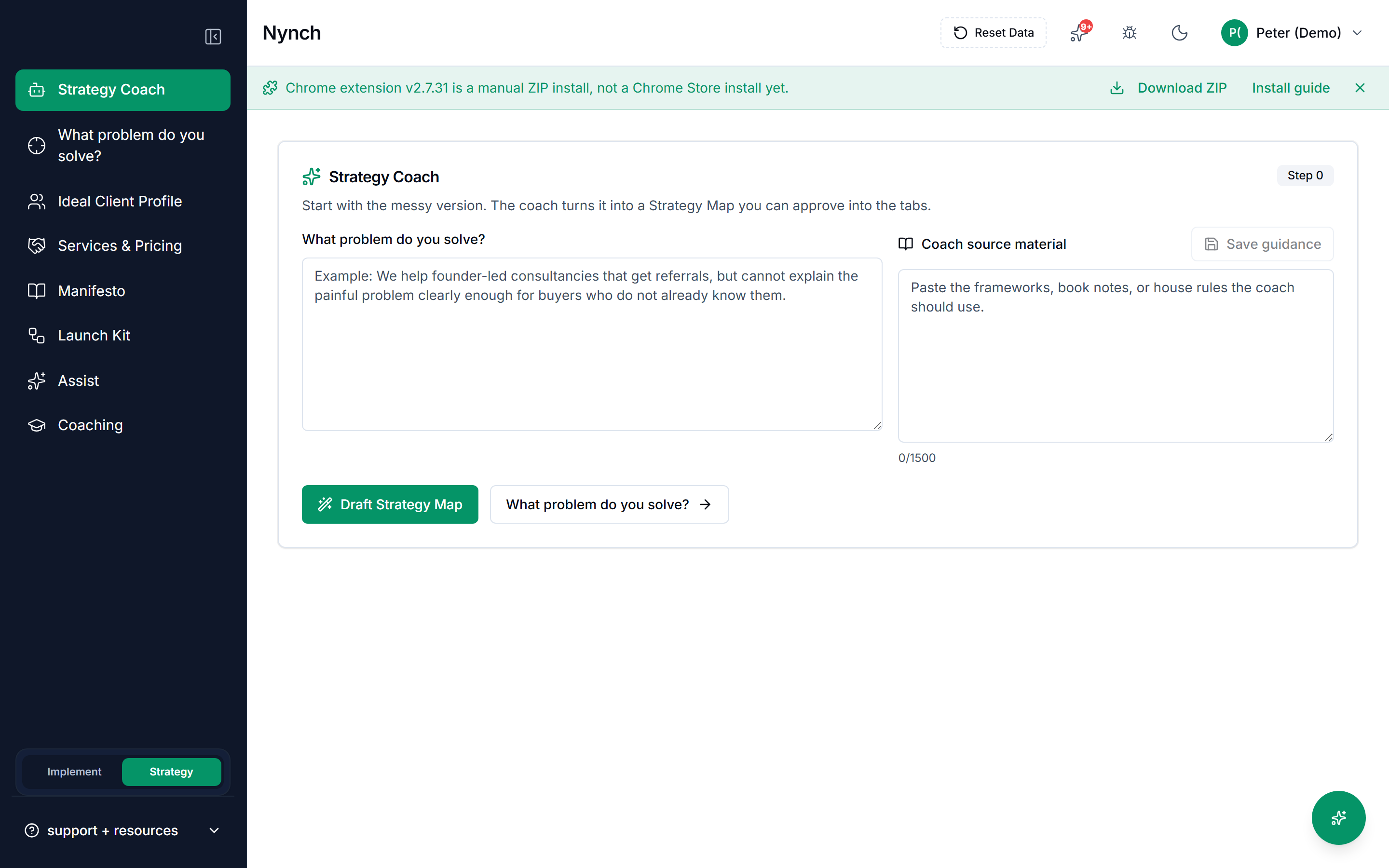
Provide examples of your own writing in Strategy Coach.
Choose examples that reflect the tone you want to use.
Writing style and AI Archetype
Give Nynch examples of your writing and a clear view of how you work with clients. Refine prepared messages so they fit your voice and the relationship.
See how it works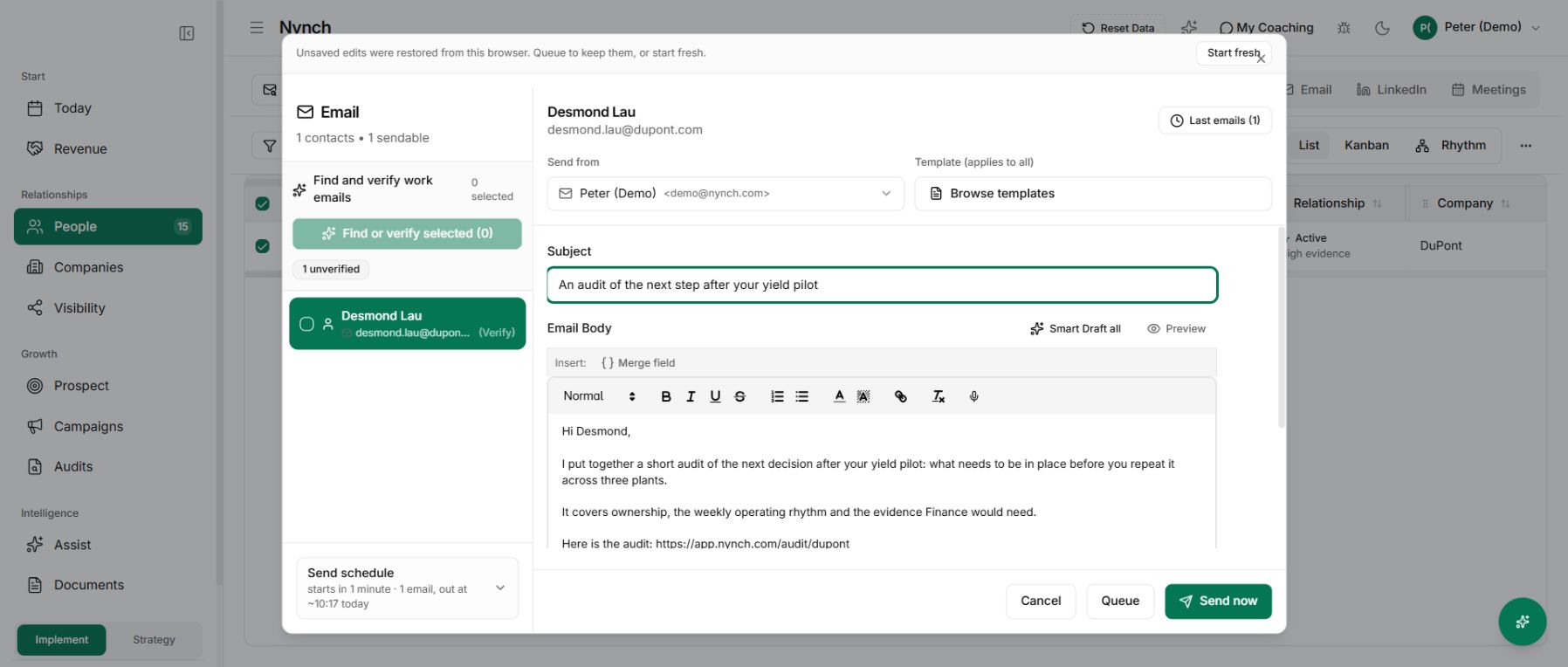
What gets in the way
Your clients recognise how you think and communicate. Generic AI language can make a personal conversation feel unfamiliar.
A warm relationship gets an overly formal or pushy introduction.
The draft lacks the detail that explains your work.
You repeatedly replace the same phrases and assumptions.
How Writing style and AI Archetype works
Use your own language and business context, then keep the final edit personal.
Provide examples of your own writing in Strategy Coach.
Choose examples that reflect the tone you want to use.
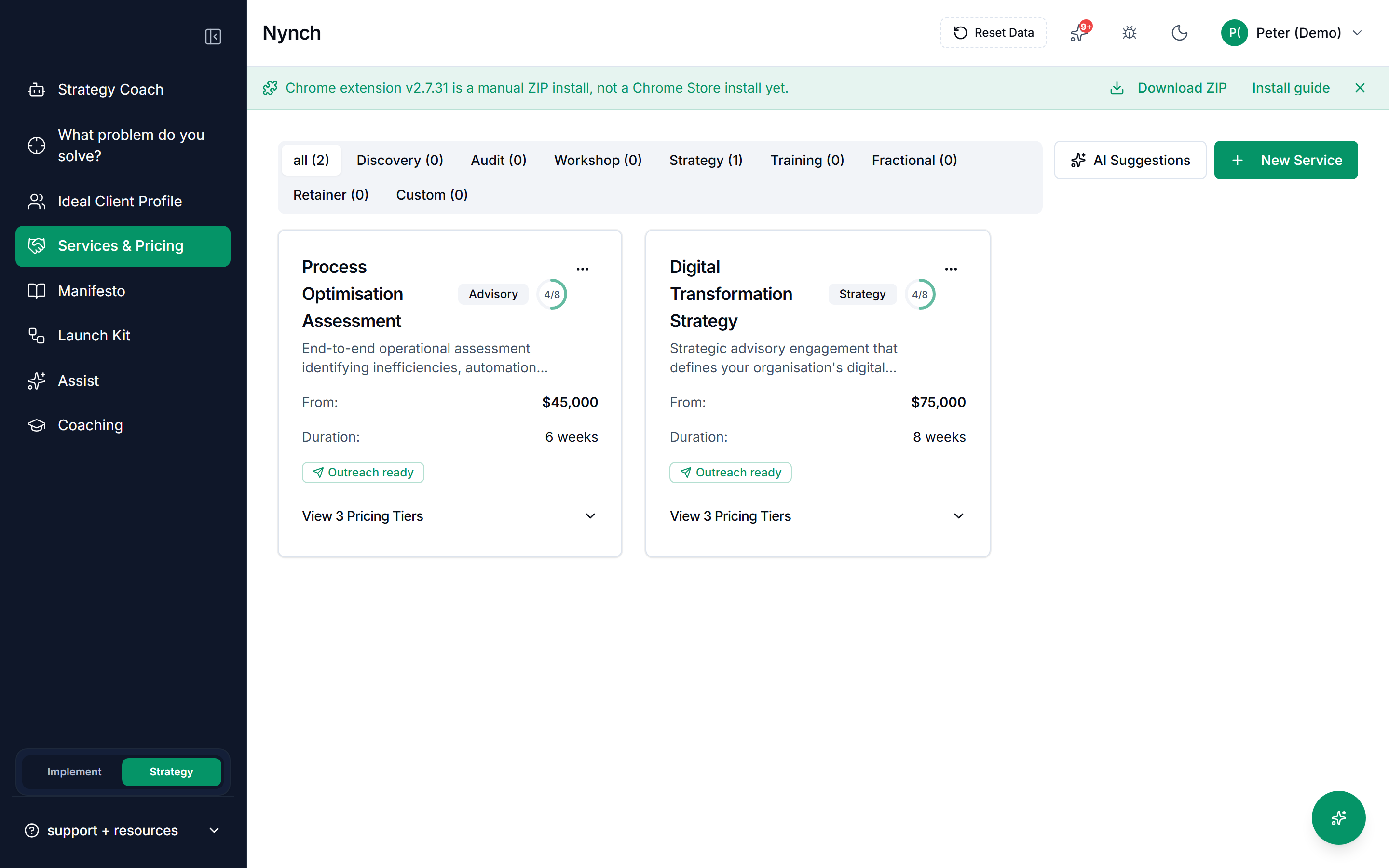
Keep your service, buyer and point of view clear enough to guide a useful message.
Style cannot compensate for an unclear offer.
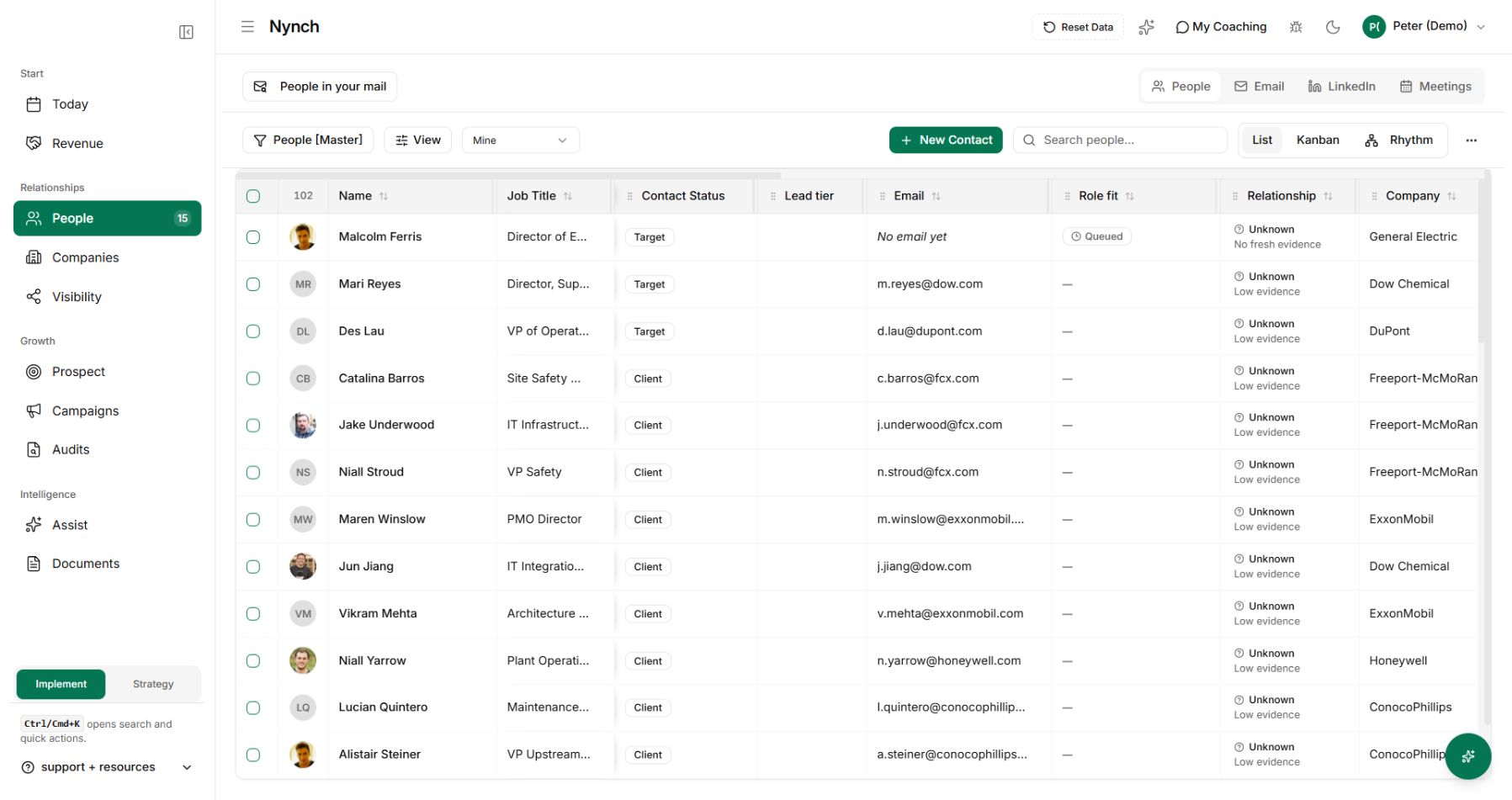
Review the relationship and purpose before choosing how direct or detailed the message should be.
A familiar client needs a different opening from a first introduction.
Review the language, remove generic phrases and add the detail only you know.
Check facts and tone before sending.
What Nynch decided, and why
Your style sets where Nynch starts: how it sounds, how much it says and how often it reaches you. These are the rules behind that, and what you still decide yourself.
Nynch offers four styles: Trusted Advisor, Growth Partner, Strategic Consultant and Fractional Executive. Each one starts with its own tone, level of detail and alert rhythm. Anything you change on the later screens is saved over that starting point.
Doing it yourself: Setting tone, length and alert rhythm yourself means making each of those choices again from scratch, with nothing to start from.
Strategic Consultant allows three Telegram alerts a day, Trusted Advisor five, Fractional Executive seven and Growth Partner ten. Once the day’s count reaches the cap, further alerts are not sent to Telegram until the next day. The morning briefing is not held to the cap.
Doing it yourself: You would have to count the alerts each day and switch channels off by hand as the number climbs.
When Nynch writes an email, it looks at the emails you sent that got a reply and at which message lengths got replies, then uses them to shape the next draft. Emails that got no reply are not used as a model.
Doing it yourself: Matching your sent emails to the replies they earned, and noticing which lengths worked, is analysis you would have to do yourself.
One connected Nynch platform
Prospecting, relationships, meetings, proposals, Deal Rooms and client growth work together in Nynch. Start with the job you need to do today. Keep the context as the relationship develops.
The details
Use something you wrote yourself and would be happy to sound like again, such as a thoughtful email, post or explanation of your work. Avoid samples that do not represent your current voice.
No. Your examples and preferences improve the starting point, but a final human edit remains important.
It should not. Check factual claims independently of tone and remove any unsupported statement from the draft.
Yes. Review the relationship, the purpose and the level of familiarity. Edit the message accordingly rather than applying the same tone to everyone.
Your writing examples and point of view also provide a stronger starting point for content drafts. Review the finished piece against your own voice and evidence.
Make the reason for writing and the useful contribution explicit. Replace pressure with a reasonable next step that fits the relationship.
See how your context shapes a personal draft.