01Opportunity review
Start with the deal you need to move.
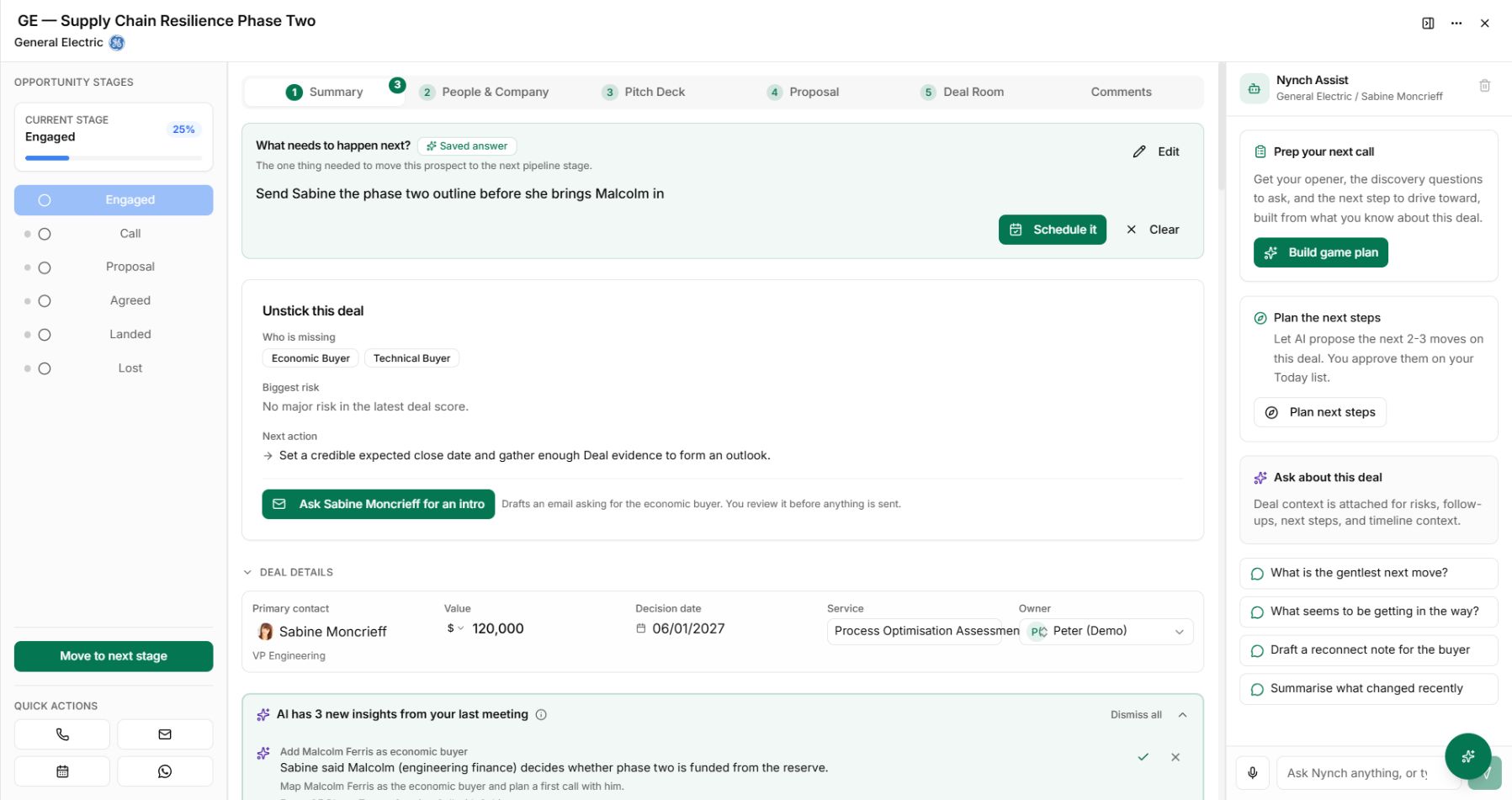
Open the opportunity and review its current position, people and next action.
Use the real deal context as the starting point.
Sales Canvases
Work through the opportunity, people and open questions in one place. Bring structure to the decisions behind a proposal, meeting or account plan.
See how it worksWhat gets in the way
A stage and a value tell you where the record sits. They do not tell you what the buyer still needs to decide or which conversation should happen next.
You know there are gaps but have not made them explicit.
You recap what happened without choosing what should happen next.
You start writing before the buyer’s problem and decision are clear.
How Sales Canvases works
Use the opportunity as a working space for the next conversation, not just a place to store a number.
Open the opportunity and review its current position, people and next action.
Use the real deal context as the starting point.
Review who is involved and the conversations you have had. Separate what is confirmed from what you still need to ask.
A missing buyer role or unclear commitment deserves a conversation.
Prepare questions that resolve the gap instead of repeating a general catch-up.
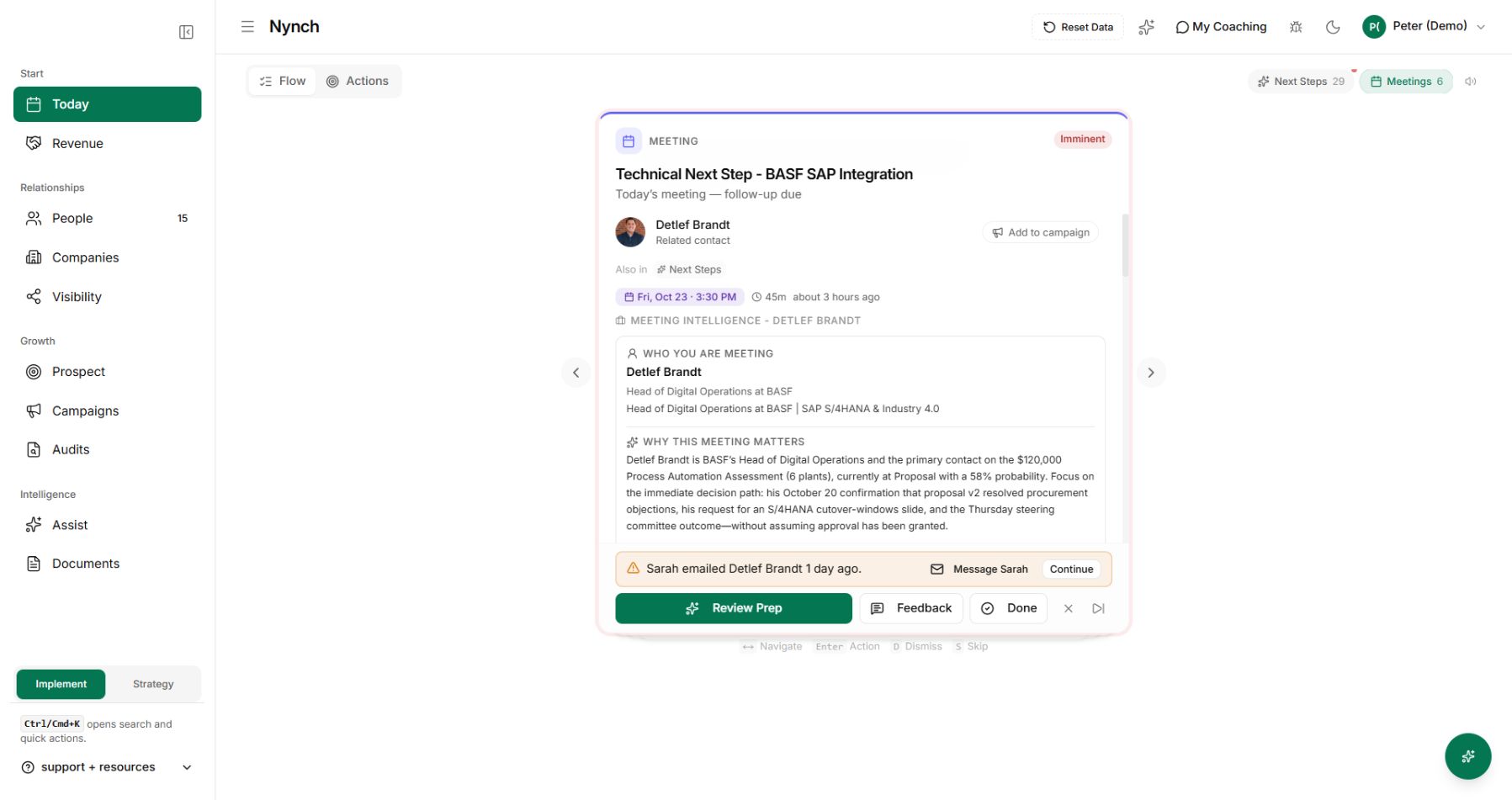
Use the relationship history to make the discussion specific.
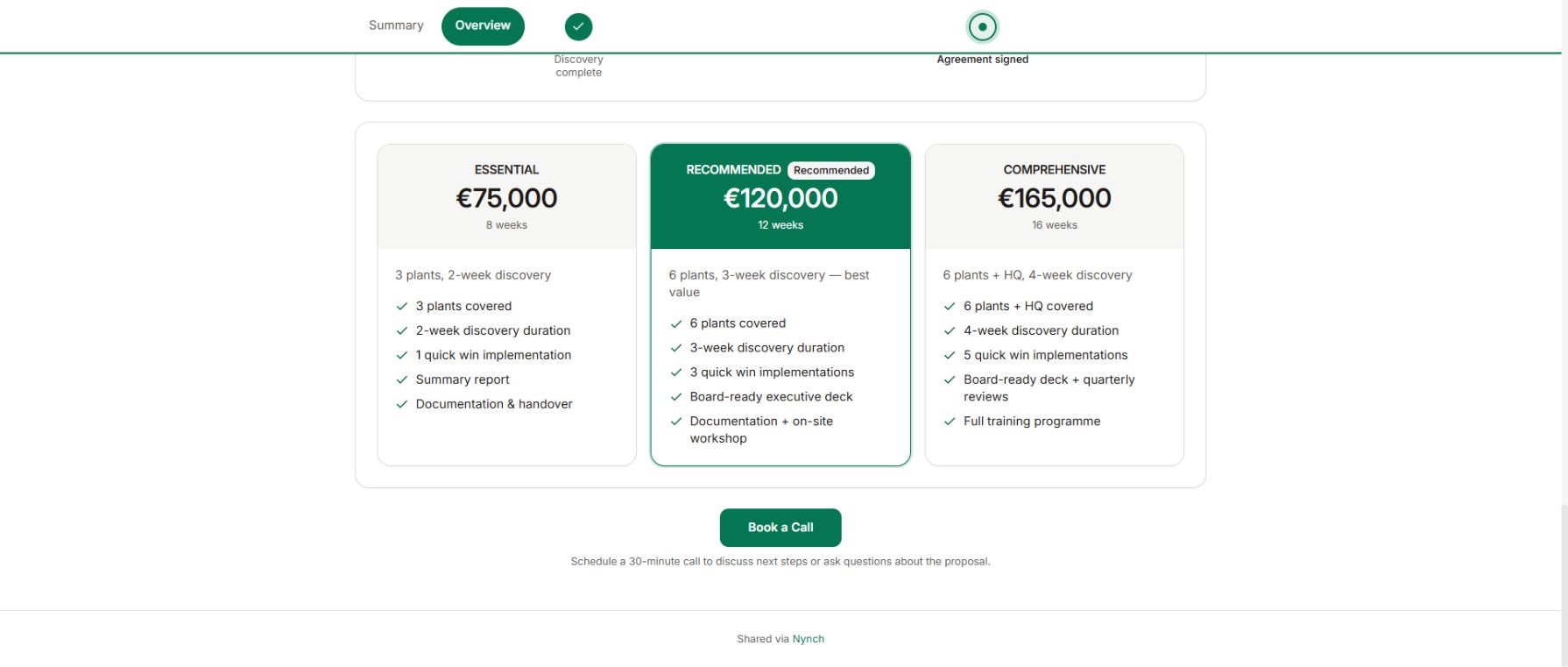
Carry the agreed approach into a proposal or Deal Room with clear materials and next actions.
Keep the internal review separate from the version shared with the buyer.
What Nynch decided, and why
The canvas puts the buyers, the risks and the next move on one page. These are the rules that decide what it flags as missing, which risk it shows and what never reaches the buyer.
The three roles are the ones a deal most often stalls without: someone who can approve the spend, someone who backs it inside, and someone who can judge the technical fit. The canvas names up to two missing roles, most important first, so the gap becomes a question you can answer.
Doing it yourself: You would need to check each deal’s people against three roles and keep that list current as contacts change.
Nynch takes the biggest of five signals from the nightly deal score: no two-way contact, a close date pushed back, slowing replies, a stuck stage or a cooling main contact. A signal shows only when its weight is at least eight points, so a small wobble does not crowd out a real problem.
Doing it yourself: You would have to rank every deal’s warning signs each week and pick the one that matters most.
Your canvas notes, risks and buyer map are not what the buyer receives. The buyer’s page is built only from the published room, which holds the items you chose to make visible. The working view stays yours.
Doing it yourself: You would have to copy the parts you wanted to share into a separate document and strip the rest out before each send.
One connected Nynch platform
Prospecting, relationships, meetings, proposals, Deal Rooms and client growth work together in Nynch. Start with the job you need to do today. Keep the context as the relationship develops.
The details
It gives a commercial conversation a structure. Use it to review the opportunity, identify open questions and prepare the next decision instead of only updating a pipeline stage.
Yes. Clarify the problem, people, scope and decision path before writing. The review should help you discover what is still missing.
Internal opportunity work and buyer-facing materials are separate. Use a proposal or published Deal Room for the content you intend the buyer to see.
No. Available context can help prepare a review, but an unanswered question remains unanswered until you have reliable evidence. Do not turn a suggestion into a buyer commitment.
Use the review to prepare focused questions, then bring what you learn back into the opportunity. The point is to improve the next conversation.
A clear next action, the person responsible and the question or decision it addresses. If there is no credible next step, reconsider the opportunity’s status.
See how relationship context becomes a practical commercial next step.