01Start with the problem
Put the messy version on the table.
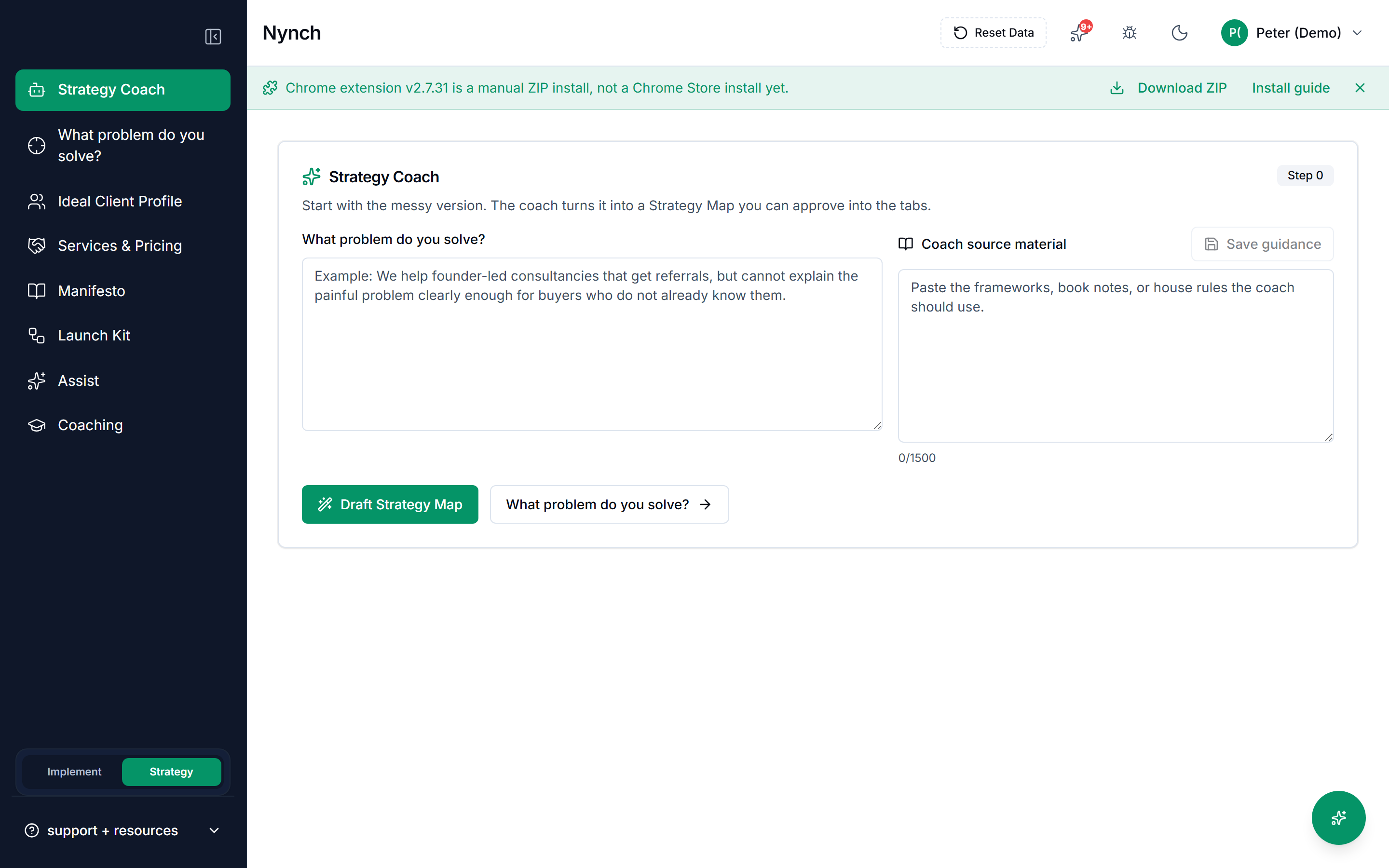
Describe what you are trying to solve and bring your own writing or source material.
Strategy Coach shown for work on your positioning and offer.
Coaching
Bring your strategy, relationships and opportunities into a focused coaching conversation. Work out what matters and leave with a next step you can use.
See how it works
What gets in the way
You are delivering, selling and deciding what to prioritise. The questions that need reflection are often the ones you put off.
You know you could sharpen it, but the day fills up.
You repeat the same hopeful explanation for why the opportunity will progress.
You leave with an idea but no action connected to your work.
How Coaching works
Use your working context to make the coaching specific.
Describe what you are trying to solve and bring your own writing or source material.
Strategy Coach shown for work on your positioning and offer.
Review your buyer, problem and point of view in the strategy canvas.
Challenge assumptions before turning them into claims.
Use the opportunity context to make the next question concrete.
An uncertain buyer decision needs evidence, not reassurance.
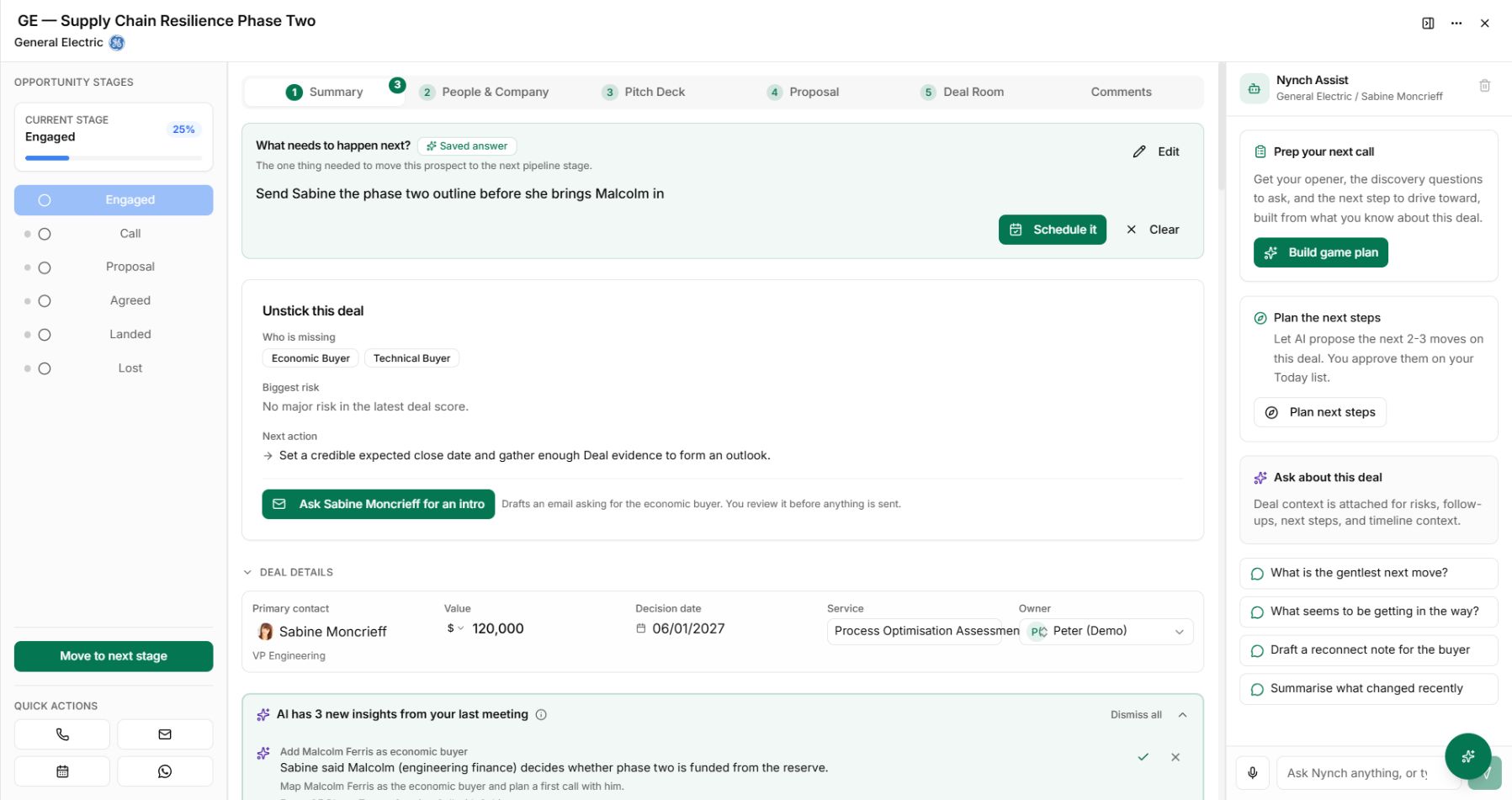
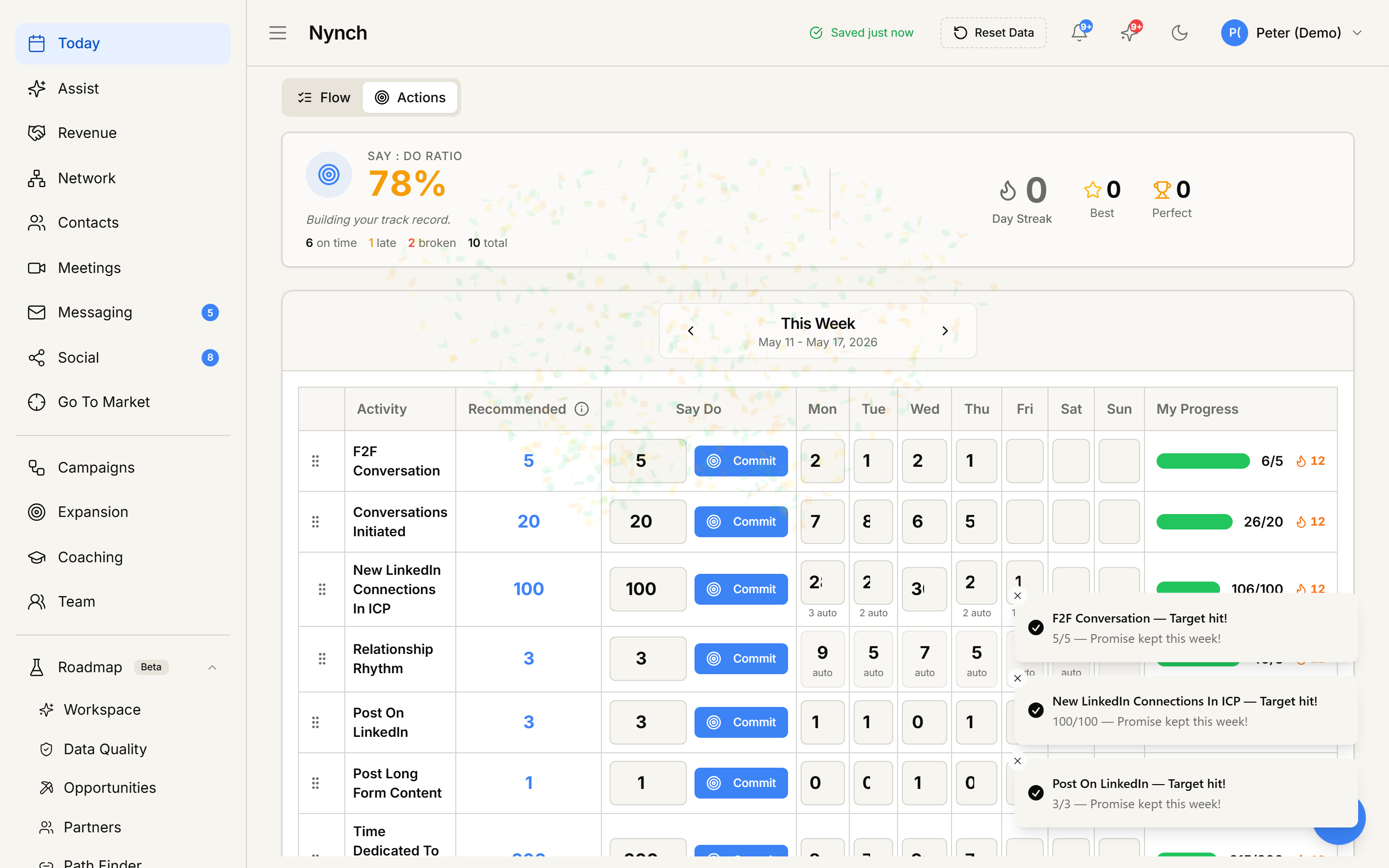
Bring the decision into the week as a conversation, a piece of preparation or a change to your offer.
Return to the result to decide what you learned.
What Nynch decided, and why
Coaching in Nynch is between you and a coach who invites you, and a coach only sees what you choose to share. These are the rules the plan follows, and why each one is hard to keep by hand.
When you share a session, your coach receives a snapshot with its date on it, and that copy does not change afterwards. The snapshot holds the conversation you chose to share, but not revenue, contact details or the records that sit behind them. A later change on your side does not reach the copy your coach already has.
Doing it yourself: Stripping revenue, contact details and underlying records out of a session by hand, then dating the copy, is something you would have to repeat every time you share.
Sharing is off by default in a team workspace, so it is always a deliberate choice. A one-person workspace needs no switch. An owner or admin can turn it off again whenever they choose.
Doing it yourself: You would have to make sure every member of a team knew not to send a session to a coach, and nothing would stop a slip.
The stages run More, Metrics, Market, Model, Money and Manpower, and the plan cannot jump ahead. A money fix belongs at the Money stage or later, and a missing number has to be gathered at Metrics before a later path is chosen.
Doing it yourself: Keeping six stages in order, and checking each one against the numbers before moving on, is easy to rush when a decision feels urgent.
Each chosen path has to say what it will take, what supports it, whether it can be reversed and what would make you stop, with a valid date for the decision. Without those, a plan has no point at which anyone has to decide whether it worked.
Doing it yourself: Writing a stop condition and a valid decision date for every path is possible, but it is the part most likely to be left blank.
One connected Nynch platform
Prospecting, relationships, meetings, proposals, Deal Rooms and client growth work together in Nynch. Start with the job you need to do today. Keep the context as the relationship develops.
The details
Use it to think through your offer, buyer focus, relationship work or a commercial decision. A specific situation gives the conversation a more useful starting point than a broad request for advice.
Bring the question, relevant context and what you have already tried. For strategy work, examples of your writing and client work help make the discussion concrete.
No. It provides a place to work through ideas with your available context. A human coach brings experience, accountability and judgment that an AI conversation does not replace.
Yes, by invitation. A coach invites you to private one-to-one coaching, and you choose what you share with them. Without an invitation, you work through the guided sessions on your own.
No. It can help examine the evidence you have, but it cannot confirm private intentions. Use the session to identify questions for the next real conversation.
Yes. Challenge the advice and revise the thinking. You decide which recommendations fit your experience, commitments and business.
Leave with a clear next action and a way to check what happened. Bring that result back into your strategy or opportunity review.
See a focused coaching conversation connected to your work.