The most reliable source of new consulting work is not blasting strangers. It is warm reactivation of people who already trust you but have simply gone quiet. Reaching out to a dormant contact with a relevant insight is always easier than convincing someone new to take a risk on an unknown consultant.
Do you ever look at your client list and realise you have not spoken to your favourite people in over a year?
You worked with someone in 2023. It was a good project. You liked them, they liked you. But the contract ended, life got busy, and you drifted apart. Now you need new business. You look at their name in your spreadsheet and hesitate. You worry that emailing them now, after so much silence, will look opportunistic. You tell yourself, “If they needed me, they would call.”
If you listen to that fear, you leave your best source of revenue to wither. You force yourself to hunt for strangers who do not trust you, while ignoring the people who already do. The silence grows longer, which makes it even harder to reach out next month.
I will concede the awkward part: after a long gap, some people will not reply, and a few will feel the timing is off. That is still better than never trying, because the people who already know your work remain your cheapest path to new conversations.
Instead of letting those relationships fade into nothing, send a message today that feels like a helpful nudge rather than a sales pitch.
1. Share a “Trigger Event” insight to prove you are still watching their back
Most consultants only reach out when they need something. That is why “just checking in” emails get ignored. They signal that you are bored or hungry. To wake up a dormant contact well, reach out when they need something, even if they do not know it yet.
A trigger event is a shift in their world (a new regulation, a competitor’s move, or a technology change) that creates a problem you can solve. When you reach out with an insight about that event, you position yourself as someone looking out for their interests. You are not selling. You are alerting. That removes the awkwardness of the silence, because the reason for your email is external (the event), not internal (your need for money).
The upside is large. It re-establishes you as a trusted advisor quickly. It shows that even when you were not being paid, you were still thinking about their business. That often prompts a “We were just talking about this” response, which leads straight into a scoping call.
For example: imagine you are a compliance consultant. You see that a new EU directive was passed yesterday. You used to work with a Director of Operations named Sarah. You have not spoken in 14 months. If you email her saying “Do you have work?”, she will delete it. If you email her saying, “Sarah, I saw this directive passed and thought of your setup in the Frankfurt office - you might need to check your data privacy protocols before Q4,” she will thank you.
Action Step:
Open a news site relevant to your niche. Find one headline from the last week that implies a risk or opportunity for your past clients. Find 3 dormant contacts who are affected. Send them the link with this note:
“Saw this and thought of you instantly. Hope you’re ahead of it, but shout if you want a second pair of eyes on the implications.”
2. The “Contextual Memory” play to bridge the time gap naturally
The hardest part of reconnecting is the opening line. “It’s been a while” feels clunky. Anchoring the outreach in a specific, shared positive memory from your past work gets you past that.
When you reference a concrete detail (a difficult deadline you hit together, a funny moment in a workshop, or a particular win), you trigger nostalgia. You remind them of the time when you were valuable to them. That warms the relationship quickly. It shifts the dynamic from “Vendor X is emailing me” to “My old ally is saying hello.”
This usually gets a high response rate because it is personal. It cannot be automated. It proves a human wrote it. Often the client will reply with an update on their current struggles, which gives you an opening to suggest a coffee.
For example: you worked with a Marketing Director two years ago to launch a rebrand. You see that brand is now running a new TV ad.
Action Step:
Scroll through your “Project Completed” folder. Pick one client from 2022. Remember one specific struggle you overcame together. Email them:
“I was just driving past your HQ and remembered that late night we spent fixing the launch deck. I hope the team is getting more sleep these days! How are things?“
3. use their content to restart the conversation without a “pitch”
Sometimes you have no news and no specific memory to share. In that case, use their activity as the hook. If your dormant contact is active on LinkedIn or has been quoted in the press, they are already looking for engagement. They want to be heard.
Building on their content is the lowest-friction way to reconnect. You are validating their work. By leaving a thoughtful comment or sending a private message about something they wrote, you are supporting them. It is flattering without being oily. It places you on the same side of the table.
Done well, this moves you back into their active network, ready for a meeting when the moment is right. It is a soft touch. If you do this twice in a month, you become familiar again. Then, when you do send the email asking for a catch-up, the door is already open.
For example: your dormant contact posts on LinkedIn about “The challenges of remote leadership.” Most people click “Like.” You send a DM:
“Great post, James. Your point about ‘over-communication’ really landed with me. Are you finding that sticking, or is the team still drifting?”
Action Step:
Go to LinkedIn. Search for a dormant client. Click “Show all activity.” Find their last post or comment. Send them a direct message referencing it specifically. Do not pitch. Just validate their point and ask a follow-up question.
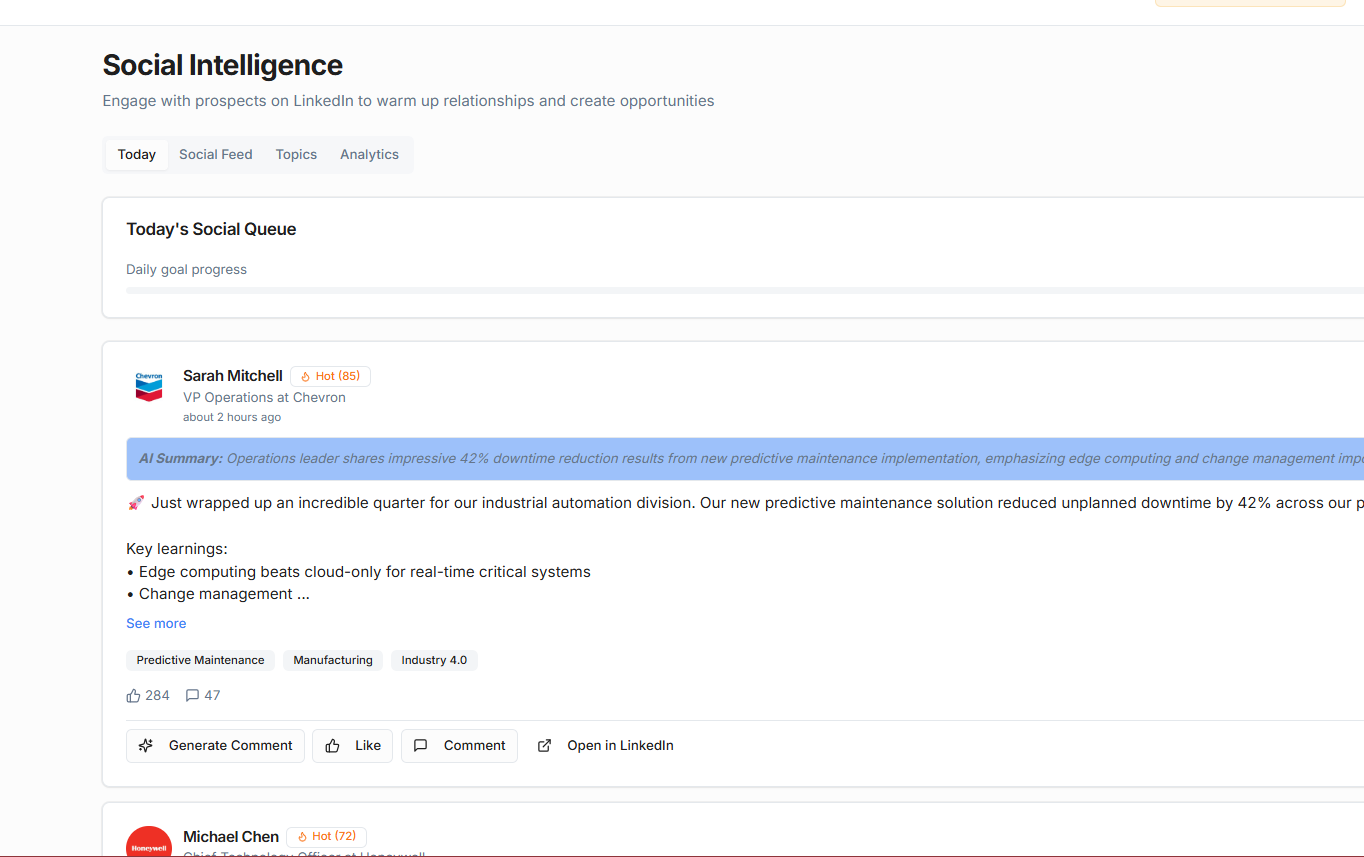
How Nynch Helps You With This
Waking up dormant contacts takes mental energy. You have to remember they exist, find a reason to talk, and get past the fear of being annoying.
Nynch handles the memory and the motive for you. It is the AI CRM for consultants who grow through relationships, so the system keeps the history you cannot hold in your head.
It watches the clock: Nynch tracks how long it has been since your last interaction. When a contact hits the six-month silence mark, it surfaces them in your daily dashboard.
It finds the trigger: background AI scans industry news and your contact’s activity. If a dormant client is mentioned in the press or their industry has a major shift, it flags it.
It drafts the opener: Nynch suggests a trigger-event email so you do not have to stare at a blank screen wondering how to break the ice.
Stop letting your network sleep. Let the system be the alarm clock.
Complement this by re-engaging dormant contacts and executing low-lift outreach to make more of the network you already have.
Read next
- The intent radar, exactly who to call today, read buying signals so your pipeline runs on intent, not guesswork.
- The client command centre, the dashboard consultants actually open every morning to spot risk and expansion early.
- The best AI CRMs for consultants, a side-by-side comparison of every serious option for solo consultants and boutique firms.
Frequently Asked Questions
How do I wake up my dormant network without cold calling?
Use trigger events as your reason to reach out - a new regulation, a competitor move, a technology change - that creates a problem you can solve. Reaching out with an insight about something happening in their world positions you as a guardian of their interests, not a consultant looking for work.
How do I reactivate old consulting clients after a long period of silence?
The contextual memory approach is most effective: reference a specific shared experience from the past engagement - a difficult deadline, a particular win, a challenge you overcame together. This re-establishes the relationship as collaborative rather than transactional and gives the client a warm emotional entry point.
How long can a consulting relationship go dormant before it’s too difficult to revive?
Most professional relationships can be revived at any point with the right hook. The key is that the hook must be genuinely relevant to them - not a generic check-in. A compelling insight or trigger event makes even a three-year gap feel natural to bridge.
What is the best first message to send to someone you haven’t spoken to in over a year?
Lead with something happening in their world, not yours. A brief message referencing a relevant news story, a congratulatory note on a recent achievement, or a comment on something they have published recently signals that you have been paying attention without requiring them to respond to a sales pitch.