The fastest way to re-engage dormant contacts is a personalised outreach that references your shared history, not a pitch. Networks are not single-use: circumstances change, budgets open, people move roles, and the no from six months ago is frequently a yes today, but only if you are still in contact.
Do you ever stare at your contact list and feel like you have already used up everyone who might hire you?
You did a big push for business six months ago. You emailed everyone. You had some coffees. You won a few engagements. But now the list feels exhausted. You look at the names of people you spoke to last year and think, “I can’t email them again, I’ll be a pest.” You assume that because they didn’t buy from you then, they won’t buy from you now.
If you believe that, I think you are walking away from most of your potential revenue, easily the majority of it, often in the ballpark of 80% if you only ever work the people who said yes last time. Networks are not single-use batteries. They are renewable. Circumstances change. Budgets open up. People move jobs. The no from January is often a yes in July, but only if you are there to ask.
Instead of hunting for cold strangers, circle back to the people who already know you in a way that feels helpful, not repetitive.
1. The “Human Check-in” to test the water
We often overcomplicate outreach because we think we need a business reason to talk. We think we need a new brochure, a new case study, or a new offer. But when you are mining an existing network, the best reason to reach out is simply that you haven’t spoken in a while.
A human check-in works because it has zero commercial pressure. You are not asking for work. You are asking how they are. This lowers their guard. It allows them to reply without fearing a pitch. Once they reply, they will naturally ask you how you are. That is your opening to mention you have capacity for a new project.
The strength of this approach is volume. You can send this to anyone, former colleagues, university friends, ex-clients, without risking your reputation. It revives the relationship first, so the business can follow second.
For example: you have a contact, Mike, who you haven’t spoken to since a conference in 2022.
Action Step:
Open your phone contacts. Scroll to the letter ‘M’. Find three people you like but haven’t spoken to in over a year. Send this SMS or WhatsApp:
“Hi [Name], just walked past [Location/Context] and thought of you. Realised it’s been ages. Hope life is treating you well?“
2. The “Nostalgia Trigger” to anchor your value
If you want to remind a dormant contact of your professional value without listing your services, remind them of a time you solved a problem together. Nostalgia is a powerful emotion. It transports the person back to a moment when you were a team.
By referencing a specific war story or shared win, you subtly remind them of your competence. You aren’t saying “Hire me.” You are saying “Remember when we crushed that deadline?” The natural response is for them to compare that success to their current struggles.
The strength here is conversion. If they are currently struggling with a similar issue, your email acts as a lifeline. They remember that you are the person who fixes this specific type of mess.
For example: you worked with a Creative Director on a difficult launch.
Action Step: Find a folder of old work on your laptop. Open a project from 2 years ago. Email the stakeholder:
“I was archiving some files and found the launch deck for [Project]. Hard to believe we got that live in 3 weeks. Still one of my favourite sprints. Hope you’re working on slightly calmer projects these days!“
3. The “Contextual Update” to capture life changes
Your network feels tapped out because you view your contacts as static. You think of “Sarah at Acme Corp.” But Sarah might have left Acme Corp. Or she might have been promoted. Or Acme Corp might have just acquired a competitor.
A contextual update means watching your dormant list for life changes. When a change happens, the silence clock resets. You have a brand new reason to reach out that is entirely about them.
The strength is that change creates chaos, and chaos creates consulting work. If Sarah has a new job, she has new problems. If you are the first to congratulate her, you are the first in line to help her solve them.
For example: you see a dormant contact has been promoted to Head of Strategy.
Action Step:
Go to LinkedIn. Click “My Network” then “Celebrations.” Look for “Job Changes.” Find one dormant contact who moved recently. Message them:
“Saw the news about the new role. Massive congrats. Does the new remit cover [Your Area of Expertise] too, or are you escaping that for now?”
How Nynch Helps You With This
Re-engaging dormant contacts is a memory game. You have to remember who you know, when you last spoke, and what you did together.
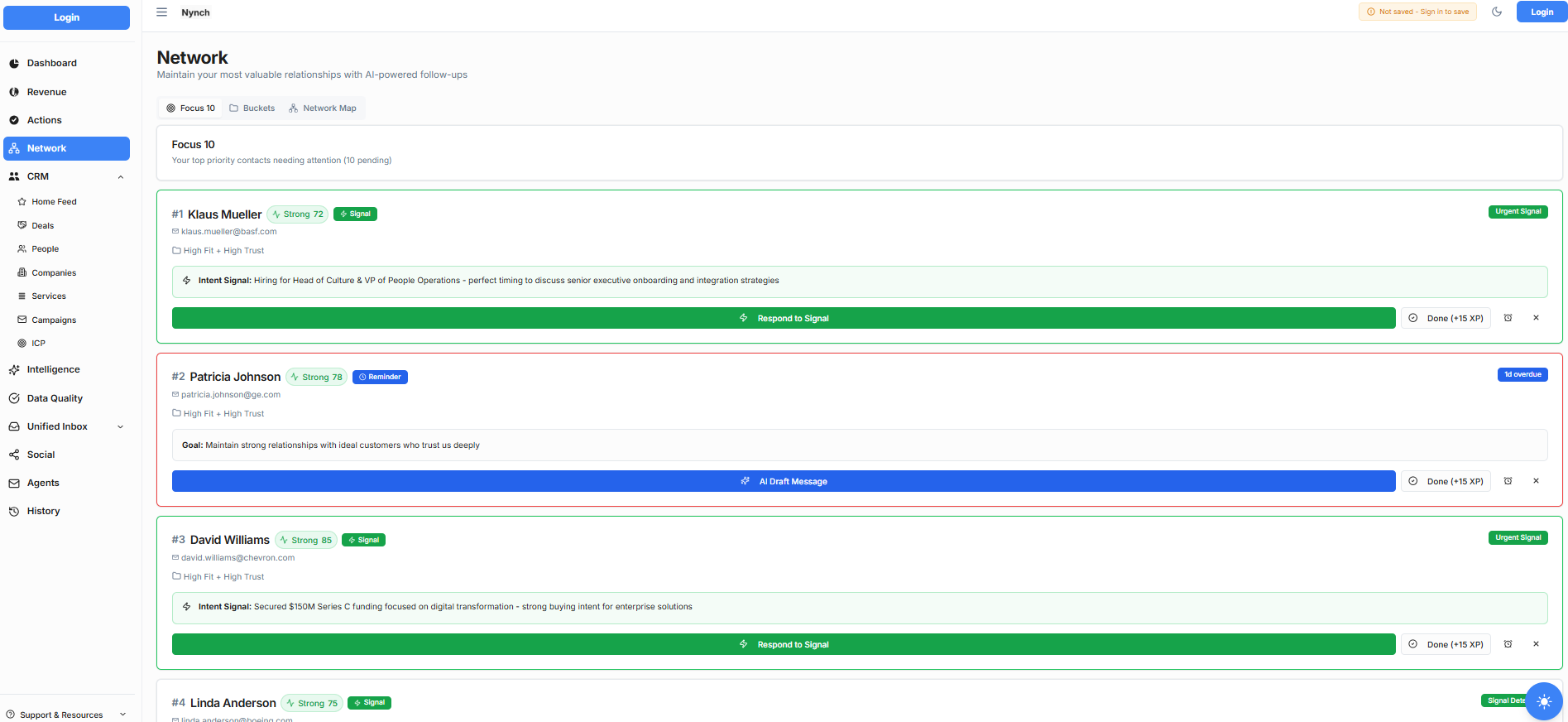
Nynch serves as your external hard drive. It is the AI CRM for consultants who grow through relationships, so it keeps the history you cannot hold in your head.
It maps the timeline: Nynch shows your entire relationship history, so you can see exactly when you last spoke to everyone and spot the gaps.
It suggests the hook: not sure what to say? Nynch looks at your past interactions and suggests a nostalgia-style opener based on your shared history.
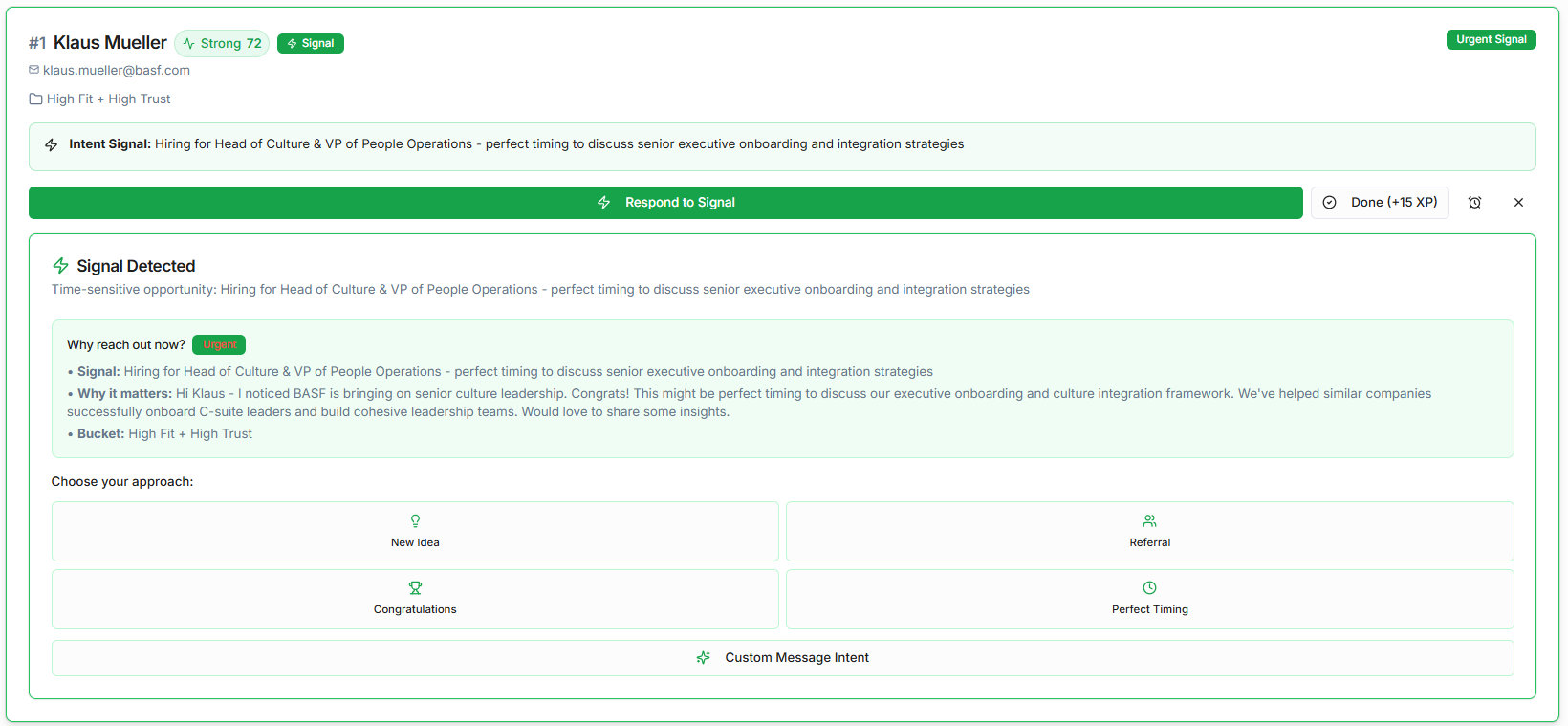
It tracks the changes: Nynch monitors your contact list for job moves and title changes, and flags those contextual updates so you do not miss a good moment to reach out.
Stop letting your network rust. Let the system keep the history visible.
If you’re building on these techniques, learn how to wake up your dormant network systematically and use low-lift outreach to start conversations.
Read next
- Wake up your dormant network, fill your week with warm conversations from people you already know.
- 4 Ways To Know If You Are Sitting On A Goldmine Of Dormant Revenue, You are chasing cold contacts while sitting on a pile of warm ones.
- The intent radar, exactly who to call today, read buying signals so your pipeline runs on intent, not guesswork.
Frequently Asked Questions
How do I re-engage dormant contacts without looking desperate?
The most effective approach is to lead with something that is genuinely about them - a life event, a shared memory, or a relevant piece of market news - rather than your own commercial needs. This removes the ‘I need work’ signal and replaces it with a ‘I was thinking of you’ signal, which triggers a very different response.
How long is too long to wait before re-engaging an old contact?
There is no hard limit, but after two years of silence the bar for a compelling reason to reach out rises. A genuine contextual hook - a new role, a shared industry event, a relevant article - makes any gap acceptable. The mistake is reaching out with a generic ‘just checking in’ after a long silence.
What is the best way to reconnect with a former client?
Reference something specific you worked on together. Nostalgia is a powerful opener because it reminds them of a time when you solved a problem together, which naturally surfaces thoughts about current problems they might need help with. A specific memory beats a generic check-in every time.
How do I use job changes as an outreach trigger for dormant contacts?
When a dormant contact changes role, the silence clock resets. A new role means new problems, new budget authority, and new pressure - all of which create demand for external expertise. Monitor your contact list for job changes and reach out within the first two weeks of a transition, when the need is highest and the relationship is still fresh.