The fastest route to a signed renewal is removing friction, not adding detail. A lightweight one-page amendment that references your original agreement will get signed faster than a comprehensive new proposal almost every time. Every extra page the client has to read is another day the contract sits unsigned.
You already have the verbal yes. They want to keep working with you. Then you go away to write the proposal. You agonise over the wording for three days. You finally send a twenty-page PDF. Silence. The client is “reviewing it.” The weekend comes and goes. Monday turns into Thursday. Suddenly you are close to the contract expiry date and still have no signature.
If you overcomplicate the extension proposal, you hand the client homework. They have to read, digest, and often get legal approval for a heavy document. Friction kills renewals. Every day that proposal sits unsigned is a day they might change their mind or lose budget.
Send something easier to sign than to ignore. Three habits make that real.
1. The “Assumption” Approach to remove the decision fatigue
The biggest mistake consultants make is asking the client to scope the next phase.
“What do you want to do next?” is a terrible question. It forces the client to do the work.
Draft the proposal from what you already know they need. Do not interview them for their own next phase. Send it with a short note:
“Based on our last quarter, I’ve drafted the scope for Q4 to keep our momentum. If this looks right, just click sign.”
That is where the speed comes from. You skip the back-and-forth scoping loop. Anchoring the proposal in your expert view makes it the default path. People prefer defaults.
Concrete example: you know they need to move from audit to implementation. Do not ask. Write the implementation scope and send it.
Action Step:
Open your last proposal. Duplicate it. Change the dates. Update the deliverables to Phase 2. Send it today with the subject line:
“Ready for Phase 2 - Agreement attached.”
2. The “Menu of Options” to eliminate the binary “No”
If you send one price, the answer is yes or no. If the price feels high, the answer is no, and the opportunity stalls while you renegotiate.
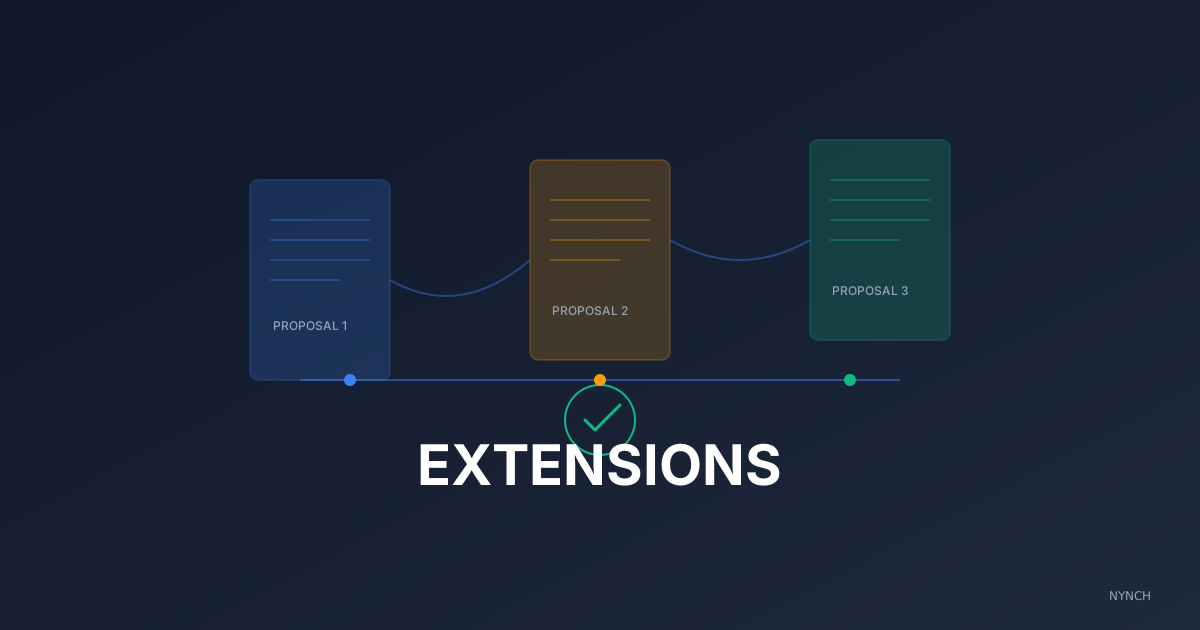
Give them three choices instead: Maintain (lower price, less work), Momentum (same price, same work), and Accelerate (higher price, more work).
The question shifts from “Should we hire them again?” to “Which option fits us best?” Most clients pick the middle option. The menu makes them feel in control even when the recommendation is obvious.
Concrete example: Option 1, £2k a month (maintenance only). Option 2, £5k a month (current pace). Option 3, £8k a month (fast-track).
Action Step:
Take your current retainer fee. Create a lite version at about half the cost and a heavy version at about one and a half times the cost. Put both on the proposal page next to the current pace.
3. The “One-Page” Amendment To Bypass Legal
Big contracts scare legal teams. They have to review every clause. That takes weeks.
Do not write a new contract. Write a one-page extension amendment that references the original Master Services Agreement they already signed.
“All terms remain per the original agreement. Only the dates and deliverables are updated.”
Often a budget holder can sign an amendment, while a new contract needs General Counsel and a long queue. That single page is how you avoid the legal trap without looking casual.
Concrete example: do not send a twenty-page deck. Send a one-page PDF that says:
“Extension of Services for Client X. Period: Jan-Jun. Fee: Same as previous.”
Action Step:
Check your original contract. Does it have an MSA clause? If yes, create a simple Change Order document today and send that instead of a full proposal.
How Nynch Helps You With This
Drafting proposals is boring admin. It pulls you away from billable hours.
Nynch takes the paperwork load down.
Clone the last win: Duplicate your previous successful proposal in one click and update the dates automatically so you do not introduce copy-paste errors.
Suggest the menu: From your project history, Nynch’s AI can suggest higher and lower options for the menu, so you get a strategy, not just a document.
Track the view: You can see when the client opens the proposal, which tells you when to call for the signature.
After identifying expansion opportunities, draft extension proposals quickly and learn how to pivot wrap-up meetings into extensions.
Read next
- The intent radar, exactly who to call today, read buying signals so your pipeline runs on intent, not guesswork.
- 5 Ways To Know If A Client Is Talking To Competitors Behind Your Back, You think you are the only one, but you aren’t.
- The client command centre, the dashboard consultants actually open every morning to spot risk and expansion early.
Frequently Asked Questions
How do I get a consulting extension proposal signed quickly?
Remove friction by sending the simplest possible document - a one-page amendment referencing your original contract rather than a new 20-page proposal. Combine this with an ‘assumption win’ where you draft the scope based on your expert judgment so the client only has to approve, not invent.
What should a consulting extension proposal include?
A strong extension proposal needs just four elements: the updated dates, the revised deliverables, the fee, and a reference to the original agreement. Anything beyond that adds review time and creates opportunities for hesitation. Keep it to one page whenever possible.
How do I avoid the binary yes-or-no when renewing a consulting contract?
Present three options rather than one price: a reduced maintenance level, the current pace, and an accelerated scope. This shifts the client’s decision from ‘should we renew?’ to ‘which option fits us best?’ - and most clients choose the middle option.
How do I bypass legal review for a consulting contract renewal?
Use a Change Order or Amendment document that references your original Master Services Agreement rather than creating a new contract. A budget holder can usually sign an amendment without legal review, whereas a new contract requires General Counsel approval and can take weeks.