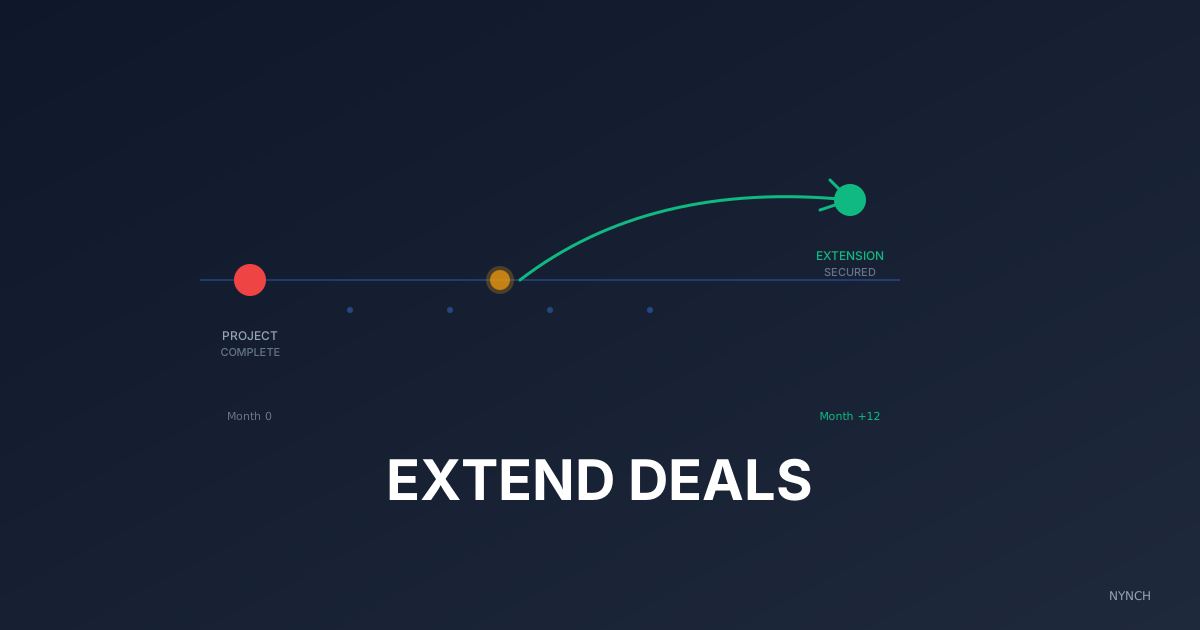
If you treat the final project meeting as a conclusion, you are firing yourself. The wrap-up is often the highest-use sales moment in a consulting engagement because the client’s trust in you is at its peak. Reframing that meeting from looking back to looking forward is a simple change that separates consultants who renew from those who constantly restart.
I have watched strong consultants dread the “final review” for one reason only. They know the calendar invite is quietly ending their income.
You are in the last month of a project. The work is done. The client is happy. You schedule the wrap-up call to hand over the deliverables. You smile, pass over the passwords and the final report, and practically hold the door open. You hope they will ask you to stay. They say “Thanks, great job,” and the Zoom screen goes black.
Treat that meeting as a conclusion and you frame the relationship as a transaction with a hard stop. You force the client into a brand new buying decision if they want to keep you, which creates friction they did not need. A better move is to spot adjacent problems during the wrap-up so expansion feels natural rather than bolted on.
The meeting should not feel like a goodbye. It should show them that the work has only just reached a useful starting point.
1. Rename the meeting to shift the psychological frame
Words matter. Invite a client to a “Project Wrap-Up” and they arrive ready to say goodbye. They bring a closure mindset. They are thinking about archiving files and shutting down costs. You have lost the room before you join the call.
To open the door to an extension, change the frame from looking back to looking forward. Signal that finishing phase one is the prerequisite for phase two, not the end of the story. Rename the meeting and you change their expectations. They arrive ready to plan, not to cancel.
You also bypass a lot of the awkward sales pitch. You are not begging for a new contract. You are continuing the logic of the work so the next step feels inevitable rather than optional.
Example: you have finished a three-month SEO audit. Instead of “Final Audit Review,” call the meeting “Q4 Growth Strategy and Implementation Roadmap.”
What to do next: open the calendar invite for the final meeting. Change the title to:
“Phase 1 Outcomes and Phase 2 Strategy.”
In the agenda, add a bullet point:
“Identifying the risks of stopping now.”
2. Present the “Maintenance Gap” to create urgency
Clients often believe that once a system is built or a strategy is written, the work is done. They undervalue execution and maintenance. They assume a junior internal person can take over. That is where projects quietly fail, and most clients know it somewhere under the optimism.
Pivoting the meeting means showing the maintenance gap in plain language: what will break, drift, or stall if expert oversight stops now. You are not threatening them. You are consulting them. A strategy without a steward is a liability. That creates a natural case for a light-touch retainer to oversee implementation.
What you are really selling here is long-term advisory work. Those retainers tend to be high-margin because they need your judgement more than your hands. You get paid to stop the junior team undoing the hard part of what you just built.
Example: you built a new financial reporting dashboard. Show them that without monthly calibration, the data will drift and become unreliable within about 90 days.
What to do next: add one slide to your final deck titled “Risks of Momentum Loss.” List three specific things that will decay if expert oversight is removed next month.
3. The “Horizon” pitch to sell the next mountain
When you are deep in delivery, you live in the weeds. The client forgets that you think strategically. The final meeting is your chance to zoom out. Show them the horizon: the opportunities they cannot see yet because they are still staring at the problem you just fixed.
A horizon pitch means showing what their competitors are doing next. You paint a future state that is desirable but hard to reach without help. You move the conversation from “we fixed the problem” to “now let’s capture the opportunity.”
That is often where contract value grows. You are not only extending the old work. You are selling a clearer, more useful vision that can justify a larger fee.
Example: you fixed their email deliverability issues. Now show them what a tighter customer journey could do for retention and lifetime value, and ask whether that should be the next twelve months of work.
What to do next: spend five minutes looking at the client’s biggest competitor. Find one advanced thing they are doing that your client is not. Bring a screenshot to the meeting and say, “Now that we have fixed the basics, this is where we should aim next year.”
How Nynch Helps You With This
Pivoting a meeting takes preparation and timing. Scrambling for slides five minutes before the call is how good intentions die.
Nynch is there to make the prep less manual.
It can alert you about 45 days before a contract ends, which is enough runway to rename the meeting and build the case without panic.
It keeps hold of the future ideas you noted during delivery so you can pull them into a phase two conversation without reconstructing the project from memory.
It can also suggest a sensible strategic-extension agenda based on the kind of project you ran, so the framing of the meeting does some of the work before you speak.
Stop treating the wrap-up as a goodbye. Use it to ask, clearly and calmly, what should come next.
Read next
- The client command centre, the dashboard consultants actually open every morning to spot risk and expansion early.
- The Hidden Cost of Letting Client Relationships Go Cold, When you don’t hear from a client for six months, something changes in their head.
- Nynch for fractional leaders, how fractional CFOs, CMOs, and COOs build proactive pipeline, protect against cancellation and create more value for clients.
Frequently Asked Questions
How do I turn a project wrap-up meeting into a contract extension?
Rename the meeting before it happens. Calling it a ‘Phase 1 Outcomes and Phase 2 Strategy’ session changes the client’s mindset from closure to planning. The framing of the meeting determines whether the client arrives ready to say goodbye or ready to discuss what comes next.
How do I secure a long-term advisory retainer after a project ends?
Present a ‘Maintenance Gap’ analysis during the final meeting - show specifically what will deteriorate if expert oversight is removed. A strategy without a steward is a liability, and clients who understand this will often opt for a light-touch advisory retainer to protect the investment they just made.
When should I start preparing to extend a consulting contract?
Start 45 days before the contract expires, not in the final week. That window gives you enough time to rename the final meeting, prepare a Phase 2 scope based on what you have learned during delivery, and build a compelling case without the pressure of an imminent end date.
How do I pitch a bigger scope at the end of a consulting project?
Use the final meeting to show the client what their competitors are doing next - not what you just finished. Zooming out to a ‘Horizon’ view shifts the conversation from ‘we fixed the problem’ to ‘now let’s capture the opportunity’, which naturally justifies a larger follow-on engagement.