A proposal shapes revenue for months. A repeatable-quarter plan shapes revenue for the next twelve. Both deserve more deliberate construction than “ask AI to draft me one.”
The previous version of Assist would do exactly that. You’d prompt for a proposal. You’d get a draft. The draft had assumed a service shape, an ICP, a buyer profile, and a next step. Usually plausible, sometimes wrong. The audit happened after the fact.
We watched founding users do something specific: prompt, then reject, then re-prompt with more constraints. Four rounds to get to a draft they’d actually use. The constraint information existed in their head from round one. The tool just had no place to capture it.
So proposal and repeatable-quarter requests now open as workpieces with the decisions surfaced explicitly.
The canvas holds the artefact taking shape. The chat holds the decisions that shape it.
Decisions surfaced:
- Which service. Pick from your existing manifesto-grounded services or define a new one with Assist
- Which ICP. Specific segment, named accounts, or a profile-based audience
- Which buyer. Role, seniority, the language they use for their problem
- What outcome. Defined upfront, not implied
- What next step. Discovery call, paid pilot, signed engagement, repeat engagement
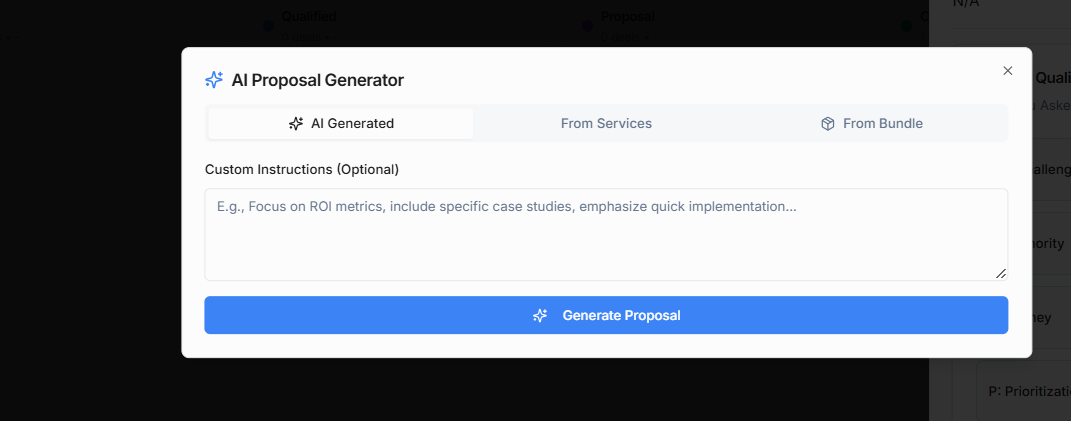
Each decision is editable as the artefact builds. Changing a decision (different buyer, different service, different next step) updates the artefact without restarting.
For repeatable-quarter plans, the same shape covers what you ship and how often. If you reread last quarter’s plan and want to repeat it for the next, Assist drafts the next version from the same workpiece, with the decisions you’ve already made.
What changes for you. The four-rounds-of-re-prompting collapses to one round with the decisions captured. Proposals come out the other side built on what you actually wanted them to say, not the AI’s best guess.