A deal room is the single highest-stakes surface in a buyer relationship. It’s the page the prospect actually visits. It’s the artefact that decides whether the next conversation happens.
Before this release, asking Assist to “build me a deal room for Acme” was a leap of faith. Assist would assemble the room offstage. You’d see a finished link a few seconds later and have to open the recipient view to check what your buyer would actually see. Some founding users were doing this five or six times per deal room. Two minutes per check. Compounded across a week, that’s an hour.
We moved the building to the canvas.
Ask Assist to draft a deal room, and the workpiece opens with every section visible as it shapes:
- Proposal summary, in the buyer’s vocabulary, with the value framed in their terms
- Proof points linked to the underlying evidence (specific case studies, named referenceable clients, signed work)
- Mutual action plan with explicit owners, dates, and acceptance criteria
- Recipient access controls showing who can see what, before any link is generated
- Sharing gates for the link itself: when it goes live, when it expires, who gets notified
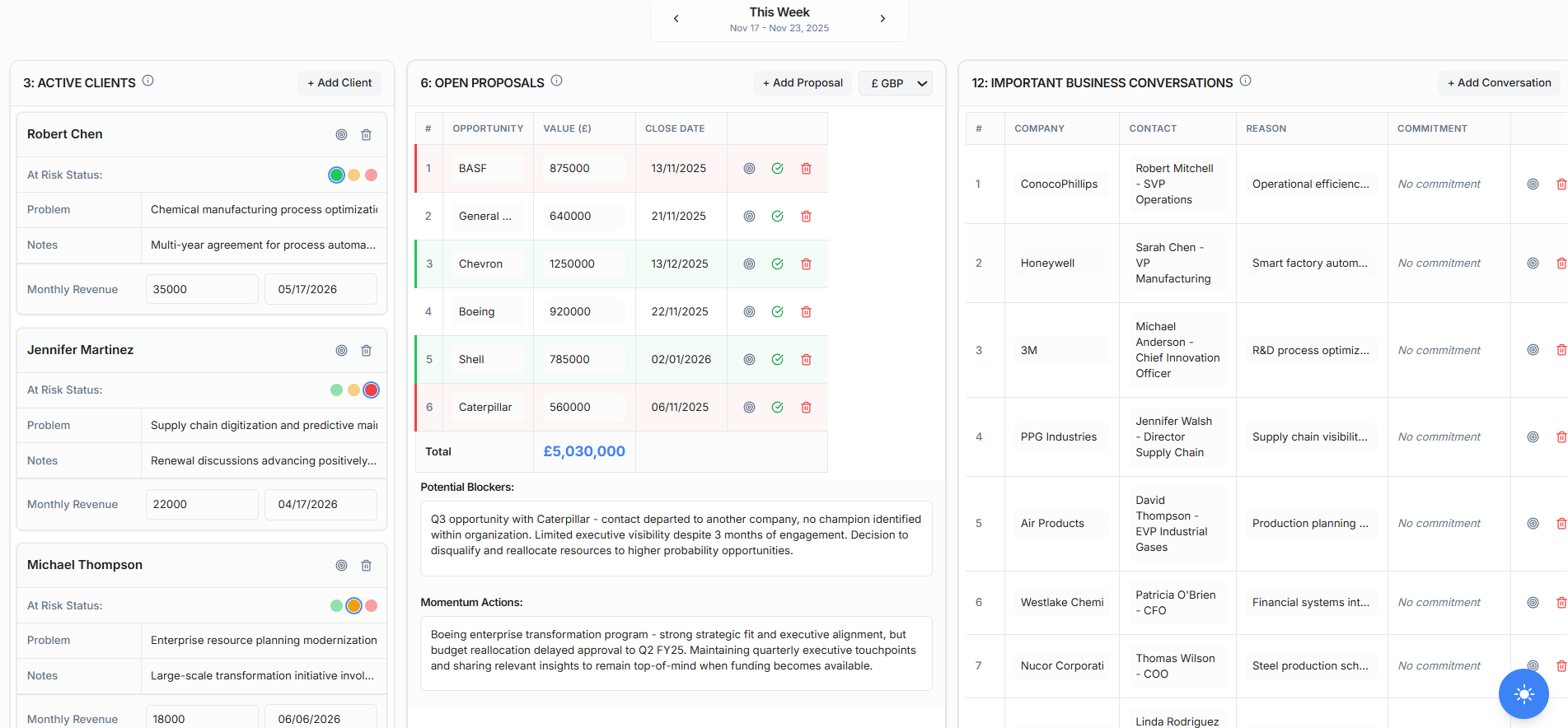
You review each section. You see who can see what. You decide when to flip the link to live. Nothing is shared until you say so.
What changes for you. The check-the-recipient-view step goes away because the recipient view is what you’ve been looking at the whole time. Deal rooms ship faster, and they ship with the parts that close deals (proof, mutual plan, owner clarity) instead of the parts that look impressive but don’t.