The Morning Briefing is the first thing a lot of founding users open every day. Five minutes of “here’s what changed in your network overnight, here’s what to act on, here’s what to leave alone.”
For the first three weeks of public Nynch, the briefing was useful and mildly unsettling. Useful because it surfaced the right things. Unsettling because some of the claims couldn’t be checked. “Sarah at Acme is cooling off.” Based on what? “The Q2 renewal at Beta is at higher risk than last week.” Derived from what signal? Right answer, opaque reasoning, no way to verify before acting.
So we shipped source links on every AI claim in the briefing.
When the briefing says a relationship is cooling, click and you see the signals that triggered the read: the meeting that didn’t happen, the email thread that went quiet, the LinkedIn change that suggests attention has moved elsewhere. When it suggests a specific outreach topic, click and you see the meeting transcript or email exchange that gave it the angle.
The default reading view stays clean. Sources expand on click, so they don’t clutter the briefing unless you need them. If you trust the read, you act on it. If you don’t, you check it in two clicks.
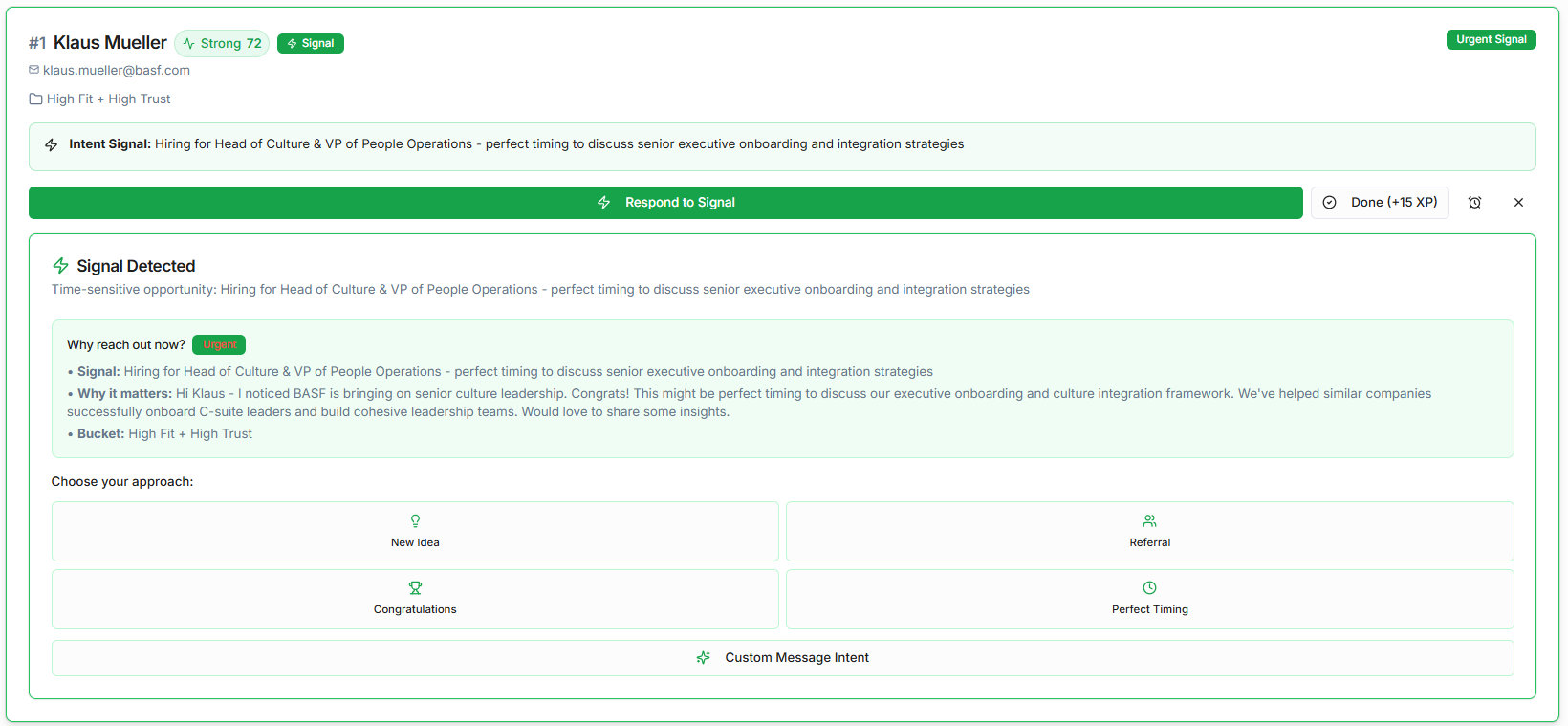
This change sits underneath a broader posture. Numbers, names, and recommendations from any Nynch AI surface will increasingly tell you where they came from. Reasoning cards on Assist (shipped May 3). Sourced signals in research reports (shipped May 7). Source links on the Morning Briefing (shipped today). The pattern is consistent: AI claims show their receipts, by default.
What changes for you. The “should I trust this” hesitation goes away because trust becomes verifiable. The first time the briefing surprises you, you check the source. The second time, you stop being surprised because you’ve learned the briefing reads from sources you’d trust.