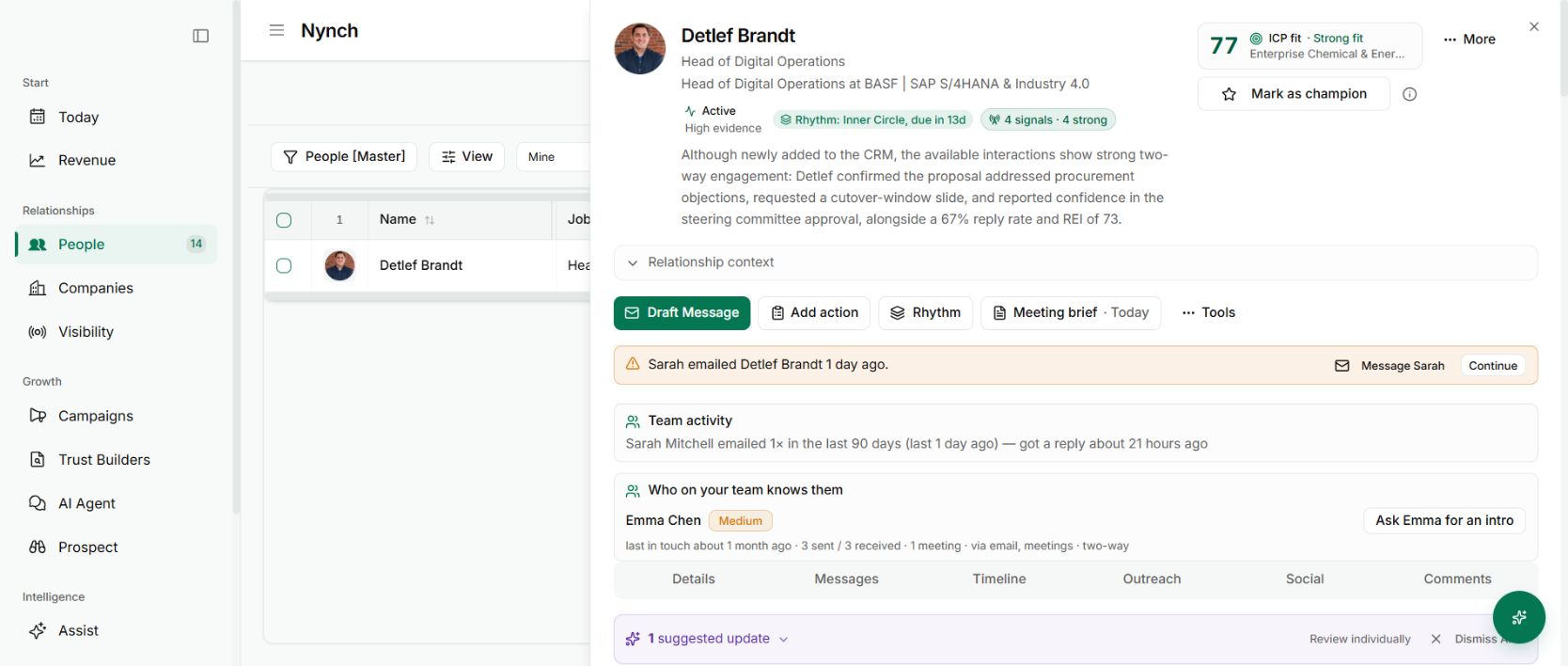
Someone at your firm may already know the person you are trying to reach. The difficult part is finding that connection before you write a cold message.
The contact record now shows Who on your team knows them. It brings the teammate, relationship strength and supporting activity into the place where you are preparing the next move.
Check the path before asking for an introduction
Open the contact and read the evidence beneath the teammate’s name. In the demo, Emma’s path includes two-way email and a meeting. That tells you more than a shared address book entry.
Use Ask Emma for an intro to start the request. Explain why the conversation would be relevant and give your colleague a small, clear ask. They should be able to judge whether the relationship is suitable for it.
For example: “Would you be comfortable checking whether their operations team is reviewing site handovers? I can send two lines on the assessment if useful.” That leaves room for the teammate’s judgement.
Coordinate the next move
The same record can show recent team activity. If another colleague has already emailed, check what they are trying to achieve before adding your own approach.
An activity count is evidence of recorded contact. It is not a promise that someone will introduce you, nor permission to read their private messages.
The practical value is using the firm’s existing relationships with more care. Start with the strongest relevant path, ask for help with context, and keep the conversation coordinated through record comments.