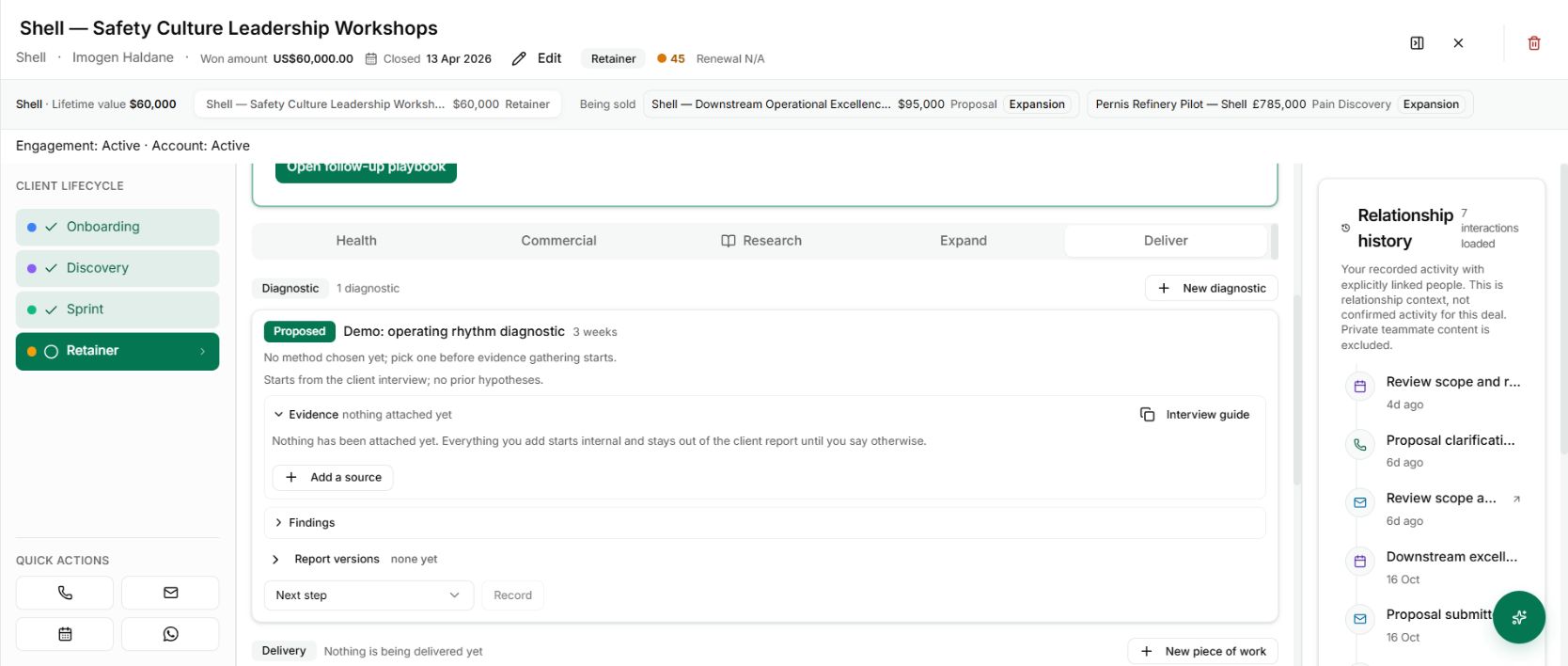
Sorting interview notes is necessary work. It is also work that can consume the time you need for the harder question: what does the evidence actually mean?
The diagnostic workflow adds AI-assisted draft findings. The analysis works from the diagnostic’s collected material and method, with a consultant review stage before the client conversation.
Give the analysis a useful foundation
Start with a defined diagnostic, a chosen method and an evidence register. An empty assessment cannot produce a defensible conclusion merely because a generation control exists.
Once the work reaches an appropriate analysis stage, use Findings to prepare and review the draft. Treat the first version as an organised reading of the material, not an independent expert who has interviewed the client.
Challenge the explanation
Check whether each finding names an observation, a possible explanation or a recommendation. Those are different things. A statement that handovers are late may be supported. A claim that one manager causes the delays needs its own evidence.
Remove invented certainty. Retain useful disagreement between sources and make the unanswered questions visible. The consultant review is where you decide which conclusions can carry weight in the debrief.
Spend the saved effort on judgement
The value is getting a structured draft to interrogate rather than starting with an empty report. You can focus on the connection between evidence, diagnosis and the next decision.
The current screenshot shows the proposed diagnostic and its controls. It does not claim that analysis has been completed. When you share findings, use the reviewed report version and the source permissions appropriate to that client.