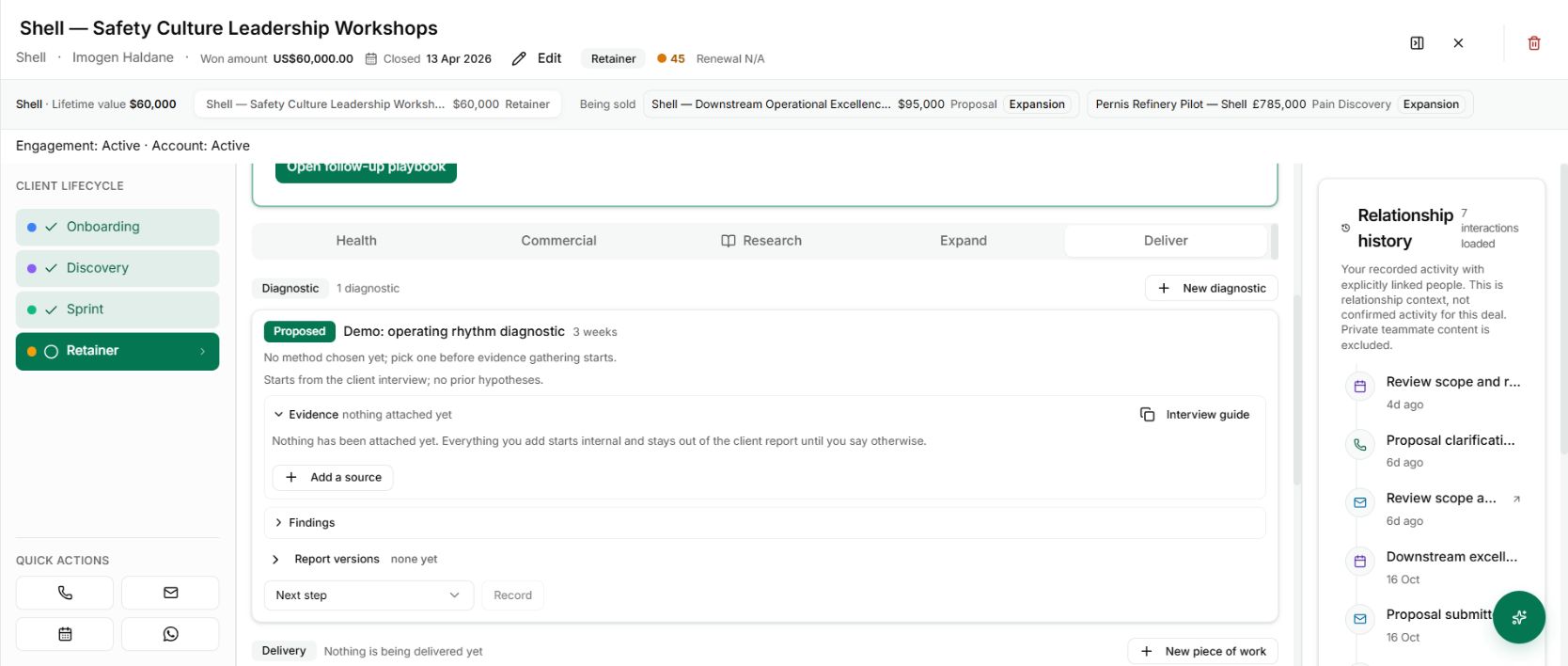
A convincing finding needs more than confident wording. When the client asks “What are you basing that on?”, you should be able to return to the source.
The diagnostic evidence register keeps material with the assessment. It supports sources and excerpts, so an interview observation or document passage can sit behind the finding it informs.
Attach the source before polishing the conclusion
Open the diagnostic under Client → Deliver, expand Evidence and use Add a source. Give the material a recognisable label and retain enough context to understand where it came from.
An interview note about delayed handovers is not the same as a measured count of delays. Keep those distinctions in the record. Several people repeating an explanation may make it worth investigating, but repetition alone does not establish the cause.
Decide what the client can see
New material starts internal. Permission to use evidence in the client report is a separate choice. That matters when the assessment combines confidential working notes with material suitable for a shared discussion.
Review excerpts for unnecessary personal details before marking them for client use. Do not assume that uploading a source automatically makes every sentence appropriate to quote.
Make the debrief easier to defend
For each important finding, ask what observation supports it, what remains uncertain and what the client should do next. The register gives that conversation a traceable starting point.
The findings workflow can help prepare an analysis, but your role remains to check the explanation. The benefit is a stronger chain from source to recommendation, with sharing decisions made deliberately along the way.