A large market count can be reassuring and still tell you very little about what to do on Monday.
Market sizing now separates two questions: which companies fit the market definition, and which of those are the most useful next bets for your capacity.
Define the boundary first
Start with the saved ICP or the relevant won-customer context. Review the industry, location, company size and other available filters before running the search.
Be explicit about exclusions. If you only serve a particular operating environment, an impressive worldwide total is less useful than a smaller market that reflects how you actually deliver.
The returned count is a view of the provider’s available company data under those filters. It is not proof that every company has the problem, budget or appetite for your offer.
Move from a market to a working list
The next step is Best bets. It helps turn the market into a manageable set of accounts, with reasons such as a warm path, similarity to wins or a current signal.
Use those reasons to investigate the account. Check the company and the likely person before treating the suggestion as CRM truth. Optional deeper checks may use provider credits, so use them where they will change a decision.
Give your capacity a vote
If you can prepare ten thoughtful approaches, a hundred-company list is a backlog, not this week’s plan. Choose the smallest useful set and do the research that makes each next action relevant.
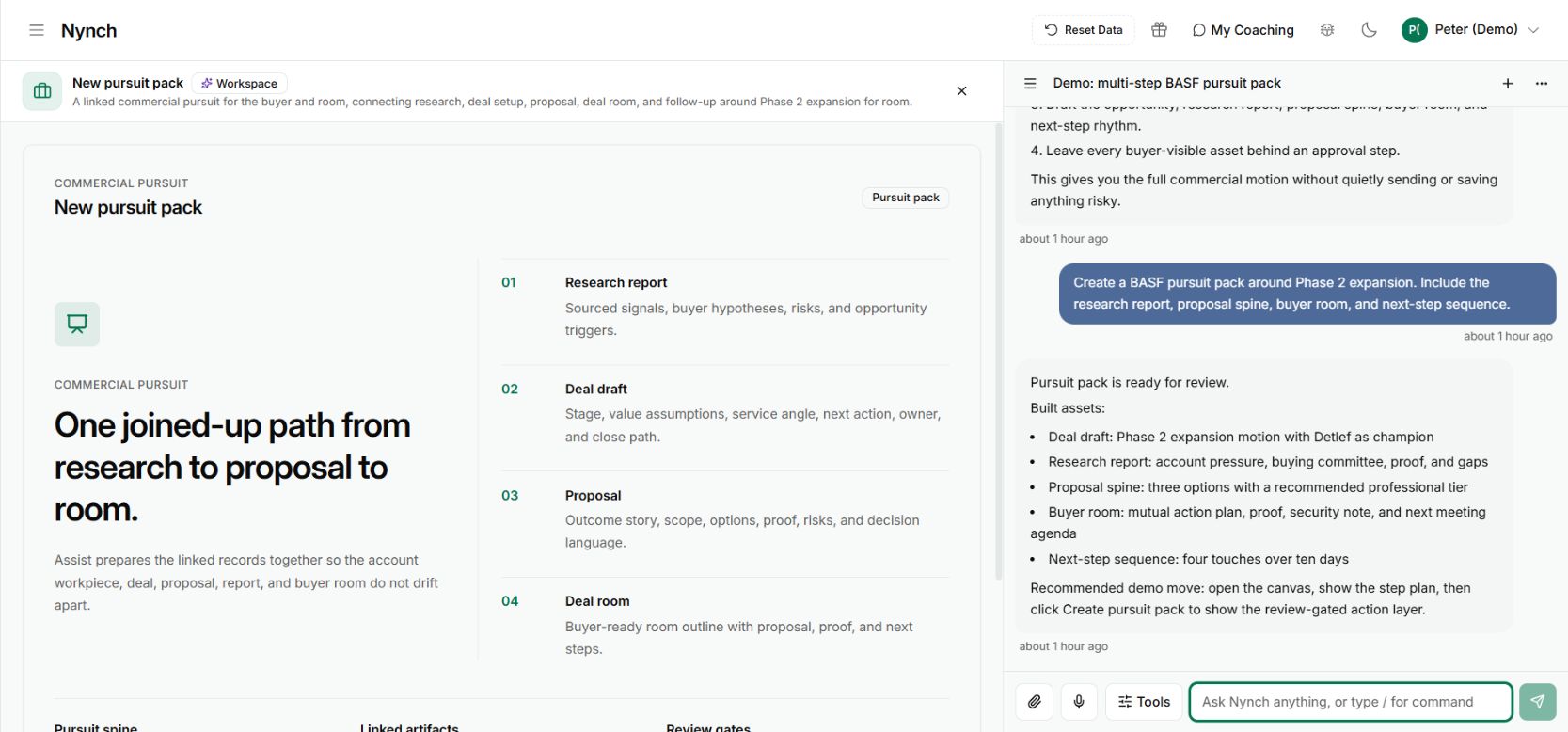
The screenshot shows account preparation after selection, rather than a completed market search. The Best bets guide covers how to interpret the shortlist without confusing a ranking with buying intent.