Winning the work should feel like the start of something well organised. Too often it is followed by a quiet gap while someone assembles the welcome email, requests access and works out who is responsible for what.
That gap is avoidable when the plan is prepared before the win.
The change
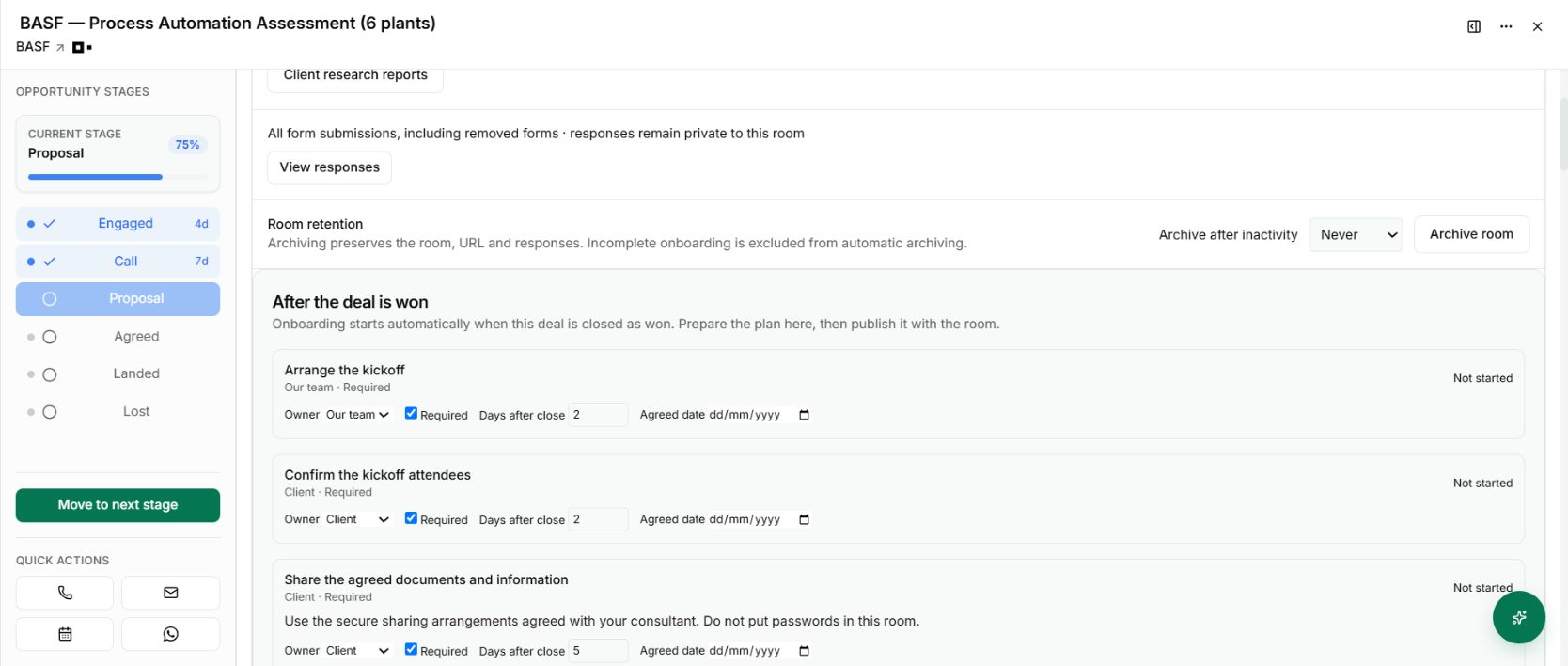
The buyer room now supports a client onboarding phase. Prepare the plan while the opportunity is still open, then publish it with the room. A confirmed won outcome starts onboarding. Accepting a proposal and recording a confirmed win are distinct steps.
The same room carries the agreement into the work that follows. You can assign tasks to Our team or Client, mark required tasks, set dates and record what is blocking progress.
Prepare the handover while the context is fresh
Open the opportunity’s Deal Room and find After the deal is won. Use Prepare onboarding plan, then review the tasks.
For a short advisory engagement, the plan might be: confirm the working contact, share the background material, arrange access and agree the first working session. Those are examples to adapt, not mandatory steps for every client.
Choose an agreed date where you have one. For repeatable steps, use a number of days after close. Assign responsibility explicitly. A task called “Send material” is less useful than knowing whether the client owes it to you or you owe it to them.
Publish the reviewed plan so the active onboarding reflects what you actually shared. Draft changes remain separate from that published promise.
Give both sides a next action
During onboarding, the room shows your next action and the client’s next action. Required-task progress and overdue work are visible. A person can record a blocker instead of leaving everyone to guess why a task has not moved.
The seller starts delivery once the required tasks are complete. The agreement and completed onboarding remain in the room. If the deal outcome changes, onboarding pauses and the completed work is preserved.
Why it is useful
You avoid starting the relationship with a scavenger hunt. The client knows what happens next, your team knows what it owes, and the sales conversation does not disappear at the point of handover.
Pair the plan with a short kickoff form and a useful welcome video. Each should help someone take the next step, rather than add another task for its own sake.
Show the client the handover you prepared
Preview the Getting started section as well as the seller’s task controls. A task list only helps if the client can understand the work and see which part belongs to them.
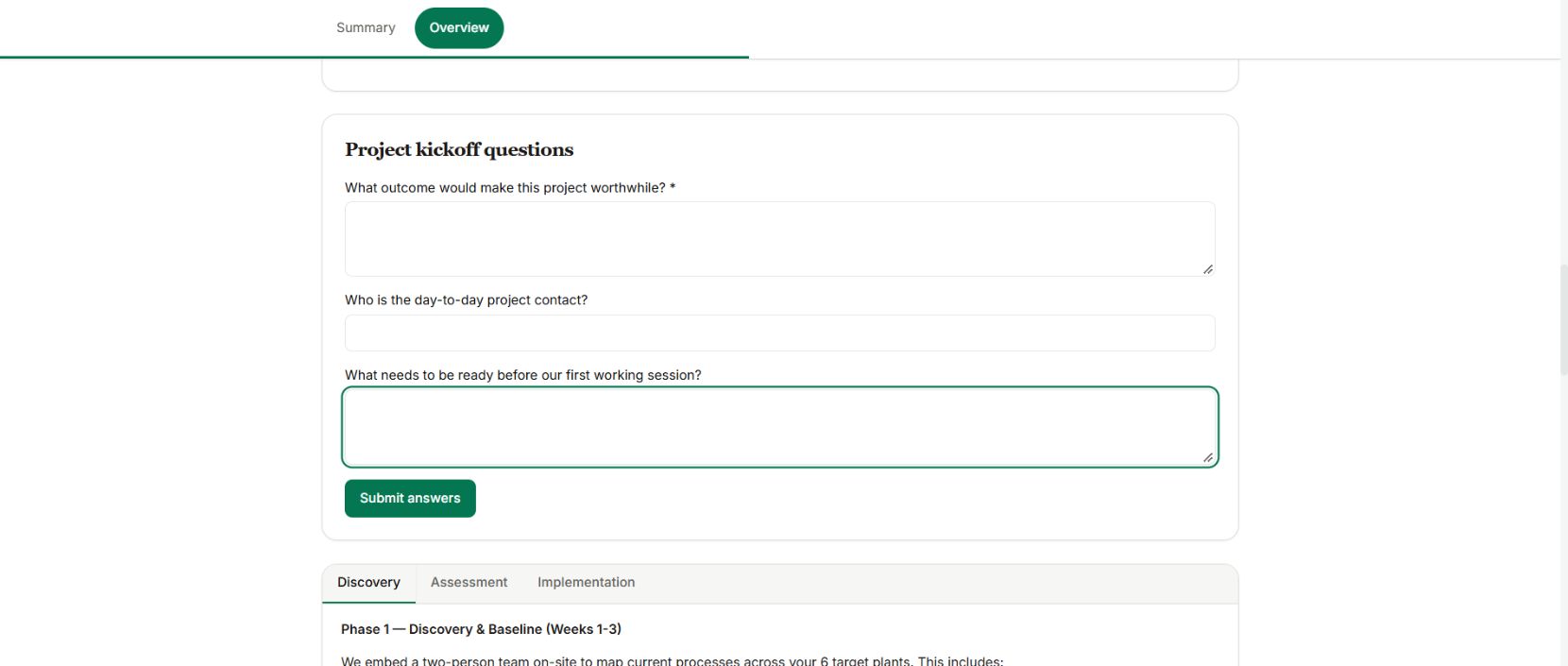
The kickoff form below can collect the outcome, working contact and prerequisites before the first session. Use the answers to refine the plan rather than leaving the form as an isolated administration step.