A person finishes your introductory campaign. They are no longer new to the problem, but they are not ready for a proposal. What happens next?
Without an explicit handover, they can sit in a completed sequence or receive another introduction they no longer need.
The change
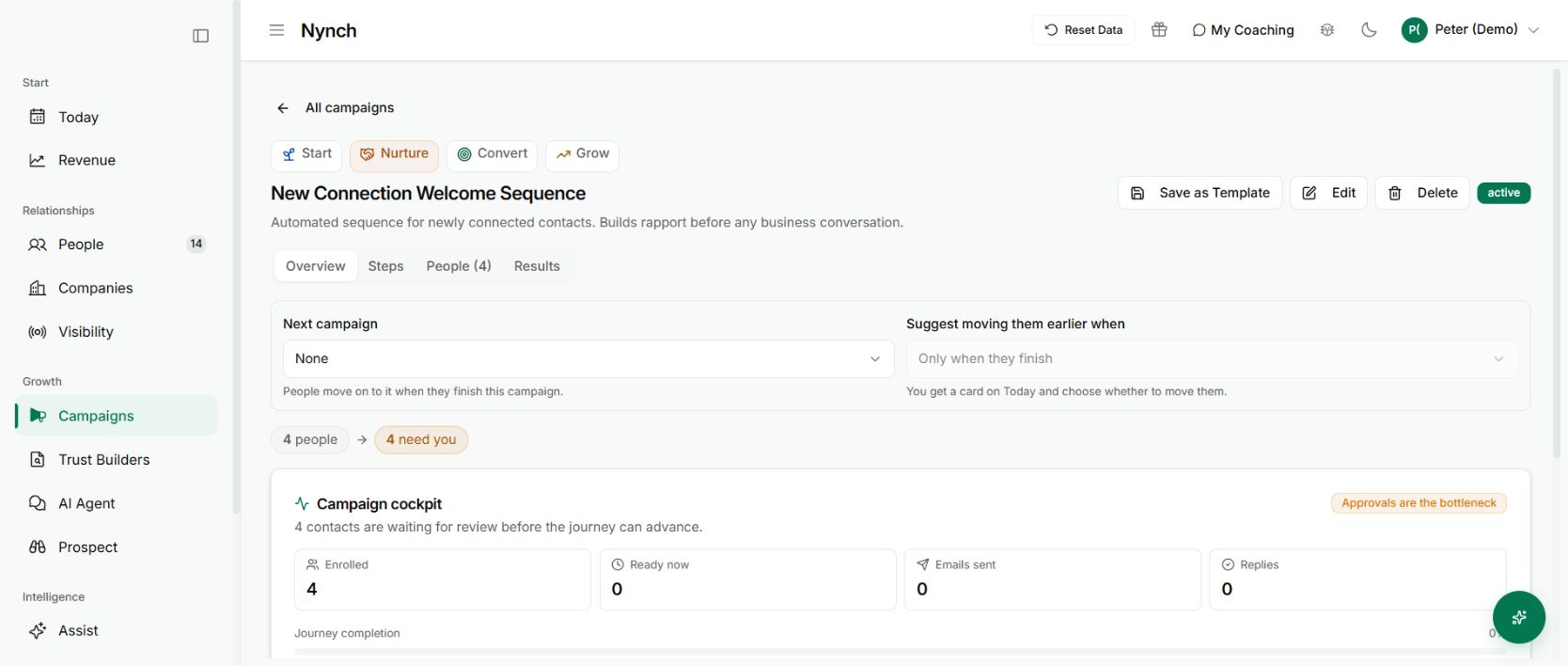
Campaigns can specify a next campaign after completion. They can also surface an earlier move when buying signals, a request to talk or an interested reply suggest the relationship has progressed.
The handover belongs to the campaign, so you can design a connected journey instead of treating every sequence as a separate list.
Decide what readiness looks like
An introductory campaign might lead to a practical education campaign. A more engaged audience might move into a relevant offer. Existing clients may need a different conversation about the next problem you can help solve.
Open the campaign’s next-step settings and choose the destination. Check that its material assumes the right amount of context. Moving someone from “understands the problem” straight to “ready to buy” does not become sensible just because the software can move the record.
Review earlier-movement suggestions in Today. Read the event that caused the suggestion before accepting it.
Choose where judgment stays involved
Automatic earlier movement is optional for supported buying signals and requests to talk. Interested replies still require review. A polite response can mean several things, and the right next action may be a personal answer rather than another campaign.
Circular campaign chains are excluded. Your journey should have a useful direction, not loop people indefinitely through the same material.
Why it is useful
You preserve momentum without keeping the entire campaign map in your head. Each stage has a sensible destination, while meaningful replies can reach you for judgment.
Combine this with Smart Nurture when you need relevant content within a stage. The next-campaign setting handles the handover between stages.
Check what changes for the person
Before moving someone, inspect the content and actions attached to the next stage. A stage label should represent a useful change in the conversation, not simply a way to keep a sequence running.
A reply may be the reason to pause automated work and open a real opportunity. The reply-decision guide explains that handover. Check the person’s current relationship state before applying another marketing step.