Most follow-ups fail before they are sent. “Just checking in” gives a busy client nothing to answer, so they don’t. And the dates that would give you a real reason to write sit in their calendar, not yours: the board meeting, the year end, the rule change landing on their sector next quarter.
This release changes three things.
Every note ends on one question
Notes Nynch drafts for you now end on exactly one question, and it is one only the client can answer. What is on the agenda for the March board? Which of the two options is the team leaning towards? “Checking in”, “touching base” and “circling back” are gone. If a draft breaks the rule, Nynch rewrites it before you see it.
This covers first notes, follow-ups, nurture notes, reconnects and the note Nynch drafts when someone changes job.
Nynch keeps the answer
A good question earns a reply worth keeping. When a client answers a question from a note you sent through Nynch, within 45 days, Nynch matches the reply to the question and keeps what they told you: a board meeting, a planning month, their year end, a deadline, a plan, a priority, a person or a concern.
You will find it on their contact page under What they’ve told you, beside the question you asked. It works with Gmail and Outlook. Campaign and proposal emails are left out.
Their calendar, on your Today
Nynch now brings the dates that matter to your current clients to Today, 14 to 28 days before they arrive, with a short note drafted for you to review. Nothing is sent without you.
The dates come from two places.
What the client told you. Their board month, planning month, year end or a deadline they mentioned. These are kept to the month, because that is how people say them.
Their sector. Regulatory deadlines, compliance dates and new legislation for the sectors where most of your clients sit, in your clients’ countries. Nynch researches each sector once a week, looks a year ahead and keeps only dates the source itself states. Every card links to its source, and the note says why the date matters to your work, not only that it exists.
You get at most two calendar cards a day, and one per company, so Today stays a short list.
Why it is useful
A note that lands two weeks before a client’s board meeting, with a point of view on what the board will ask, is a different note from “how are things?”. It gives them a reason to reply, and their reply gives Nynch the next date to remember. The relationship gets two reliable memories instead of one.
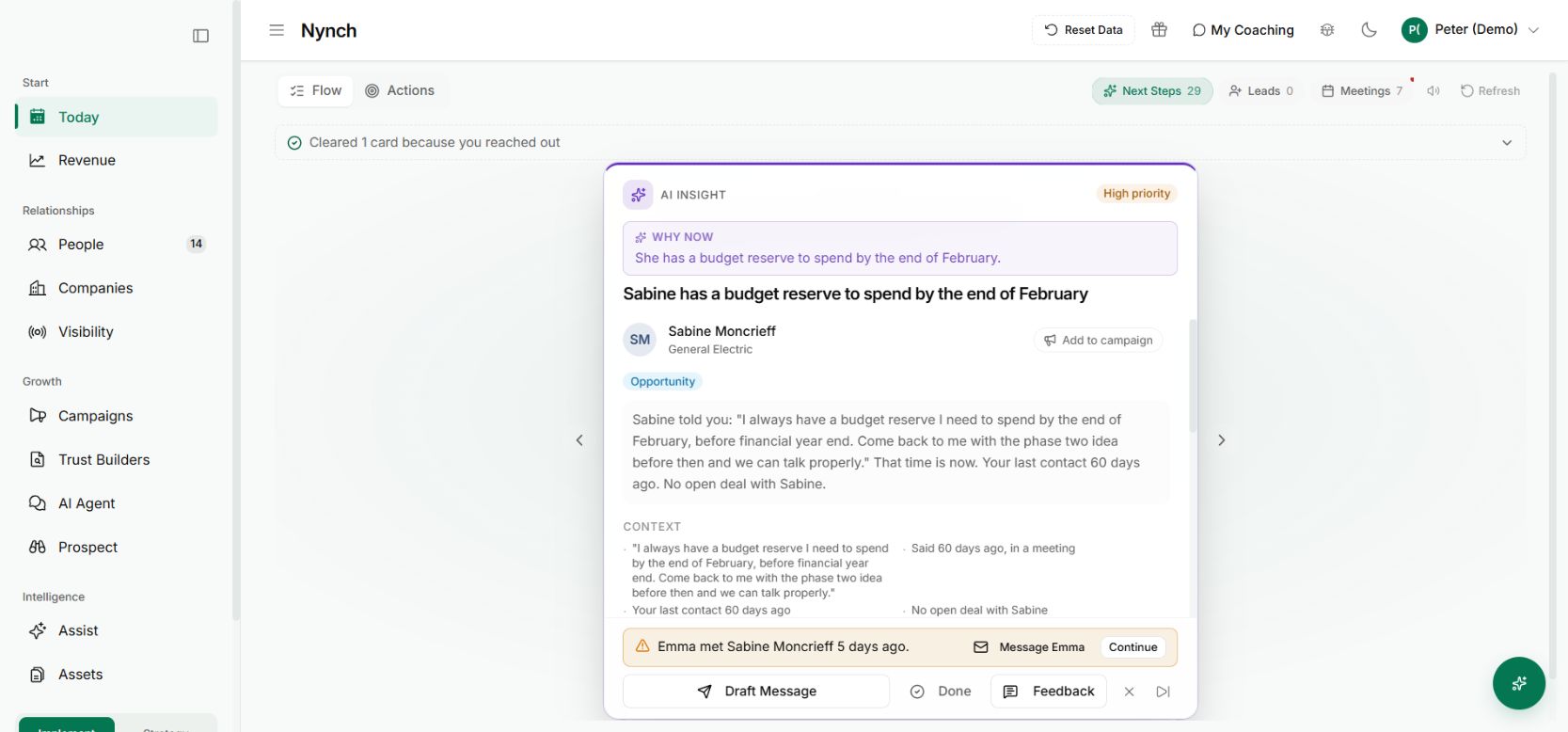
It builds on the context Today already uses to explain each suggestion, such as the budget deadline in the card above.
What to expect
Calendar cards start with your current clients, the companies where you have a won deal. Sector research needs the client’s industry on their company record, and either their country there or your currency or time zone in your profile. It runs on paid plans. The first cards appear after Nynch’s daily run, once the research has finished.
A card names the date and where it came from. It is not legal or compliance advice.