“We have some ideas for your business” is easy to say. A useful audit has to show that you looked, found something relevant and can explain why it matters.
The hard part is often the work between selecting the companies and sending a credible message.
The change
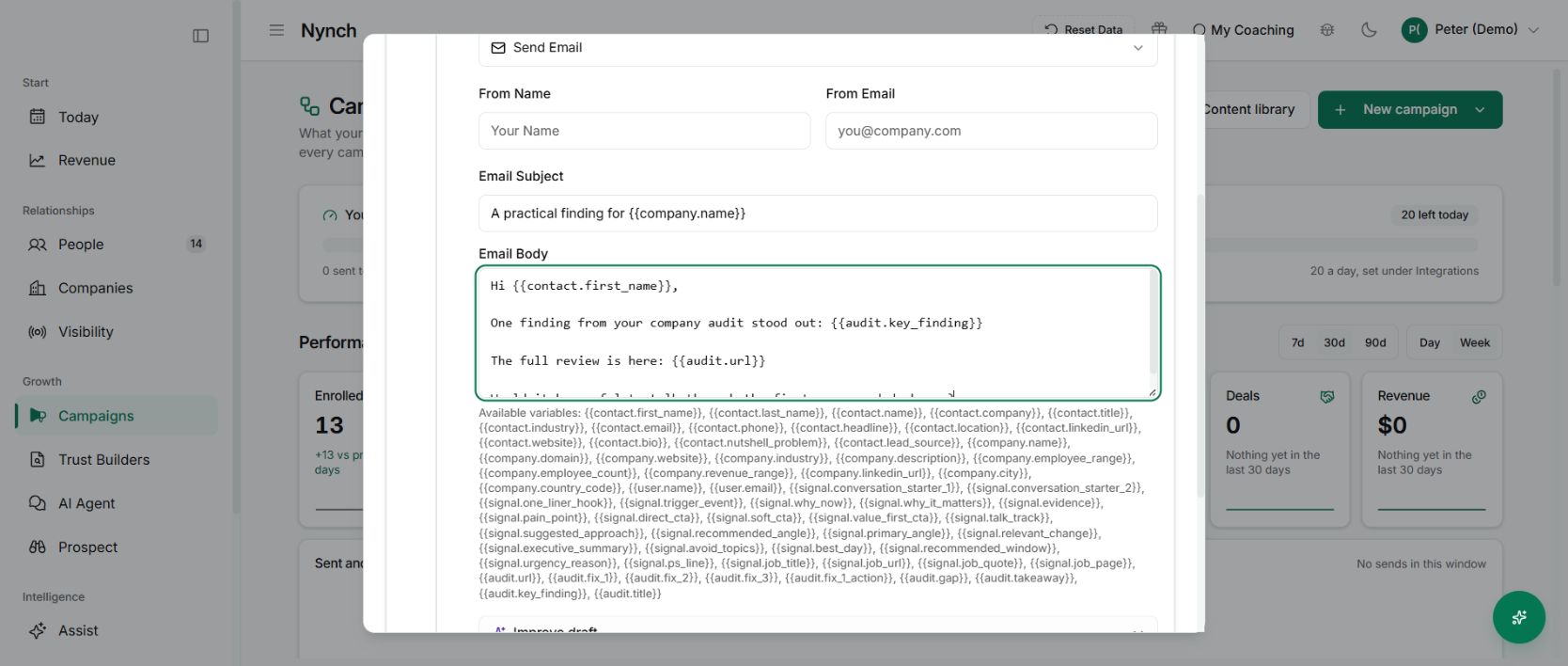
The Free Audit campaign workflow brings that preparation into the campaign. It identifies companies missing an audit and supports generating them in batches of up to 25 companies.
Each company’s emails wait until its audit is approved and public. If the person has no company record, those emails remain blocked. The system should not send a promise about a company-specific audit that does not exist.
Review the finding before the invitation
Start with a focused set of companies for which your expertise is relevant. Check that the people are attached to the correct companies, then open the campaign’s audit panel.
Prepare the missing audits in a manageable batch. Review each one for a useful finding, credible evidence and a recommendation that follows from what was observed. Remove claims that depend on private information you do not have.
Approve and publish the audit only when you would be comfortable discussing it with that company. Then review the campaign message. It should lead with the useful finding, not hide a sales pitch behind the word “free”.
Keep the supporting material available
The campaign shows what is ready and what still needs attention. Expired audits can be renewed for 60 days when they remain appropriate to share. Review the content before renewing something that may have become stale.
A published audit is an invitation to a conversation. It is not proof that the recipient has the problem, agrees with the diagnosis or has asked to buy.
Why it is useful
The research, review and outreach stay connected. You can see why a company is not ready to contact and fix the missing step before a message goes out.
That makes the offer easier to stand behind. The value is in sending something specific enough to be useful, with a clear route to discuss it.
Make the audit useful before the email looks finished
Open the audit that the message will reference. Check the company, the central finding, the supporting evidence and the next question. The email should invite the recipient to inspect something relevant, not use a personalised link to disguise a generic claim.
Keep the audit’s readiness separate from the message draft. If the evidence is missing, repair the audit before approving the send. Use campaign reply decisions to handle what the recipient says next.