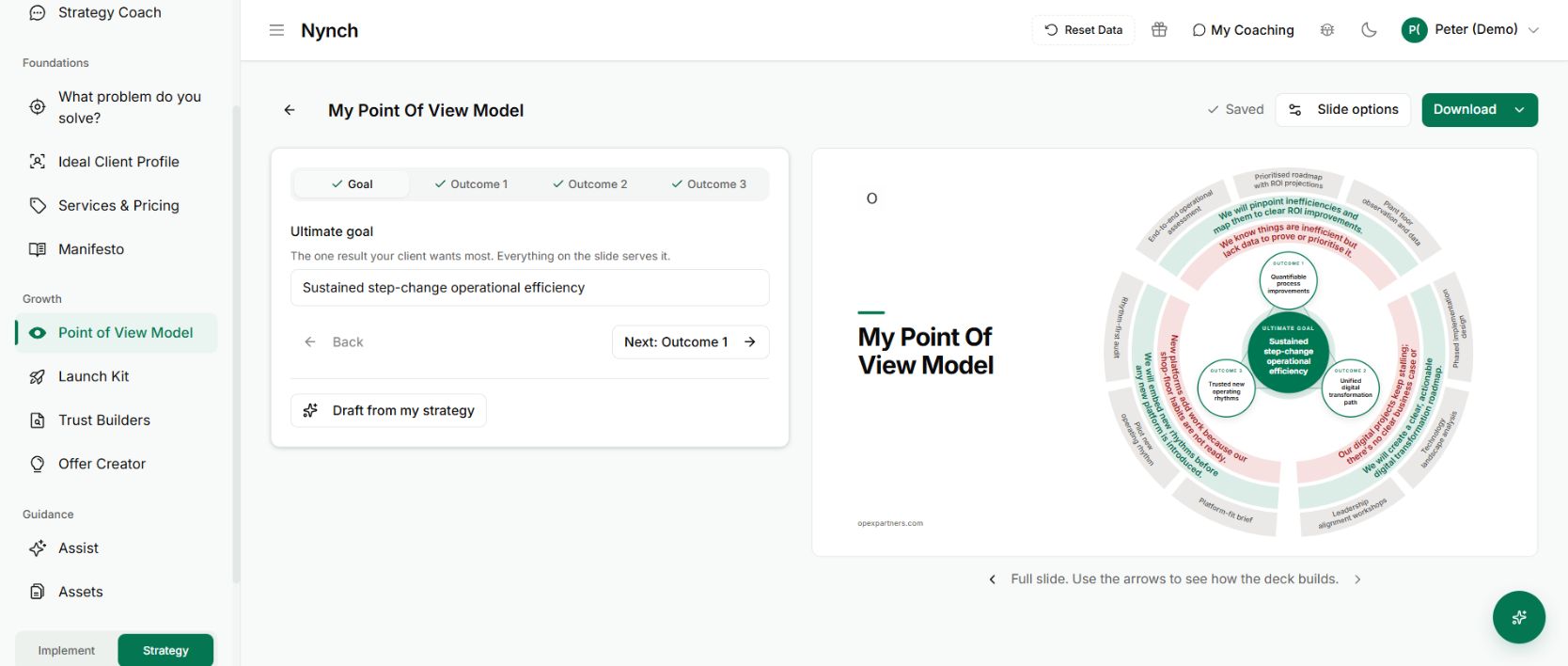
Your strategy says one thing. The service description drifts into another. By the time the campaign is written, the buyer’s original problem has become a generic promise about growth.
The Strategy writing chain now carries saved buyer evidence through more of that work. Relevant problems, buyer language, intended outcomes and source excerpts help keep the ICP, offer, manifesto and campaign connected.
Improve the source before generating another version
Review the saved problem and the buyer evidence supporting it. Describe the situation in which the problem appears, the current workaround and the consequence. Keep a suspected cause labelled as a hypothesis until you have evidence for it.
Then prepare the asset you need. The writer can use that saved context without requiring you to paste the same explanation into every prompt.
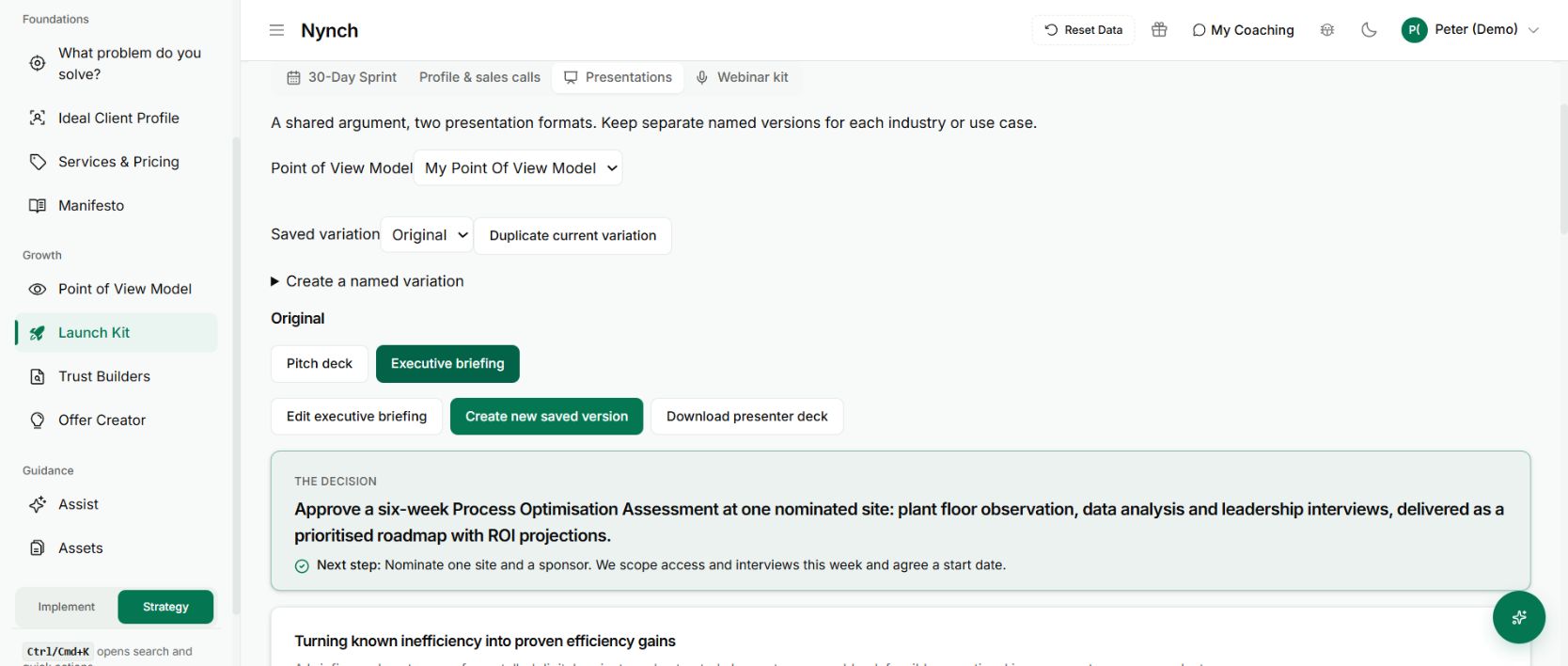
Read the output for continuity
Does the opening describe the buyer you chose? Does the offer explain work you actually deliver? Has a tentative explanation become a confident market-wide claim?
Those checks matter even when the draft sounds persuasive. Supplied buyer language is useful evidence of what someone said. It does not establish demand, willingness to pay or the results your service will produce.
Why the background change matters
You get a better starting point across related assets and fewer opportunities for the story to drift between tools. The system can reuse approved context while leaving unknowns visible.
This is a change to the evidence supplied to generation, not an automatic validation of your positioning. Use the Point of View Model and the next real buyer conversation to test whether the argument holds together.