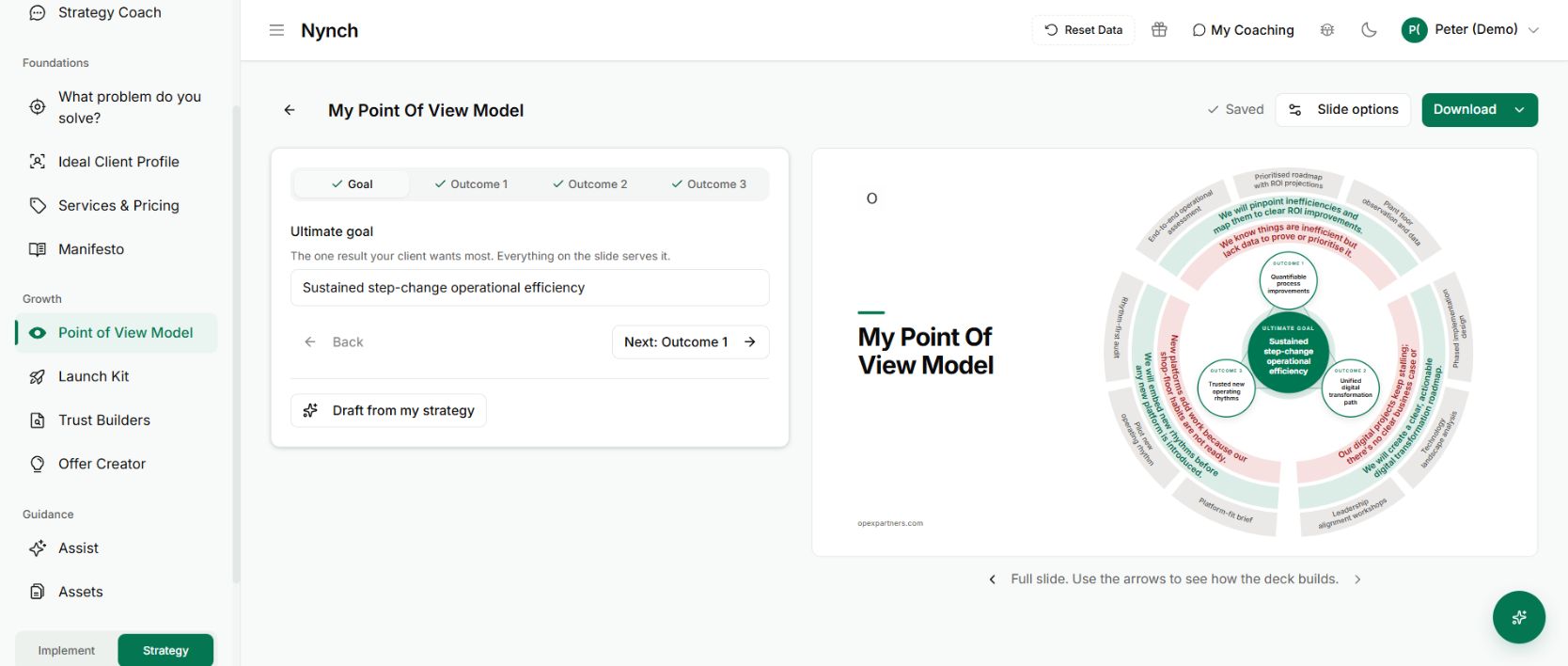
You know how your work fits together. Your buyer sees a list of services and has to work it out for themselves.
The Point of View Model gives you a way to explain the connection. Start with the overall goal, organise the outcomes around it, then show the pains, promises and work behind each outcome.
Build the argument before the slide
Open Strategy → Point of View Model. Work through the goal and the three outcome steps. Use language you would say on a client call. “Trusted operating rhythms” needs a practical explanation of what changes in the client’s week.
For each outcome, ask what gets in the way today and what your service actually does about it. This exposes gaps that a polished list of deliverables can hide. A workshop is a deliverable. A team agreeing the same operating priorities is the intended change.
Review the model before exporting it. Optional circles and service details let you choose how much explanation the slide needs. The model is editable, so your first draft does not have to become your permanent method.
Carry the same thinking into the next conversation
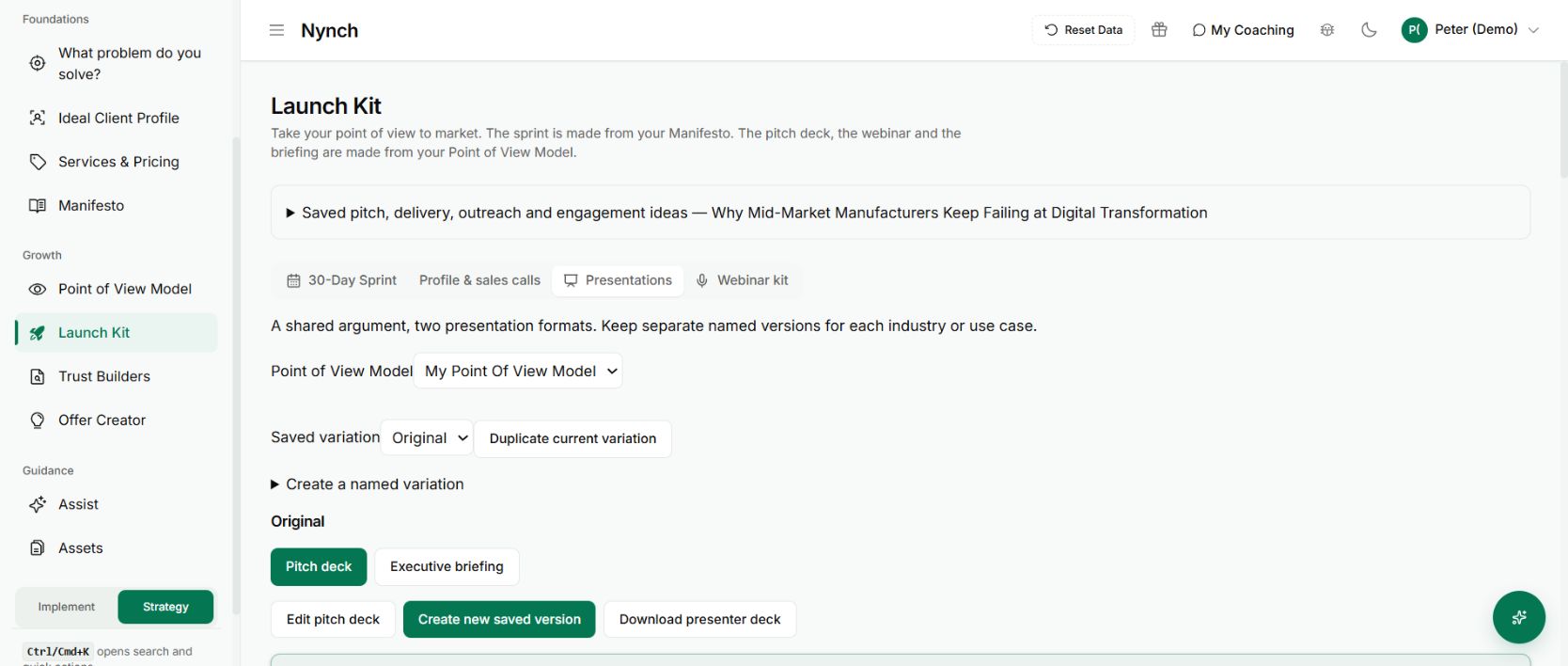
The saved model can feed the core pitch deck, executive briefing and webinar kit. Each format has a different job, but it starts from the same account of how you help.
Use the model in your next discovery conversation. Ask which outcome matters most and which part of the method needs explanation. That answer is more useful than treating a finished graphic as proof that the positioning is right.