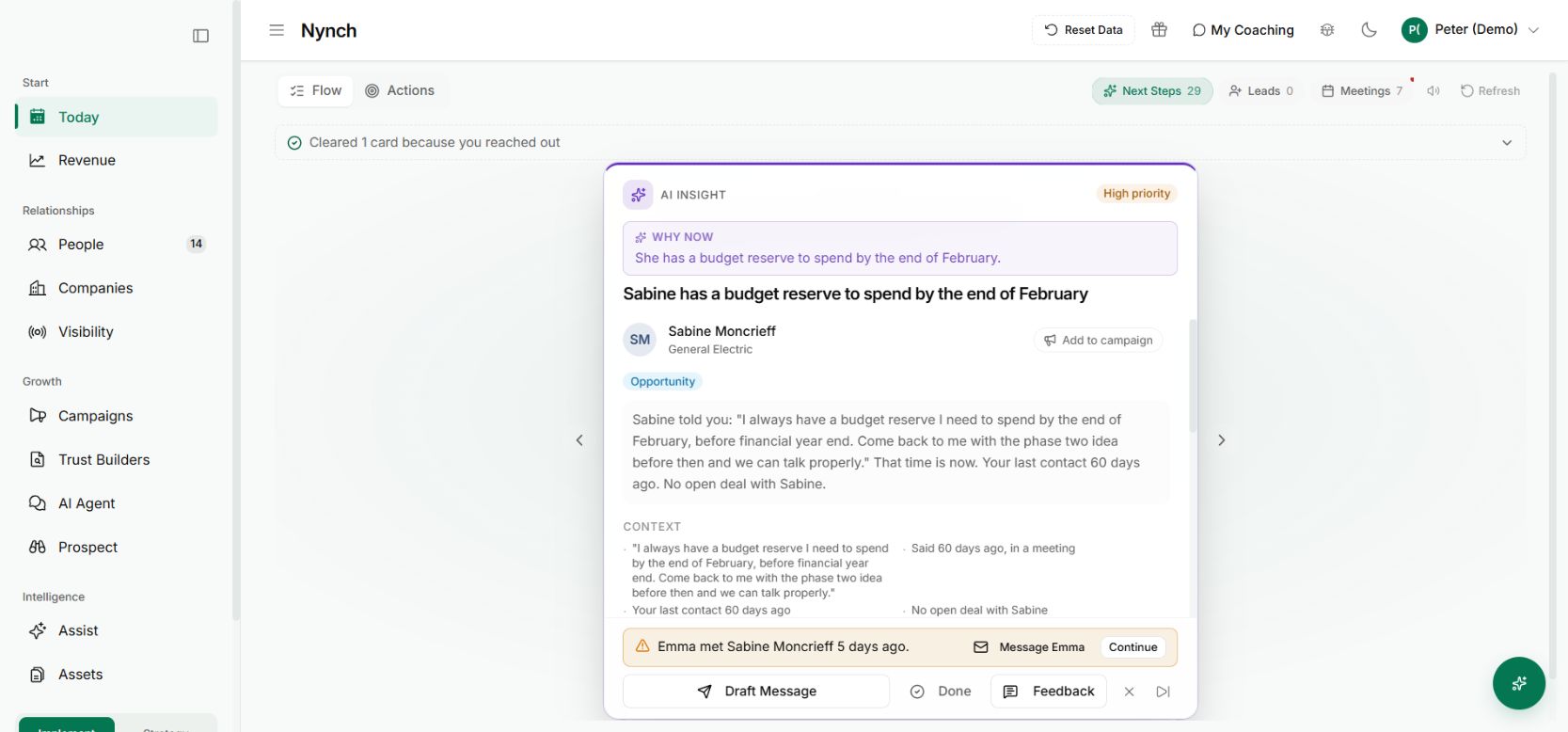
An AI estimate can be useful. It becomes misleading if the next answer cites that estimate as though a buyer said it.
Nynch tightened the boundary in contact AI profiles. Generic reads of those profiles now exclude generated commercial advice, reducing the risk of an earlier interpretation being used as independent evidence for another recommendation.
Read the source and the interpretation separately
A buyer replying to a proposal is a recorded event. “This deal is likely to close” is an interpretation. A third answer repeating the interpretation does not create another piece of evidence.
When reviewing a card, brief or draft, look for the underlying message, meeting, note or confirmed outcome. Use the estimate to decide what to investigate, then return to the source to assess the claim.
Why the backend boundary matters
Without that separation, a tentative idea can become more confident merely through repetition. Excluding generated advice from these contact-profile reads helps prevent that loop.
This is a specific contact-profile change, not a claim that every prediction or company analysis is excluded from every AI context path. Estimates remain elsewhere in the product and still need to be read as estimates.
Put it to work
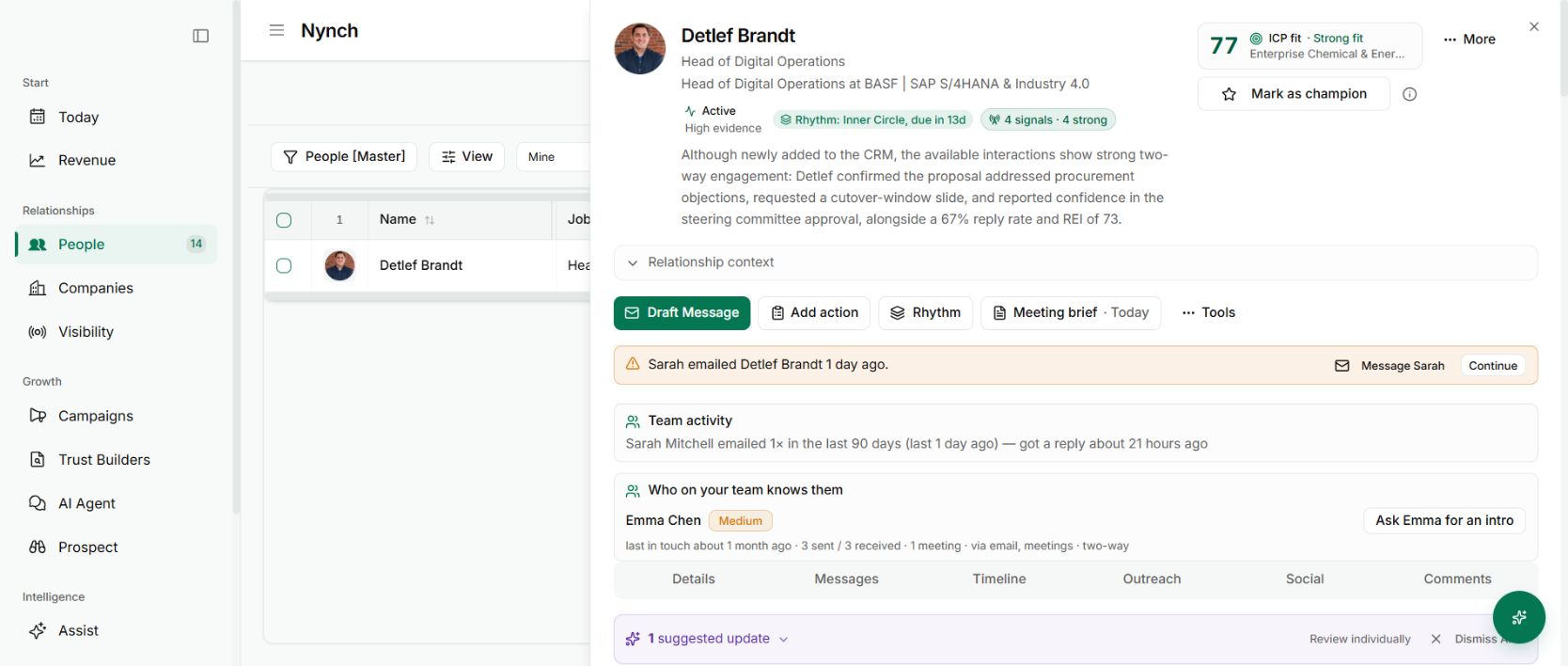
Before using an AI statement in a buyer message, ask what would let you defend it. If the only answer is “another AI summary said so”, narrow the wording or verify it first.
This is reliability work behind the interface. Its value is a clearer distinction between what the business has recorded and what the system currently thinks that record might mean.