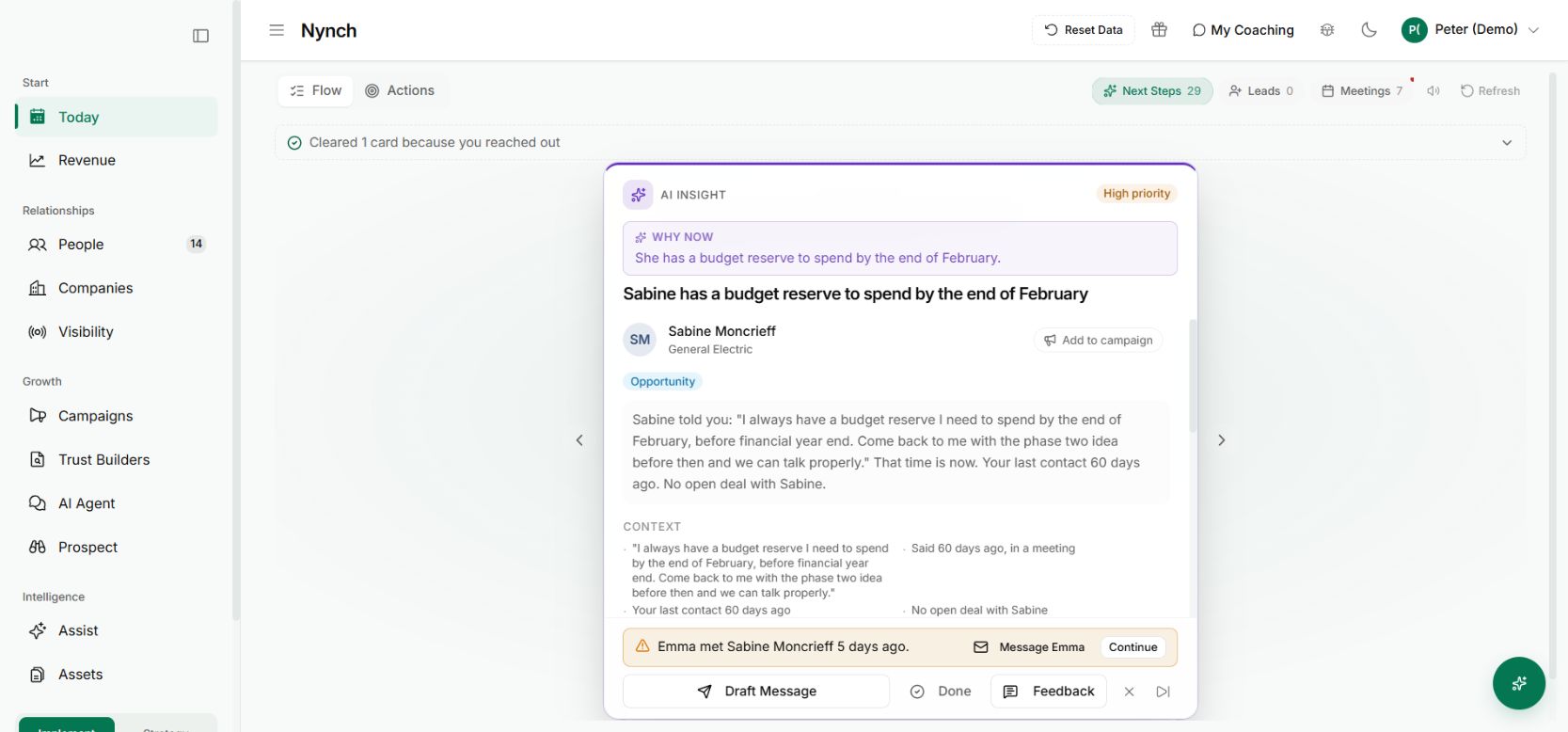
The most useful sentence in a discovery call may arrive forty minutes in. A buyer finally explains what they tried, why it failed or what they are worried will happen next.
The meeting-processing work now includes whole-call evidence capture for relevant conversations. It looks for what the counterpart says they believe, want, fear or have tried, retaining source context rather than treating an AI paraphrase as their quotation.
From recording to usable evidence
Start with a supported recording or transcript that has reached Nynch. Processing checks whether the call is relevant before attempting the deeper extraction. Internal calls, no-shows and unrelated vendor conversations should not become buyer evidence merely because they contain speech.
For eligible calls, the extraction examines the transcript beyond the opening. Proposed quotations are checked against the text before they are stored.
Use the observation in the next question
If a buyer says their last change programme failed because local managers never agreed the priorities, that gives the next conversation a specific question: what would need to change about that agreement this time?
It does not establish that the buyer’s explanation is the complete cause. The record preserves an attributed observation, not a diagnosis of their organisation or private psychology.
Keep the human review
Transcript quality and speaker identification still affect the evidence. Check the original wording when a statement carries commercial weight, and correct the source context when necessary.
This backend change gives later preparation and strategy work better material to draw on. It does not promise perfect recall or turn every spoken sentence into a permanent fact.