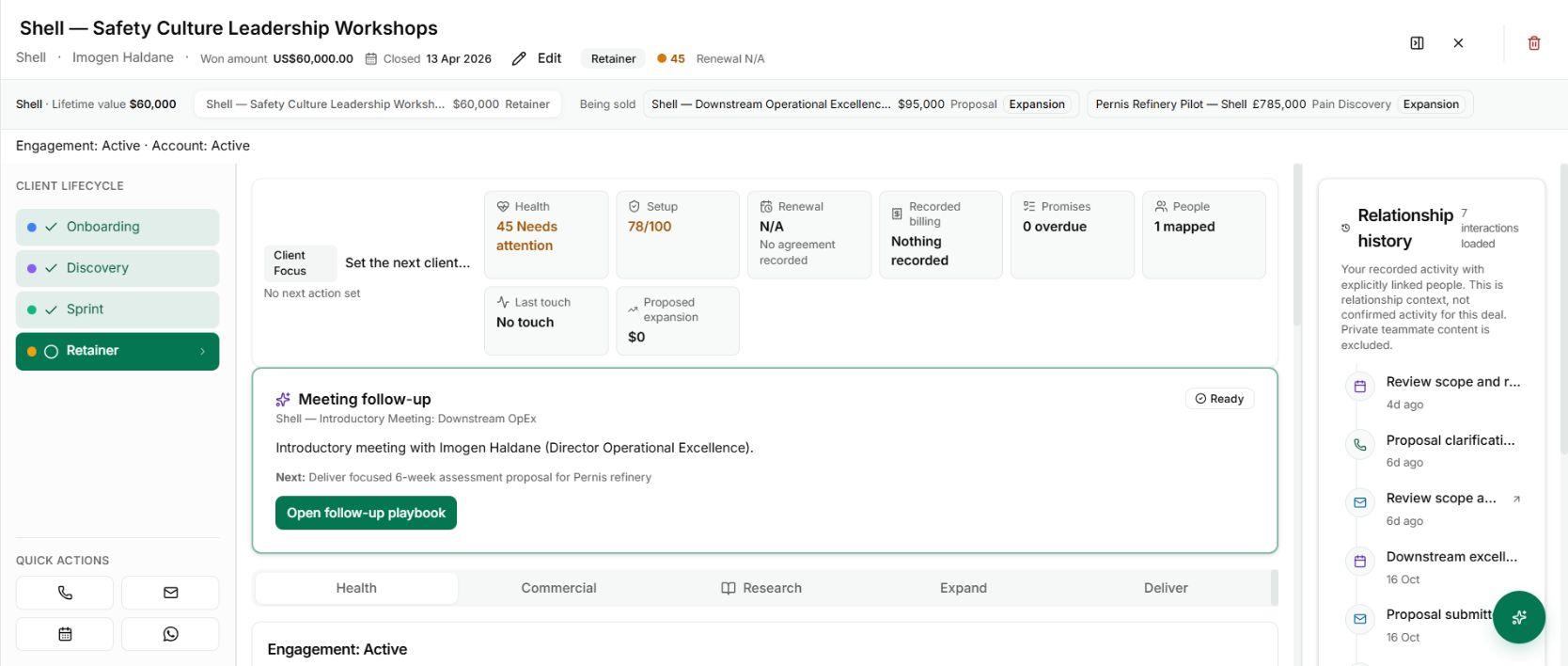
Your first ideal client profile is a hypothesis. The deals you actually win and lose give you a better basis for improving it.
Nynch now uses canonical closed-deal outcomes as inputs to learning-enabled ICPs. Both wins and losses matter. You no longer have to manually nominate a favourite customer to make a closed deal available to the learning workflow.
Record the outcome accurately
Close the real deal with the correct outcome and context. A proposal being accepted, a promising conversation and a confirmed win are different events. The learning should start from what happened, not what you hope will happen.
The system prepares learning work for eligible profiles in the background. A newly enabled learning profile can also draw on earlier recorded closes.
Review what the pattern suggests
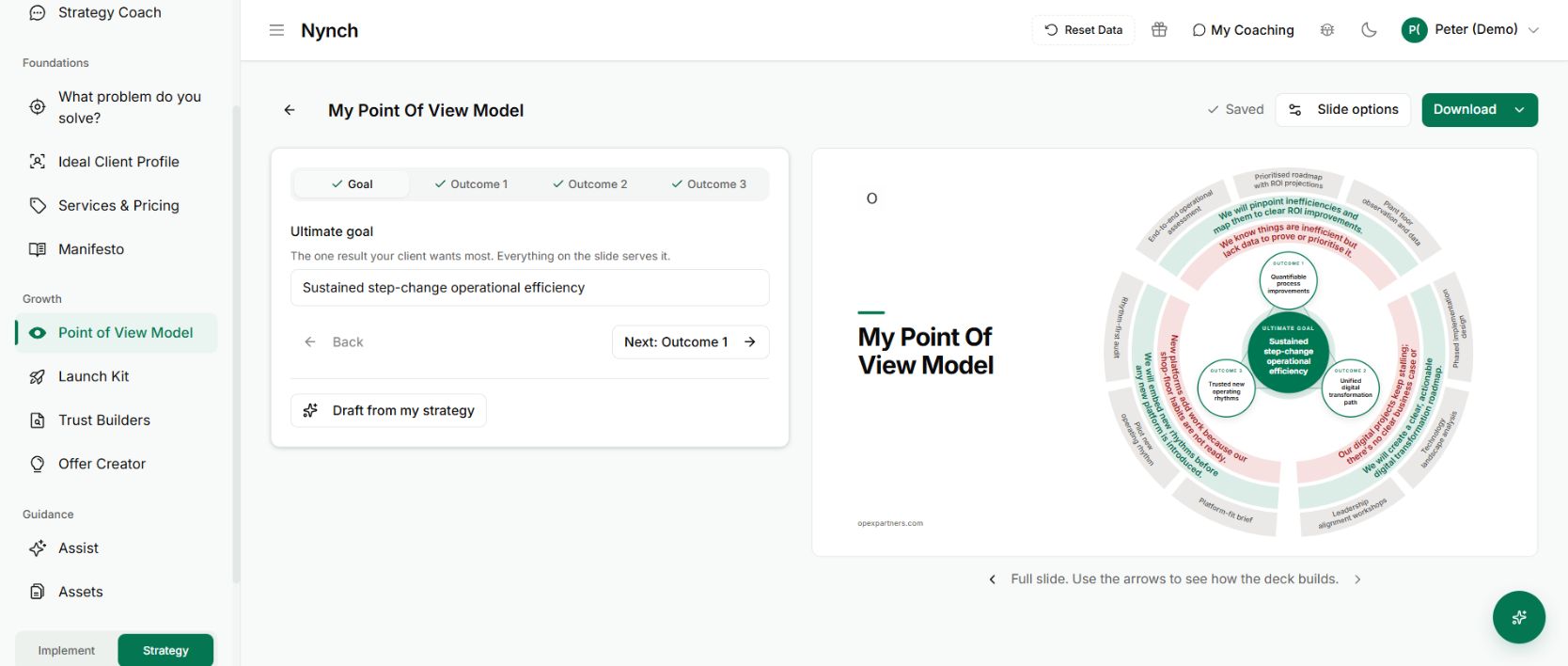
Use the ICP’s learning settings, suggestions and change history to understand how refinements are handled. Review and automatic modes have different implications. A suggestion should name the pattern and why a field might need to change.
One win does not prove that every similar company is a good target. One loss may reflect timing, competition or execution rather than the wrong market. Keep that context in the decision.
Why it is useful
The profile can develop from commercial evidence instead of remaining a document you wrote once. Background work is queued so a failed analysis does not need to erase the other completed items.
Learning here means analysing recorded outcomes and preparing or applying profile refinements under the configured rules. It is not a claim that Nynch has proved what causes a sale, or that past results guarantee the next one.