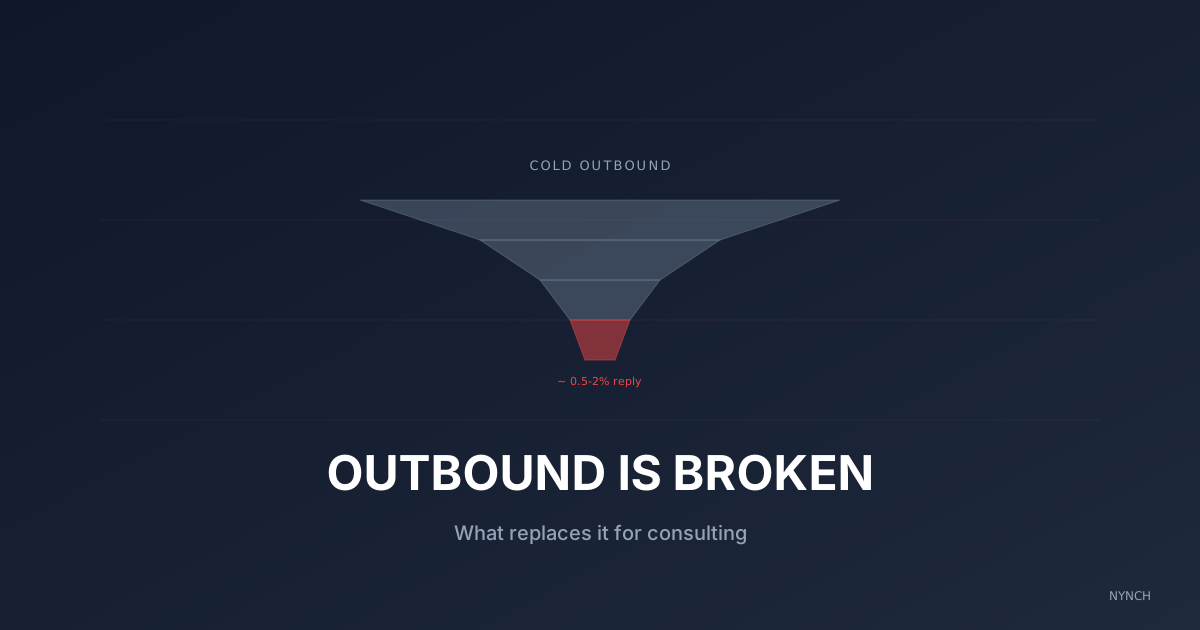
Cold outbound was already losing effectiveness before AI flooded the channel with infinite generic email. For consultants, fractional executives, and boutique advisory firms, outbound never really worked at scale. AI-driven outbound has now broken what limited effectiveness it had. The right move isn’t better outbound. It’s a different motion entirely.
A 200-email cold campaign that returns three replies, two of which are “please remove me”, is the modal outcome for consultant outbound in 2026. The math doesn’t work. Senior buyers receive dozens of personalised cold emails per week, almost all generated by tools that produce superficially personalised messages everyone has learned to recognise. Reply rates have collapsed. Even the consultants running the campaigns admit privately the channel is broken.
If you’re spending more than 10% of your business-development time on cold outbound, you’re spending it in the wrong place. The question isn’t how to make outbound work better. It’s what motion replaces it. For relationship-led businesses, three motions work far better than grinding the broken channel.
1. Dormant network reactivation
Most consultants have 1,000-3,000 LinkedIn connections, most of them dormant (no contact in 12+ months). Nobody actively maintains a thousand relationships. Scroll your own list and count how many you have actually spoken to this year. Past that number, contacts go quiet without anyone meaning it to happen.
Reactivation means reaching out to dormant contacts who’d still recognise your name. It works for three reasons. There’s already trust (you’ve met, worked together, or had a meaningful conversation). The contact is flattered to be remembered, which is the opposite of cold outbound where they feel imposed upon. And the timing is often luckily right, because they may have a need you don’t know about yet.
The framing matters. No pitch. No ask. A specific reference to something they’ve done recently or a project you shared. The conversation goes where it goes.
Example: you worked with Sarah on a project at Company A in 2023. You haven’t spoken since. She just changed roles to Company B. You send a one-paragraph note congratulating her on the move and mentioning a specific lesson from your shared work that’s relevant to her new role.
Open LinkedIn. Filter your connections by “no recent interaction.” Pick 10 you’d be comfortable reaching out to. Send a personal note to all 10 this week. Track replies. Roughly 4-5 will reply within a week. One or two will turn into active opportunities within 90 days.
2. Lookalike plays from closed customers
Your existing customers are the highest-quality signal you have of who else will buy. The lookalike play converts that signal into active work: pick a closed deal, source 30-80 similar companies, reach out with the customer reference as the credibility anchor. Research compiled by Harvard Business Review consistently shows existing-customer references are the dominant driver of B2B service-firm growth.
The math is dramatic. Cold outbound to a similar list typically returns 0.5-2% reply rates. The same outreach with a customer reference (“I helped [named customer] do [specific outcome]”) typically returns 5-15%. Same activity, 5-10x return.
Most consultants don’t run the play because the manual workflow takes six hours per closed deal: identify lookalikes, find decision-makers, enrich emails, push to a campaign. That overhead is what kills the play, not the strategy.
Example: you closed an engagement at Acme Co last quarter. You source 50 lookalike companies, find the relevant senior contact at each, and reach out: “I helped [Acme] solve [specific problem]. Wanted to ask whether [the same problem] is on your radar.”
Pick your single best closed engagement from the last 12 months. Identify 20 lookalike companies (similar industry, size, life stage). Find the relevant decision-maker at each. Reach out with the customer reference. The full motion is detailed in the lookalike play playbook.
3. Signal-driven outreach
The third motion is responding to signals as they happen, not running scheduled campaigns. Champion job changes, new funding announcements, expansion hiring, public posts about relevant problems. Each is a reason to reach out personally with timing that’s actually right.
The signal that matters most is champion job changes. When someone you have a relationship with moves to a new role at a new company, you have roughly 14 days before the onboarding overwhelms them. Reach out in that window and you’re warm. Reach out three weeks later and you’re cold again. LinkedIn’s research on workforce mobility suggests roughly one-in-three senior contacts change roles within 18 months, so the signal flow is steady.
The discipline is responding fast. Most consultants notice the change three weeks late, when the window has closed. The fix is automated detection, either through LinkedIn job-change alerts (free, manual) or through a relationship CRM that surfaces the move within minutes (continuous, automated).
Example: a former client just posted that they’re moving to a new role as Head of Operations at a different company. You see the post the same day, send a personal note within 24 hours, and end up scoping a new engagement at the new company within 60 days.
Pick the 30 most important contacts in your network. Set up LinkedIn job-change alerts for them (manual, free) or use a relationship CRM that surfaces the moves automatically. Commit to responding within 48 hours of any change.
How Nynch Helps You With This
The three motions all need the same supporting infrastructure: a system that tracks your network continuously, surfaces signals as they happen, and remembers context across years. HubSpot was built for marketers and Salesforce for managers. Both optimise for deal velocity rather than relationship depth. Nynch is the AI CRM for consultants and fractionals who win high-value deals based on relationships, which is why the same three motions sit naturally inside it.
Dormant network surfacing. Nynch organises your network and tracks last interaction date plus relationship health for every contact. The system surfaces who’s gone dormant before you have to remember to look. See how the product is structured.
Lookalike play automation. The Landed Customer Lookalike Play compresses the six-hour manual workflow to fifteen minutes: pick a closed deal, get 30-80 enriched, scored, contact-ready people ready for outreach.
Signal detection. Career Move alerts, funding-round detection, and engagement-pattern monitoring run continuously. You get pinged within minutes of a relevant signal, not three weeks late.
Most consultants I talk to free up 5-10 hours a week of broken-outbound work once these three motions are running properly. Book a 20-minute walkthrough.
If you’ve started running the three motions, the next question is how to convert closed engagements into network expansion, because the strongest channel of all is the customer who introduces you to their peer group.
Read next
- The intent radar, exactly who to call today, read buying signals so your pipeline runs on intent, not guesswork.
- 3 Ways To Retrieve Relationship History Instantly To Walk Into Any Call Sounding Like A Genius, Stop bluffing your way through client calls.
- The client command centre, the dashboard consultants actually open every morning to spot risk and expansion early.
Frequently Asked Questions
Is cold outbound dead for B2B consulting?
For consulting, fractional, and advisory work, cold outbound was never the dominant channel even when it worked elsewhere. AI-driven outbound has now broken what limited effectiveness it had: reply rates have collapsed under the weight of automated personalisation that everyone can see is automated. Consultants who win do so through trust, referrals, and existing relationships. The right move isn’t better outbound. It’s a different motion entirely.
What replaces cold outbound for relationship-led businesses?
Three motions work better. First, dormant network reactivation: most consultants have 1,000+ professional connections, most of them dormant. Reawakening 50 of them is faster and higher-converting than 1,000 cold emails. Second, lookalike plays from closed customers: pick a closed deal, source 30-80 similar companies, reach out with the customer reference as the credibility anchor. Third, signal-driven outreach: when a champion changes roles, a contact posts about a relevant problem, or a former client gets new funding, the timing is right for a personalised note.
Should consultants ever do cold outbound?
Rarely. A specific exception: when entering a new industry vertical where you have no existing network, a small carefully-targeted cold campaign (10-30 contacts maximum, with hand-written personalisation and a specific value proposition) can work. But it’s a bridge to relationship-building, not a sustainable channel. Anyone selling you a cold-email automation tool for consulting is selling the wrong solution.
What’s the realistic reply rate for consulting outbound?
Cold outbound to senior buyers in 2026 typically returns 0.5% to 2% reply rates if you’re disciplined, much lower if you’re not. Warm outreach (someone who already knows you) typically returns 30-60%. The math is overwhelming: 100 warm outreach beats 10,000 cold every time, and takes a tenth of the effort if you have a system to surface the warm contacts.
How do I move from outbound to relationship-led growth?
Three steps in sequence. Audit your existing network for warm contacts you’ve lost touch with (most consultants have 200-500). Set up a system to track relationship decay automatically so warm contacts don’t go cold again. Run dormant-network reactivation as your default daily activity, with cold outbound reserved for specific vertical-entry moments only.