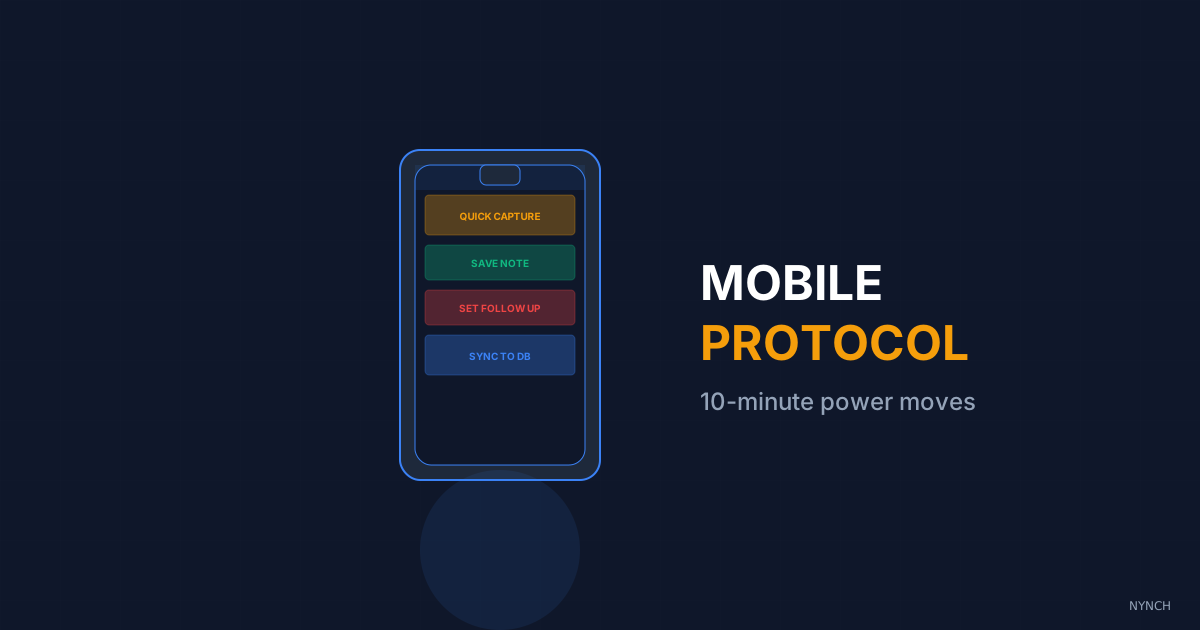
Ten minutes before a meeting is enough to get yourself fully present. Dump every open loop from your head into a voice memo so your mind can release it. Read one brief note about the person you are about to meet. Then turn on Do Not Disturb so nothing interrupts the room. You walk in empty of baggage and primed for the conversation.
You can be physically in the meeting and still stuck in the last one. You rush from a coffee chat into a boardroom. You sit down. The client starts talking. Part of your brain is still on the email you forgot to send, or the idea that landed in the taxi. You are buffering. You miss the first critical minutes because your head is full.
You cannot do high-quality consulting work if you carry baggage from one hour into the next. You need a reset. Here is the three-step routine I use in a hotel lobby, a lift, or the two minutes before I walk through the door.
Do not try to type notes on a tiny keyboard while you walk. It is too slow.
Step 1: Dump the open loops
Open your voice memo app or Nynch. Dictate everything currently looping in your head. “Email Sarah about the invoice. Buy milk. The idea for the Q3 strategy is X.” Get it out of your head and into the device. Once it is recorded, your brain can let it go. The open loop closes. You feel physically lighter.
Step 2: Load the next person
Now that your head is empty, fill it with the one thing that matters next. Open the contact record for the person you are about to see. Read the last note you wrote. Just the last one. “Promised to ask about their daughter’s exams.” That primes you for connection. It moves you from a general state of readiness to a specific person with a specific history. This is the step people skip, and it is the one that makes the meeting feel human rather than transactional.
Step 3: Silence the world
Toggle Do Not Disturb on your phone and your watch. If your wrist buzzes with an email halfway through the client’s sentence, you will break eye contact. You will look distracted. Silencing notifications is a small ritual of respect for the room.
That is the whole protocol. Dump, load, silence. Under ten minutes, often under five.
Capturing thoughts on the go is usually messy. Nynch tidies that up for you. You speak into it and it transcribes the note, tags it, and assigns it to the right project, so you are not left with a pile of “Audio Recording 12” files to sort later. When you arrive, it can surface the last interaction summary for the person you are meeting. There is also a simple inbox for random thoughts so you can capture them in one tap and process them later.
The method works with any voice memo app and a sticky note. Run it by hand first. You will feel the difference in the first meeting of the day. The product version just removes the admin that makes people abandon the habit by Thursday.
Read next
- Build a £500k consulting practice on relationship capital, the operational rhythm that turns a roster of contacts into a compounding business.
- 4 Ways To Know If Your Interface Is Causing You Subconscious Stress, Your tools shape your mood.
- Wake up your dormant network, fill your week with warm conversations from people you already know.
Frequently Asked Questions
How do consultants mentally reset between back-to-back meetings?
The most effective reset takes three steps: brain-dump every open loop from your head into a voice memo so your mind releases it, review only the last note you wrote about the next person you are meeting to prime for connection, then enable Do Not Disturb to eliminate incoming interruptions. The whole process takes under ten minutes and means you enter every meeting at full cognitive capacity.
What is the best way to stay present in client meetings as a consultant?
Presence requires clearing mental RAM before the meeting starts. Dictate all outstanding tasks and ideas into a voice tool in the minutes before you enter the room, read one brief context note about the client, and silence all notifications. These three habits switch your brain from background processing to full focus.
How can a consultant use their phone productively in the 10 minutes before a meeting?
Use those ten minutes for three things only: voice-dump all open mental loops so your brain stops tracking them, pull up a one-line context note about who you are meeting, and enable Do Not Disturb. Avoid email, social media, or any task that opens a new mental loop rather than winning existing ones.
Why do consultants lose focus during important client meetings?
The most common cause is unprocessed mental load - tasks, ideas, and worries from earlier in the day that continue to occupy working memory. Without a deliberate clearing ritual before each meeting, part of your cognitive bandwidth is still running background processes instead of being available for the conversation in front of you.