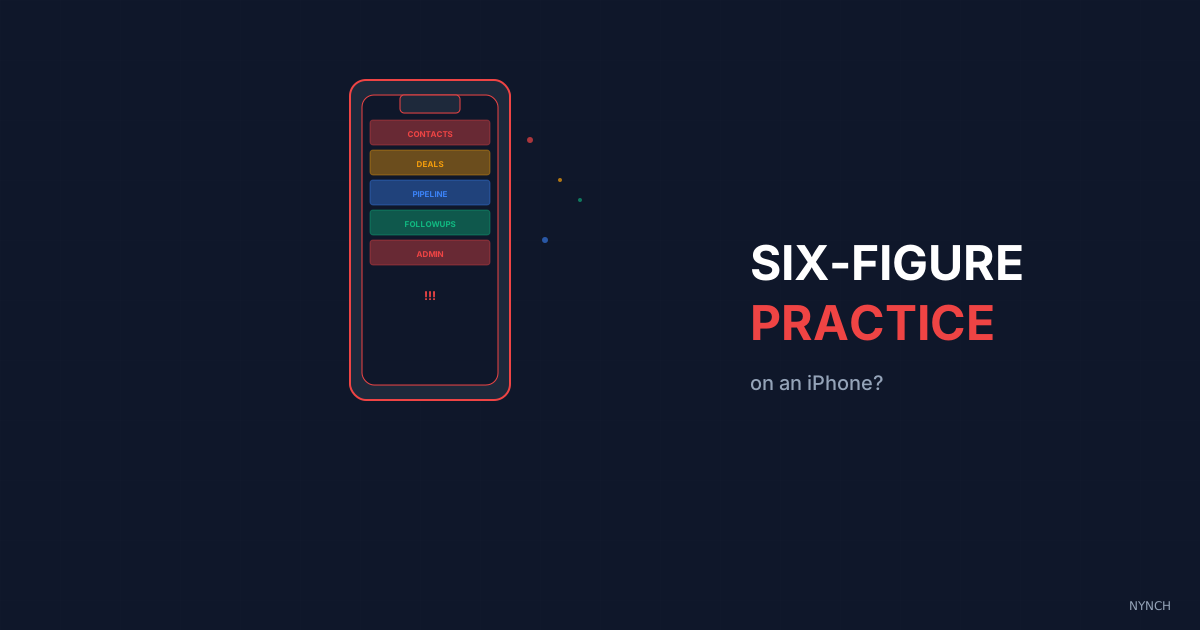
A consulting practice can and should be operable entirely from a mobile phone. The lessons from attempting it are: speed of response is a quality signal, voice-to-text replaces the typing barrier, brevity via “Sent from my iPhone” is professional rather than sloppy, and any tool that requires a desktop to use properly is a constraint on your business rather than an enabler of it.
I used to treat my laptop like an oxygen tank. Lunch with a friend, client email lands, simple question. I see it on my phone and think I will answer properly when I get back to my desk. Three hours later the moment has gone. The client has moved on.
I believed real work only happened on a keyboard. I was wrong. The work that keeps a practice alive happens in moments of connection. Speed is part of quality. If you can solve a problem in a coffee queue, you are more useful than the consultant who needs dual monitors to write an email.
I used to delete the “Sent from my iPhone” signature because I thought it looked unprofessional. I left it on and noticed what it did. It signals that you are out of the office and still responsive. It excuses short replies and the odd typo. It makes a two-sentence answer that resolves the issue feel normal rather than lazy. Now I leave it on. Speed over polish is the right trade for most client questions.
I hated typing long emails on glass. Voice-to-text fixed that and changed how I write. Spoken emails sound more like a person and less like a corporate template. You can clear half an inbox while walking to the train. The barrier was never careful thinking. It was poking at glass for twenty minutes.
For a long time I used my phone for Twitter and maps, and my laptop for the business. Then it hit me: if I cannot run my network from my pocket, I do not own the business. The business owns me. I audited every tool I paid for. If an app needed a desktop to be usable, I cancelled the subscription. Now I can check opportunity status, send a contract, and update a note with one thumb. That is response time, not a lifestyle flex.
I also tried to force strategy into a chair. My better pitch ideas arrive while I am moving: hotel lobby, pavement between meetings, train platform. Without a capture habit those ideas vanish. A voice note that records in seconds and syncs later is enough. The desk is for editing. The world is for the first version of the thought.
Most business software is still a desktop app squeezed onto a phone screen. Barely usable. Nynch is built for the phone first. The main actions sit at the bottom of the screen where your thumb already is. It works offline in a lift or on the tube and syncs when you have signal again. It loads quickly enough that you are not staring at a spinner while a client waits.
None of this means you never open a laptop. Long proposals still want a full keyboard. The point is narrower: if every small act of relationship work has to wait for a desk, you keep losing the moments that matter.
Read next
- Build a £500k consulting practice on relationship capital, the operational rhythm that turns a roster of contacts into a compounding business.
- 5 Ways To Execute Micro-Outreach To Keep Your Opportunities Moving In Just 15 Minutes, You don’t need an hour to build a network.
- Wake up your dormant network, fill your week with warm conversations from people you already know.
Frequently Asked Questions
Can a consultant effectively run their business from a mobile phone?
Yes - if your tools are genuinely mobile-native rather than desktop apps squeezed onto a small screen. The key is auditing your entire stack and replacing anything that requires a laptop to use properly. A consultant who can check opportunity status, send a reply, and update notes with one thumb is more responsive and therefore more valuable than one who defers everything to a desk.
What is the best mobile workflow for a consultant managing a network on the go?
The highest-impact mobile workflow changes are: switching to voice-to-text for email replies so you can clear your inbox while walking, using brief “Sent from my iPhone” replies to resolve questions immediately rather than deferring them, and having a one-tap capture tool for ideas and contact notes that syncs when you are back online. Speed of response is itself a quality signal.
Is it unprofessional to reply to client emails from a phone?
No - the “Sent from my iPhone” signature actually signals that you are active and accessible, and it sets an expectation of brevity that makes short replies entirely appropriate. A two-sentence reply that resolves an issue within minutes is more valuable to a client than a polished three-paragraph email sent three hours later.
How do consultants capture ideas and insights when away from their desk?
The best approach is a voice-first capture tool that records a note in seconds and syncs automatically. Many of the best strategic ideas emerge during movement - walking between meetings, travelling, waiting - and a capture habit that works in those moments means you stop losing the thinking that happens outside the office.