Skip to content
Blog About Sign in 1 to 1 Revenue Opportunity Analysis
Why Fractional Executives Need a Different Kind of Growth Tool
Business Development April 2026 • 8 min read

Why Fractional Executives Need a Different Kind of Growth Tool

Why Fractional Executives Need a Different Kind of Growth Tool

You run a fractional practice. You work with three to five clients at the same time. Maybe you’re a fractional CFO managing finance strategy for a construction company, a healthcare startup, and a mid-market tech firm. Maybe you’re a fractional CMO building go-to-market strategy for clients in completely different industries. Maybe you’re a fractional COO doing operations work for three companies simultaneously.

This is not the same problem a traditional consultant solves.

A traditional consultant might specialize in, say, pricing strategy for SaaS companies. They have a target market. They have a repeatable engagement. They sell to CFOs and product leaders, and the sales process is relatively consistent. That consultant can use a standard CRM because the sales process is linear.

Your world is different. Your sales process is not linear because you’re not selling in the traditional sense. You’re managing relationships with multiple clients in parallel, each with their own cadence and expansion opportunities. You’re also prospecting for new clients. And you’re doing this all while actually working, which means you have limited time.

The tools built for sales teams don’t fit this model. And trying to force-fit a CRM into your workflow is a recipe for either abandonment or analysis paralysis.

The Fractional Executive Workflow Problem

Let’s walk through what a typical week looks like.

Monday morning: You have a call with Client A to review this quarter’s financials and plan next quarter’s focus. While you’re prepping, you remember you haven’t spoken to Client B in two weeks - you should probably check in before they think you’ve disappeared. You also need to reach out to a prospect (someone who referred you or who you met at an event) because you’re not at full utilization yet.

By noon, you’ve got three mental contexts running: Client A (full attention), Client B (checking in), and Prospect (low priority but on your mind).

Wednesday: You have a deep working session with Client C. You’re embedded. They ask you to talk to their new VP of Sales about budget. That’s a new contact. You need to remember to add them to your CRM so you track when you talk to them and what you learn.

Friday: You’re planning your outreach for next week. You want to call five people to see if they might need fractional support. But you also know that Client A is in a strong spot - there might be expansion opportunity there. And Client B just went through a leadership change (you saw it on LinkedIn) - that’s your hook to reach out.

By Friday afternoon, you’re juggling: five active clients with different needs and different renewal timelines; a prospect pipeline that never gets enough attention because client work takes priority; and signals (job changes, company news, business milestones) that you’re barely tracking because you don’t have a system.

Most fractional executives try to solve this with Slack, email, and a note-taking app. It works until you miss something important. Then you realize you need a system. But when you implement a traditional CRM, you hit a wall.

Why CRMs Fail Fractional Executives

A CRM is optimized for one company with one sales team closing deals into one unified pipeline. Every feature assumes that structure.

When you’re a fractional executive, the assumptions break down.

For example, a CRM will ask “What’s the deal size?” For a CRM user, the answer is clear: $50,000. But for you, “deal size” means different things depending on the context. Is it a new client engagement? An expansion at an existing client? A referral? The revenue numbers look different. The sales process is different. The decision-maker is different.

A CRM will want you to classify contacts as “prospects” or “customers.” But your reality is messier. You have five active clients. You have 30 people at those five companies who are part of your network. Some are your direct contacts. Some are stakeholders you’ve worked with. Some are people who could expand their engagement. Some are people you’ve lost touch with. A binary prospect/customer division doesn’t capture this.

A CRM will push you to move deals through stages: discovery, qualification, proposal, negotiation, close. But a lot of your growth doesn’t work that way. Client renewal discussions happen quarterly. Expansion opportunities emerge over time as you demonstrate value. A prospect might become a client through a warm introduction, not a formal sales process. The funnel metaphor breaks.

Most frustratingly, a CRM assumes you have time to maintain it. You’re supposed to update deal status, log calls, add notes. But you’re busy actually doing the work. So the CRM becomes a burden instead of a tool. You stop using it. Your data gets stale. And you’re back to relying on memory and email chains.

What a Fractional Executive Actually Needs

Instead of forcing yourself into a CRM, what would be actually useful?

You need something that acknowledges this reality: you work at multiple companies, each with their own set of stakeholders, and you need to stay aware of what’s happening at each one.

Here are the core capabilities.

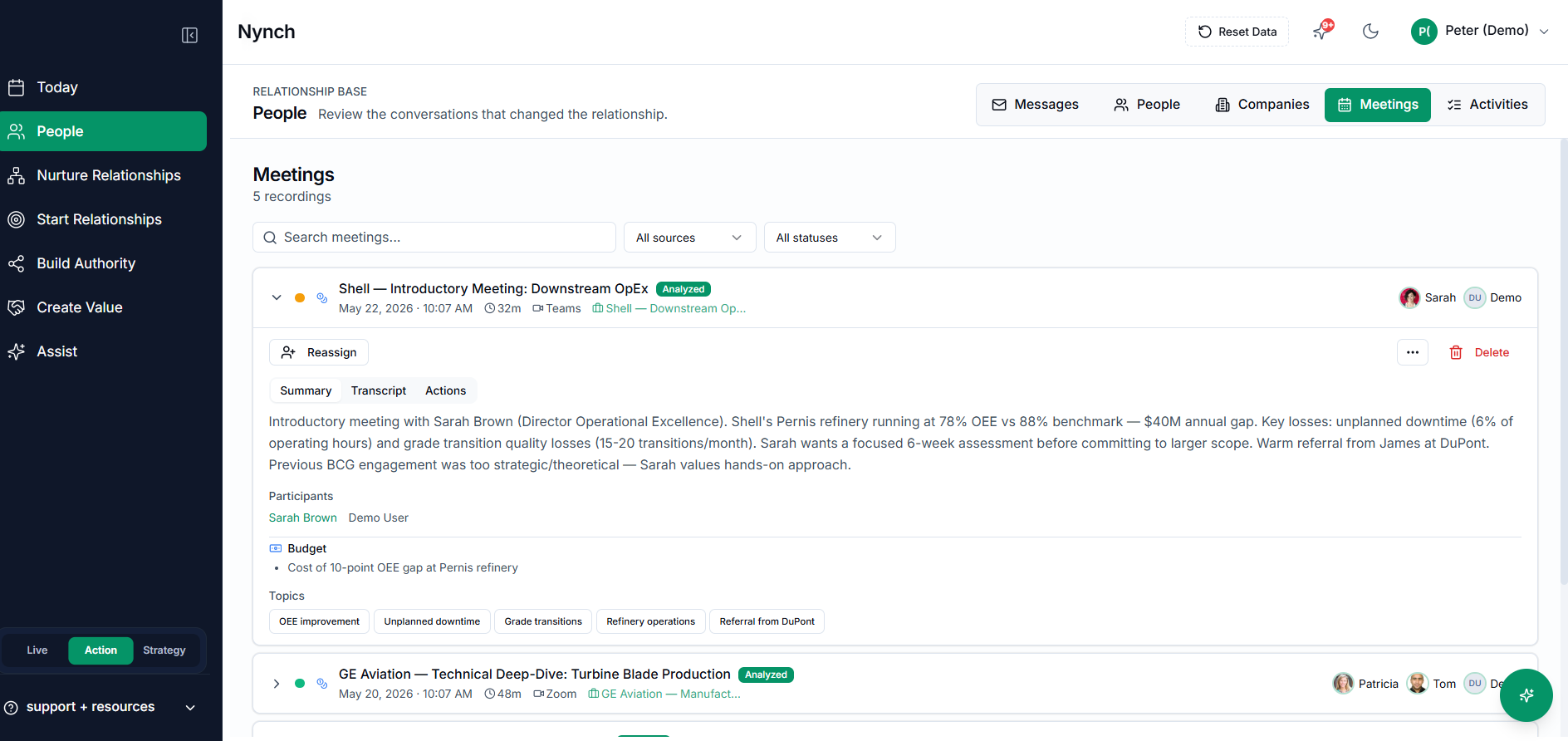
1. Multi-workspace relationships. You should be able to see your world organized by client company, not by deal stage. Under “Client A,” you see everyone you work with. The VP of Finance (your main contact). The CEO (someone who needs to know you). The Chief Operations Officer (someone you collaborate with on initiatives). You see when you last talked to each. You see what’s on their radar. This is relationship tracking, not pipeline tracking.

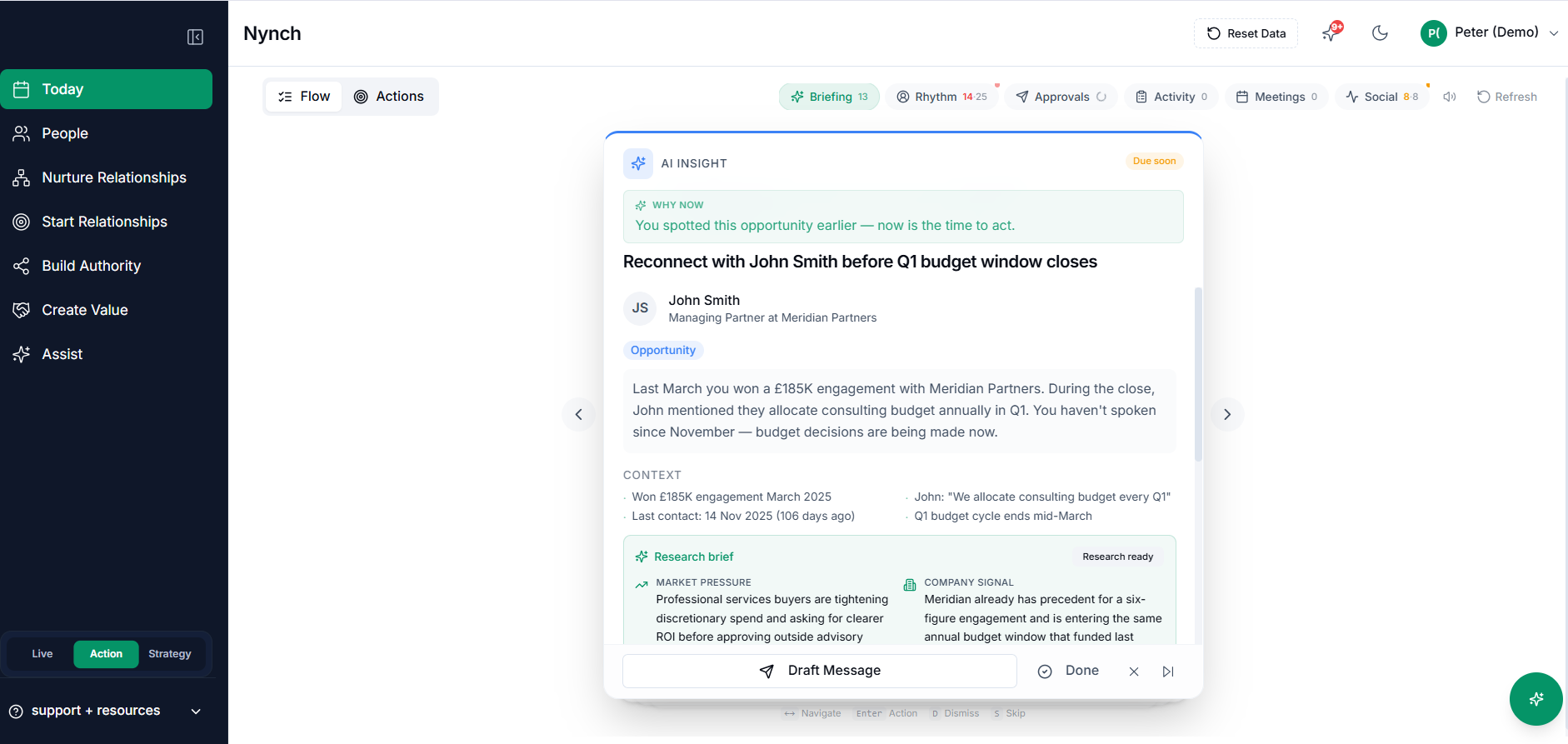
2. Expansion signals. You need to know who at each current client might be ready to expand the retainer. Has the company doubled in headcount? Did they raise funding? Did a new exec join? These are signals that your engagement might need to expand too. Instead of a CRM asking “What’s the next step?”, you need visibility into: “What’s changed, and what does that mean for our engagement?”

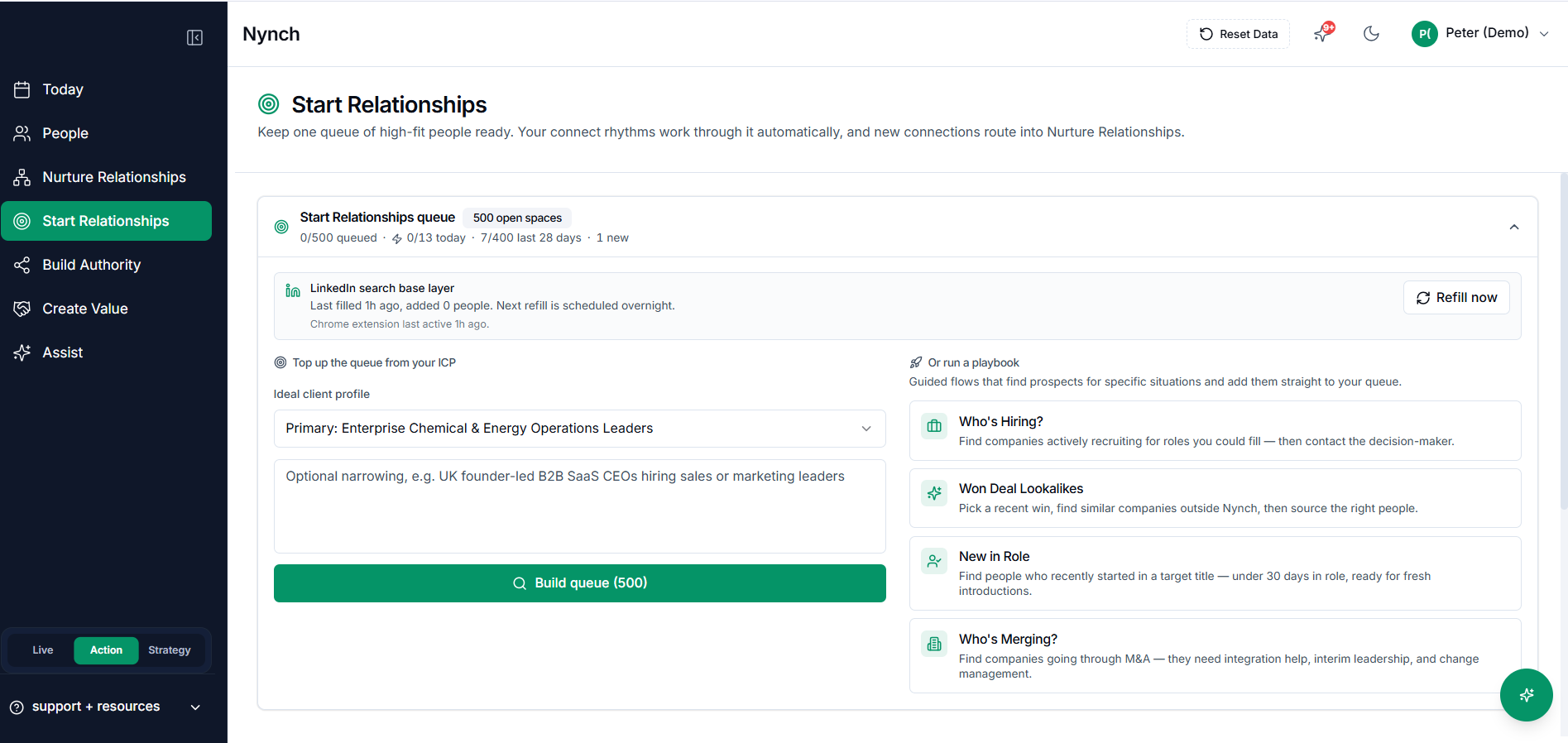
3. Prospect pipeline with low friction. You do need a place to track people you might work with eventually. But it shouldn’t be a formal sales funnel. It should be more like a watch list. “These are people in my target market or referral sources I want to stay aware of.” When something changes with them (they move companies, their company goes through a transformation, they publish something relevant), you get a signal. Then you have a natural reason to reach out.

4. Utilization visibility. You need to know quickly: Am I at 80% utilization? 120%? Who’s likely to expand? Who’s likely to contract? This isn’t a CRM question - it’s a capacity planning question. But it’s critical to a fractional practice. Your tool should help you see this at a glance.

5. Relationship history without overhead. You need to remember what you discussed with each client. What commitments did you make? What are they working on? What problems are they facing? But you don’t have time to maintain a formal CRM. So the system needs to make it easy to capture notes and find them again. Not “log the meeting” but “what did I discuss with Sarah last time?”

The Competitive Edge of Being Intentional

Here’s the reality: most fractional executives are not disciplined about relationship management. They rely on memory. They reach out reactively (when they need revenue) instead of proactively (when they see a signal). They miss expansion opportunities because they’re focused on delivery. They lose prospects because there’s no system to remind them to follow up.

If you’re willing to be intentional about this, you have a massive competitive advantage. You can be the fractional executive who always seems to know what’s happening at each company. Who reaches out at exactly the right moment. Who sees expansion opportunities before the client even realizes they need them.

That doesn’t come from luck. It comes from a system that works for how you actually work, not against it.

A system that acknowledges that you’re managing multiple relationships in parallel. That helps you spot when things are changing. That keeps you disciplined about staying in touch. That tracks capacity so you know when you can take on more work.

If you’re building this yourself, start with these three elements: a client tracking view (not a sales funnel), a prospect watch list (not a qualified pipeline), and a simple way to log what you discussed. Add utilization tracking when you’re ready.

Get those right and you’ll stop leaving money on the table. You’ll also stop feeling scattered. Because you’ll have a real system instead of hoping you remember.

Peter O'Donoghue
Peter O'Donoghue
Founder of Nynch. Spent a decade advising 200+ consultancies on business development and built Nynch after watching great consultants lose deals not to better competitors - but to forgotten follow-ups. LinkedIn
Free Strategy Guide
Grow Your
Relationship
Capital
Accelerate Your Growth

The 7 Point Relationship-Led Growth (RLG) Strategy Guide

Download our guide and accelerate your service business to the next stage of growth 👇

No spam. Unsubscribe anytime.