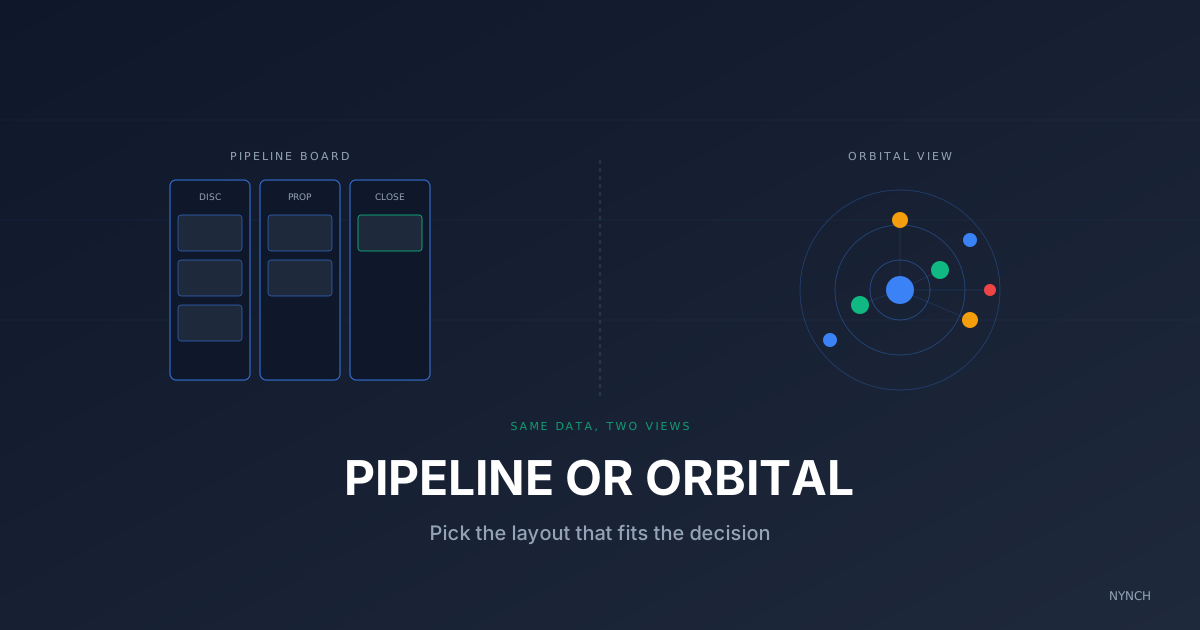
A Kanban pipeline board is the right tool for stage-based decisions and the wrong tool for daily relationship work. A relationship-centric view is the right tool for daily triage and the wrong tool for forecast aggregation. Kanban itself comes from Toyota’s manufacturing process and is described in Anderson and Carmichael’s Kanban: a system built to make work-in-progress visible, not to show whether a relationship is warming or going cold. Most consultants only ever use the first view because, for a long time, the second was not a real option.
You can stare at a healthy-looking pipeline and still lose a piece of work you never saw coming.
That happens because the Kanban view shows what stage a deal is in, not what is happening to the relationship behind it. A deal can sit at Stage 4 (Proposal) for two months with open rates falling, two promises overdue, and a champion who quietly changed jobs. The pipeline still shows Stage 4. Nothing flags. Then the work dies, and the board only updates after the fact, when it is already too late.
If your only view of active work is stage-based, you miss the variable that usually decides the outcome. Stage tells you where something sits in your process. Relationship trajectory tells you whether it is still alive. Gartner’s research on B2B buying behaviour consistently points to roughly 80% of the buying journey now happening between stakeholders rather than with the seller, which is why the relationship layer is often the dominant signal of whether work will land.
You do not need one permanent “view of pipeline.” You need different views for different decisions.
1. The “Forecast Friday” rule for stage-based work
Some decisions really are stage-based. Weighted forecast aggregation, board reports, spotting deals stuck in one column too long, and pipeline coverage analysis all benefit from a Kanban layout where columns equal stages and deals equal cards. Kanban’s strength is that it sums naturally. You can total deal value by column and see a weighted forecast in seconds.
The Forecast Friday rule is simple: reserve the Kanban view for once-a-week forecast review, monthly board prep, and any moment when you need to communicate pipeline status to someone who also speaks in stages. Use it for those jobs, then close it.
The gain is communication speed. When a partner, board member, or coach asks how the pipeline looks, Kanban answers in about 30 seconds. Trying to tell the same story through a relationship-centric layout takes longer and confuses people who only want stage totals.
Example: it is Friday at 4pm and you have a partner check-in at 5pm.
Open Kanban. Sum the column totals. Note any cards that have sat in one column for more than 30 days. That is your forecast. Walk into the meeting with it. Do not try to use Kanban for the rest of your week.
2. The “Daily Triage” rule for relationship work
Most of a consultant’s day is relationship work, not stage work. The questions sound like: who do I need to email today? Which pieces of work are cooling? Which client has gone quiet? Which contacts sit across more than one opportunity? Daniel Pink makes the broader point in To Sell Is Human: modern selling is less transaction tracking and more understanding the human dynamics underneath each decision.
The Daily Triage rule is to open a relationship-centric view first thing in the morning. Deals sit around the contacts behind them, with engagement signals shown visually. Cooling relationships, multi-deal contacts, and warm-intro paths should be obvious at a glance.
The payoff is catching trouble before the stage moves. A decaying relationship often shows declining engagement weeks before the card slides backward on a Kanban board.
Example: you open your Monday morning view and see two contacts whose engagement health has dropped from green to amber over the weekend.
Make the relationship-centric view your default morning screen, not the Kanban. The first 60 seconds of your day should answer “what changed in my relationships overnight?” not “where are the deals in the pipeline?” The pipeline will still be there later. The relationships need attention now.
3. The “Decision-First” question to pick a view
The fastest way to choose a view is to name the decision you are about to make, not the layout you prefer. Almost every CRM decision falls into one of two buckets: stage-based or relationship-based. Once you have named the decision, picking the view takes about five seconds.
The Decision-First question is two prompts. “Am I about to make a stage-based decision (forecast, report, stage triage)?” Or “Am I about to make a relationship-based decision (outreach, risk, prep)?” The first opens Kanban. The second opens the relationship-centric view.
Matching the tool to the work is the whole point. Most consultants default to whichever view they opened last, regardless of the job in front of them. That is how you end up doing daily relationship triage on a Kanban (clumsy and slow) and weekly forecast on a relationship view (confusing and hard to aggregate).
Example: you are about to spend 30 minutes on outreach to your top contacts.
Before you open the CRM, write the decision down. “Daily outreach triage” is relationship-based. Open the relationship-centric view. Do not “just check the pipeline” first. The pipeline is the wrong lens for that decision.
How Nynch Helps You With This
Most CRMs ship with one view. Nynch ships with both, kept in sync, so you can switch in one click based on the decision in front of you.
Pipeline Board view. Classic Kanban with columns for stages. Drag deals between columns. Sum value by column for forecast aggregation. Familiar if you are coming from Salesforce, HubSpot, or Pipedrive.
Orbital View. Deals organised around the contacts and relationships behind them. Engagement signals and relationship health shown visually. Multi-deal stakeholders visible. Decay-based risk shows up before stage backslides.
Same data, instant switch. Both views show the same live deals. Drag a deal in Pipeline Board and it updates in Orbital View immediately. No manual refresh. The view is a lens. The underlying data stays unified.
Relationship-health awareness on every card. Even on the Pipeline Board, every deal card carries a relationship-health indicator. The relationship signal is always present, whichever view you are in.
If you want to see both views on the same live pipeline and decide which fits how you think, book a walkthrough.
Once you have picked the right view for the right decision, the next question is what daily and weekly habits actually move pipeline, because the view only helps when you pair it with action.
Read next
- The intent radar, exactly who to call today, read buying signals so your pipeline runs on intent, not guesswork.
- Even If They Are Ghosting You, You Can Still Resurrect The Opportunity With This 3-Step Sequence, Don’t accept the ghosting.
- The client command centre, the dashboard consultants actually open every morning to spot risk and expansion early.
Frequently Asked Questions
What is a Kanban pipeline view?
A Kanban pipeline view shows deals as cards organised into vertical columns by sales stage (Discovery, Proposal, Negotiation, Closed). It’s the standard layout used by Salesforce, HubSpot, Pipedrive, and most other CRMs. The strength is that it aggregates naturally for forecast review.
What is a relationship-centric deal view?
A relationship-centric deal view organises deals around the contacts and relationships behind them, with engagement signals and relationship health surfaced visually. The strength is that it makes the relationship trajectory (warming, cooling, decaying) visible at a glance. It is the right view for daily relationship triage.
When should a consultant use a Kanban view vs a relationship view?
Use Kanban for stage-based decisions: weekly forecast, board reports, stuck-deal triage, pipeline coverage analysis. Use relationship-centric for daily decisions: who to reach out to, which deals are at risk because of relationship decay, which contacts span multiple deals, where the warm-intro paths sit.
Why does my pipeline view miss relationship risk?
Because it’s organised by stage, not by relationship trajectory. A deal can sit at Stage 4 with declining open rates, two overdue promises, and a champion who just changed roles. The Kanban view shows a healthy stage. The risk is invisible in that layout. You need a different lens to see it.
Should I switch entirely to a relationship-centric view?
Most consultants end up using both, just at different moments. A relationship-centric view becomes the daily default for triage. The Kanban stays useful for Friday forecasts, monthly reviews, and any reporting where stakeholders also speak the language of stages. The two views complement each other rather than replacing each other.