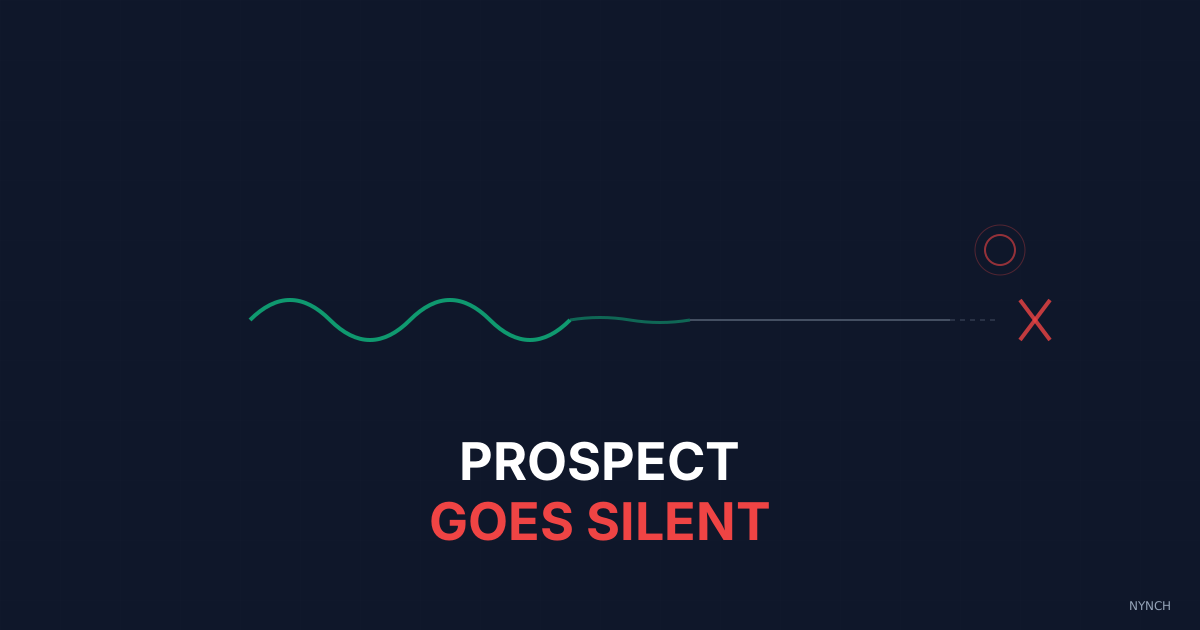
When a contact goes dark, the three mistakes that kill opportunities are panic-chasing with empty “just checking in” emails, passive waiting that lets the project fall off their radar, and discounting your own proposal before any objection has been raised. The fix for all three is a structured follow-up cadence that adds value at each touch and holds your nerve on price.
Why does silence feel louder than a rejection?
You sent the proposal. You felt good about it. Then three days passed. Then seven. Now it is day fourteen. You check your email every hour. You start inventing stories. Maybe they are ill. Maybe they hated the price. The anxiety builds. Eventually you crack. You send a frantic “Did you get this?” email, or you decide never to contact them again out of spite.
Both reactions are fatal. Silence is not a personal attack. It is usually just a lack of urgency on their side. How you react to that silence decides whether you stay a peer or become a pest. Most consultants destroy the opportunity in this phase because they cannot handle the ambiguity.
Here are the three biggest mistakes people make in that void, and how to fix them.
1. The “Just Checking In” Panic Spam
The biggest mistake is breaking the silence with zero value.
When you send an email that says “Just checking in” or “Just floating this to the top of your inbox,” you are making a withdrawal. Instead, learn proven nudge email templates that add value and get responses. You are asking for their attention without giving them anything in return. You are advertising that you are anxious about the opportunity and want them to soothe that anxiety.
That smells of desperation. It lowers your status. A trusted advisor does not “check in.” A trusted advisor adds value.
The Fix: Never send a naked bump. Always wrap your follow-up in value. Send an article. Send a relevant piece of news.
“Hi [Name], I saw this regulation change and thought of our conversation. Still happy to walk through the proposal when you are ready.” This is a gift, not a demand.
2. The “Passive Waiting” Trap
The opposite mistake is doing nothing. You tell yourself you do not want to be “pushy.” You convince yourself that if they want it, they will buy it.
That is a lie. Contacts are busy. They have twenty other priorities. If you do not keep the project on their radar, it will fall off. Passive waiting is not patience. It is avoidance. You are hiding from the potential “no” by not asking the question.
The Fix: Adopt a standard cadence. Remove the emotion. Commit to a day 3, day 7, day 14 follow-up rhythm. If you decide in advance when you will follow up, you remove the fear of being annoying. You are just running a process.
3. The “Internal Narrative” Spiral
The third mistake happens entirely in your head. You start negotiating against yourself.
“They haven’t replied, so the price must be too high.” You send a follow-up offering a discount before they have even objected. You bid against yourself. You erode your margin because you are inventing an objection that might not exist. They might just be on holiday.
The Fix: Stick to the facts. The fact is they have not replied. That is all you know. Do not change the opportunity until they ask you to. Hold your nerve. Price is rarely the reason for silence. Timing is.
How Nynch Helps You With This
You need a system that stops you from acting on emotion.
Nynch acts as the rational brain when yours is not.
It tracks the opportunity and shows whether the silence is normal for this client or unusual, which takes some of the panic out of the wait.
It suggests value-add follow-up templates so you never send a generic “checking in” email again.
It holds the reminder schedule. You do not have to decide when to email, because the system tells you when it is time.
Read next
- The intent radar, exactly who to call today, read buying signals so your pipeline runs on intent, not guesswork.
- 3 Ways To Clone Your Best Client And Find Clients Who Pay Full Price, Stop wasting time on bad-fit contacts.
- The client command centre, the dashboard consultants actually open every morning to spot risk and expansion early.
Frequently Asked Questions
What should a consultant do when a contact stops responding after a proposal?
Avoid the two extremes of panic-chasing and passive waiting. Instead, follow a structured cadence - a value-add follow-up on day 3, a channel switch on day 7, and a break-up email on day 14. Each message should give the contact something useful rather than asking them to address your anxiety about the opportunity.
Why do consultants discount their fees when a contact goes silent?
Silence triggers an internal narrative spiral where consultants assume the worst - usually that price is the problem - and offer discounts before any objection has been raised. Silence almost always means busy or low priority, not price resistance. Hold your rate until a specific objection is voiced.
What is the difference between a good follow-up and a bad follow-up after a proposal?
A bad follow-up asks for the contact’s attention without giving anything back - the classic “just checking in” message. A good follow-up wraps the contact in something valuable: a relevant article, a regulatory update, or a market insight that connects directly to the problem they shared. It positions you as an advisor rather than a chaser.
How long should a consultant wait before following up on a silent proposal?
Three days of silence is the right trigger for a first follow-up, but the message should be value-led, not a status check. Seven days without a reply warrants a different channel. By day fourteen, a break-up email that withdraws the offer will either win the file cleanly or prompt the contact to re-engage.