HoneyBook helps you bill the work you already won.
We help you win the next one.
HoneyBook is a clientflow platform for booking-shaped businesses. Wedding photographers, planners, venues, florists, DJs, caterers. If every engagement is a proposal followed by milestone payments, it’s fit for purpose. If you’re a solo consultant, coach, or fractional executive whose revenue lives in long-running relationships, the parts of HoneyBook you actually need (a place to bill) are 10% of the price you’re paying. The parts you really need (a system that surfaces the next engagement) HoneyBook will never build.
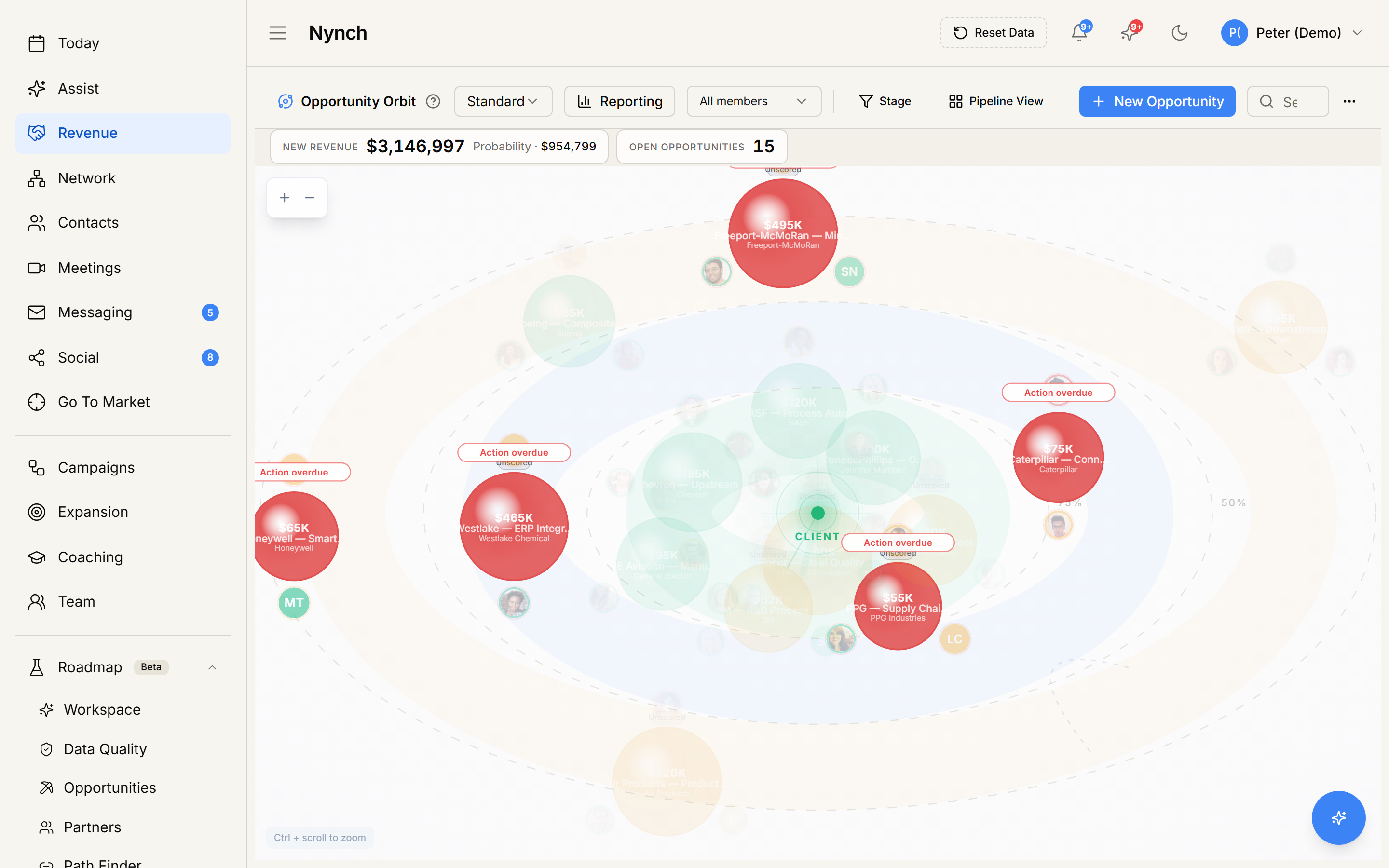
A pipeline that thinks. Currency, probability, every overdue action surfaced. Built for the consultant who wins on relationships, not the photographer who wins on bookings.
A Payment Processor vs. A Relationship System
HoneyBook is, structurally, a payments company. Their revenue is a cut of every invoice that flows through the platform. They are the merchant of record on your client transactions. Their newest products are HoneyBook Finance (instant payouts, expense tracking) and HoneyBook Capital (lending against your future invoices). That is the business they are in.
The CRM features they ship on top, proposals, contracts, e-signature, client portal, are an acquisition layer for the payments business underneath.
This matters because it tells you exactly what HoneyBook AI will and will not be allowed to do. It will draft proposals, suggest contract clauses, propose lead replies, build workflow automations from a prompt. Every one of those features moves a buyer closer to an invoice. The thing you actually need most as a consultant, surfacing the dormant relationship that mentioned a Q4 budget in October and is ready to call today, is structurally non-revenue to a payments company. They will never build it.
Nynch is the opposite end of the funnel. Nynch reads Gmail, Calendar, LinkedIn, meeting transcripts, and news for you. It tracks every relationship in your professional network with two-sided memory: what you said, what they said, and what either of you implied is coming. It tells you who to contact today, why, and what to say. No data entry. The billing piece you keep wherever it already works.
Three Differences That Matter
Win the work vs. win the next client.
HoneyBook starts the moment a lead fills in your inquiry form. From there it does proposal, contract, payment, client portal, calendar, follow-up automations. The whole product is sequenced around an inquiry that already happened. There is no surface for the months and years that came before the inquiry, where most consulting work is actually decided.
Nynch starts before the inquiry exists. It reads your network for buying signals, funding rounds, job changes, role expansions, new initiatives, content mentions, and tells you which relationship is about to come back. The Ignition Queue surfaces today’s warm conversation, not yesterday’s open invoice. By the time a client is ready to send HoneyBook a contract, Nynch has already told you it was coming.
Project files in a portal vs. relationship memory across every touch.
HoneyBook’s memory is the project. A client gets a portal with their files, their contract, their invoices, their messages. The model assumes the only thing worth remembering is what you exchanged inside this engagement. When the project closes, the memory stops.
Nynch carries two-sided memory across every touch. The Q4 budget the client mentioned in October. The board change they hinted at on a call. The introduction you made to their COO two years ago. When the next engagement comes, Nynch is the one that connects the thread. HoneyBook would not have remembered the budget comment because there was no invoice attached to it.
AI that drafts your follow-up email vs. AI that flags the dormant relationship about to come back.
HoneyBook AI is a no-prompt assistant for content. It writes proposal copy, suggests email replies, builds automations from a description. Everything it does makes the existing booking flow faster. None of it answers the real question: who in my network should I be talking to this week, and why?
Nynch monitors your professional network 24/7. It detects buying signals, tracks the Rhythm-Break Rule on your stale relationships, calculates an Authority Score on each contact, and gives you a Signal-Driven Alibi to reach out before your competitor even knows the opportunity exists. Outcome-calibrated AI that learns from your actual close rate, not a generic baseline.
Force a Choice, Not a Comparison
- → You’re a wedding photographer, planner, venue, florist, DJ, or caterer.
- → Every engagement is a proposal followed by milestone payments and a delivery date.
- → You need contracts, e-signature, a client portal, and an integrated way to take the money more than anything else.
- → You’re a solo consultant, coach, or fractional executive who wins on trust and reputation.
- → Most of your future revenue lives in relationships you’ve already built, not new inquiries from strangers.
- → You want AI that surfaces buying signals and reactivates dormant relationships, not AI that drafts your follow-up email faster.
- → You already have a way to send invoices and want one tool for the part nobody else owns: winning the next engagement.
Your network is already
sending you signals.
See what your Sleeping Network looks like and how much dormant network value is hiding in relationships you have neglected.
Nynch vs. HoneyBook, Answered
No. HoneyBook and Nynch solve different jobs. HoneyBook handles the work after a client has decided to buy: proposals, contracts, e-signature, invoicing, and payments. Nynch handles the work before: the relationships, signals, and dormant network reactivation that surface the next engagement. Most consultants and fractional executives keep a lightweight billing tool (Stripe, Wave, an accountant, or HoneyBook itself) and add Nynch as the relationship and pipeline layer.
HoneyBook was built for wedding photographers, planners, venues, florists, DJs, and caterers. Booking-shaped businesses where every engagement has a proposal, a contract, milestone payments, and a delivery date. Consultants and fractional executives sell expertise on retainer, fly back two years later for a fresh engagement, and win most of their revenue from people who already trust them. HoneyBook does not see that motion. It cannot tell you a client mentioned a Q4 budget in October and is now ready to call. It can only track the project once you have already won it.
Nynch is £950 per year on the Annual SaaS plan, annual only. HoneyBook ranges from $29 to $129 per month after their February 2025 price hike, with a payment processing cut on top of every invoice you send. The Founder Member charter (£4,950 for 12 months) adds 52 coaching sessions with the founder. Pricing is one factor. The bigger factor is that HoneyBook charges you to bill the work you already won. Nynch helps you find the next engagement.
HoneyBook AI drafts proposals, suggests email content, and builds workflow automations from a prompt. Useful for the booking flow. It does not surface dormant relationships, prioritize next-best-action across your network, watch for buying signals, or learn from your actual close rate. HoneyBook’s revenue depends on a cut of every transaction you process, so their AI is structurally pointed at transactions, not relationships. Nynch is pointed at the opposite end of the funnel.
Yes. Use HoneyBook (or any lightweight billing tool) for proposals, contracts, and payments where they fit your workflow. Use Nynch for the relationship and pipeline layer that HoneyBook does not provide: stale relationship detection, buying signals from Gmail, Calendar, LinkedIn, and meeting transcripts, dormant network reactivation, and an Ignition Queue that tells you who to contact today and why. They are adjacent jobs, not competing ones.