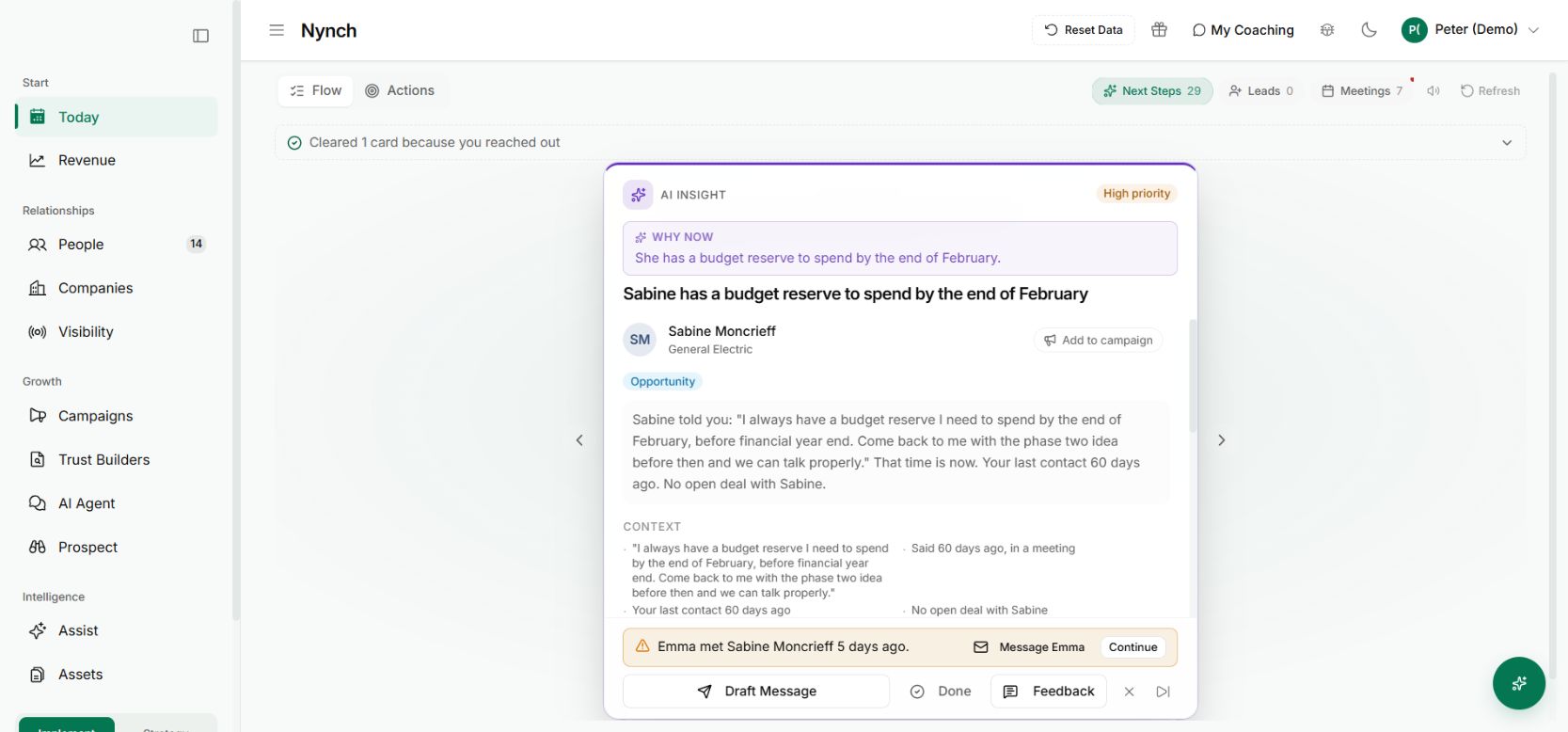
“You should contact this person” is not enough. You need the reason, and you need to know whether that reason still holds.
What changed
Nynch brings supporting context closer to AI-assisted work. Research briefs, source links and context gaps help you distinguish a recorded fact from a proposed interpretation.
The current Today screen provides a concrete example: the remembered conversation, company context and suggested question sit together.
Put it to work
When an answer surprises you, ask for its source. Follow the available record and check the date. If the information is incomplete, tell Assist what is missing rather than asking it to sound more certain.
Do this before quoting a figure, making a claim about a buyer or treating a suggested next step as agreed.
The value is a decision you can stand behind. You can use AI to prepare the work while keeping responsibility for what you say and do. The presence of an explanation is useful, but it is not a substitute for checking the evidence.
Do not let repetition become proof
A recommendation may combine recorded events with an interpretation. Keep those parts separate when you act on it. A reply is evidence of a reply. A claim that the buyer is ready to commit needs more support.
The later AI evidence boundary update addresses this behind the scenes by narrowing the generated advice available through generic contact-profile reads. Your review still matters: an explanation can help you inspect an answer without making the answer automatically correct.