Everyone in the AI revenue tools space is suddenly publishing the same essay. The CRM is a graveyard. Reps spend their lives logging things that already happened. The forecast you are staring at is shaped less by what is true and more by what your team was willing to type into a dropdown.
All of that is correct. Anyone who has worked a deal inside HubSpot or Salesforce already knows it.
The interesting question is the next one. What do you actually do about it?
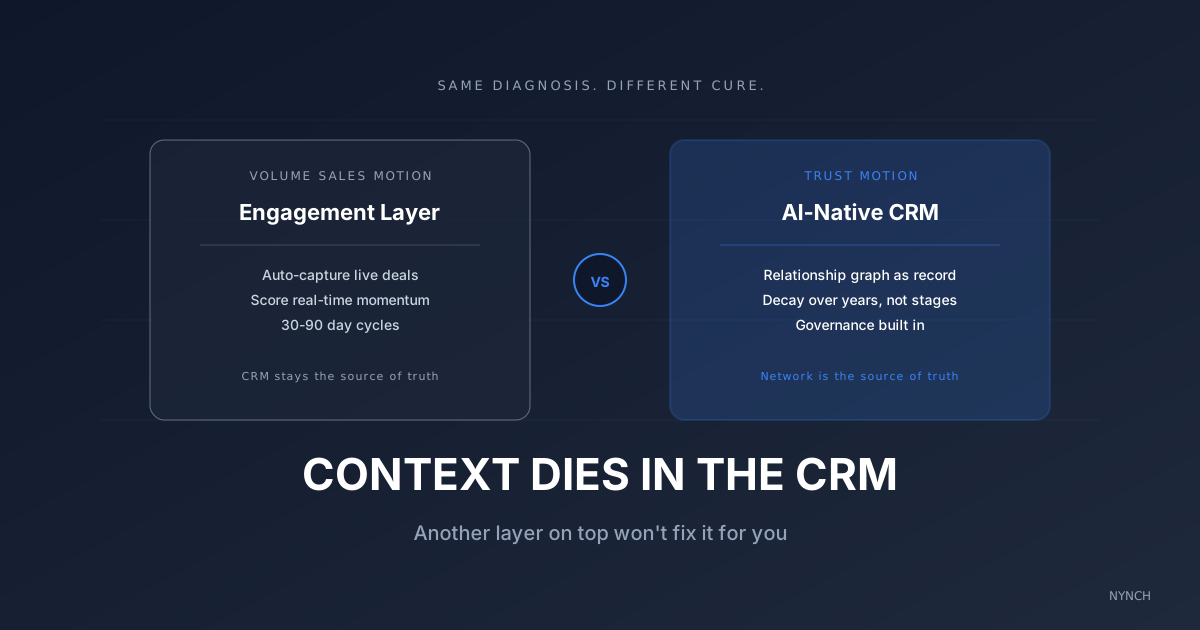
The current answer, from a wave of well-funded engagement-layer companies, is: bolt automation on top of the CRM. Capture context automatically. Let the rep spend more time selling and less time typing.
For a high-volume SaaS sales team, that is a real fix. For a consultant, a fractional executive, or a boutique advisory firm, it solves the wrong problem.
Here is why.
The disease is universal. The cure isn’t.
CRMs were built in the 1990s to track high-volume B2B sales funnels. The unit of work was the deal. The metric was velocity through stages. The rep was a high-output SDR or AE running a 30 to 90 day cycle, repeatedly.
That whole architecture made a quiet assumption: the relationship is downstream of the deal process. You source new contacts, you score them, you move them through stages, you win the work. The relationship lasts as long as the deal does. Then you find another one.
If that is how your business actually works, the modern engagement-layer prescription is correct.
Skip the manual logging. Pipe email, calls, calendar, and Slack into an AI that summarises and scores. Surface real-time momentum signals. Let your rep work the live conversation rather than the historical record. The win condition is the same it has always been. Win more deals, faster.
But there is an entire other side of the revenue world where that assumption breaks.
The world the engagement layer can’t see
Picture a fractional CFO. She bills £15K a month. She has four active clients, eleven past clients, and a network of roughly two hundred people she has worked with, advised, or been introduced to over the last decade.
Where does her next £180K engagement come from?
Almost never from cold outbound. Almost never from a deal she pushed through stages. Usually from one of three sources:
- A past client extending the engagement
- A past client referring a peer
- A dormant relationship she has quietly stayed in touch with for two years suddenly hitting an inflection point
The unit of work is not a deal stage. It is a relationship over years. The risk is not that she will miss this quarter’s forecast. It is that she will go quiet on the seven warm people who could each refer her a six-figure engagement next year.
Now run the engagement-layer playbook against her business. Auto-capture every call. Score momentum on the live conversation. Surface real-time stakeholder signals.
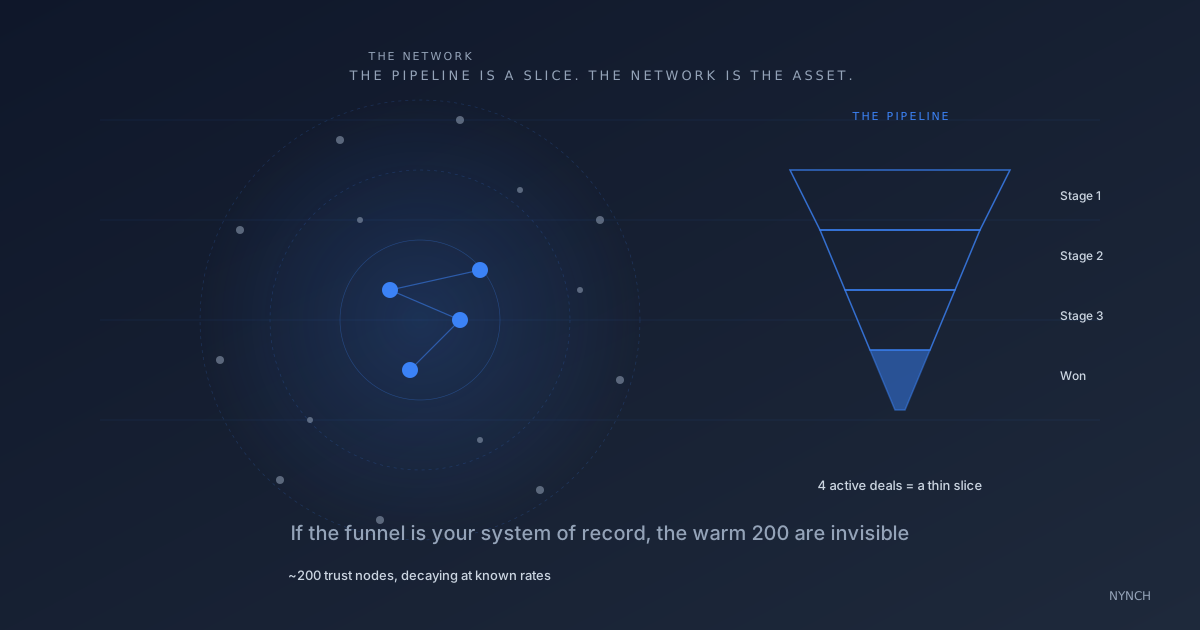
It would work, for the four active engagements. It would do nothing for the 207 people who are not currently in a deal but who collectively represent the entire next decade of her revenue.
A workspace built around live deal velocity literally cannot see them. They are not in the funnel. They have no stage. There is no momentum to score because nothing is happening, which is exactly the problem you would want flagged.
What relationship-led pros actually need
Five things, none of which an engagement layer bolted onto a legacy CRM can give you.
1. The system of record is the network, not the funnel.
For a relationship-led business, the truth lives in the graph of people you have earned trust with. The deal list is just the slice of that graph where money is currently moving. If the funnel is your source of truth, your warm 200 are invisible by definition. They live as “old contacts” in a CRM nobody opens.
2. The unit of work is decay, not stages.
A deal stage tells you where active work sits. It tells you nothing about whether a relationship is alive. Most relationships in a consultant’s network are not dead. They are decaying at rates you can roughly model. Stay quiet for too long past someone’s natural rhythm and trust evaporates, even if neither side notices until the day you reach out and it is too late.
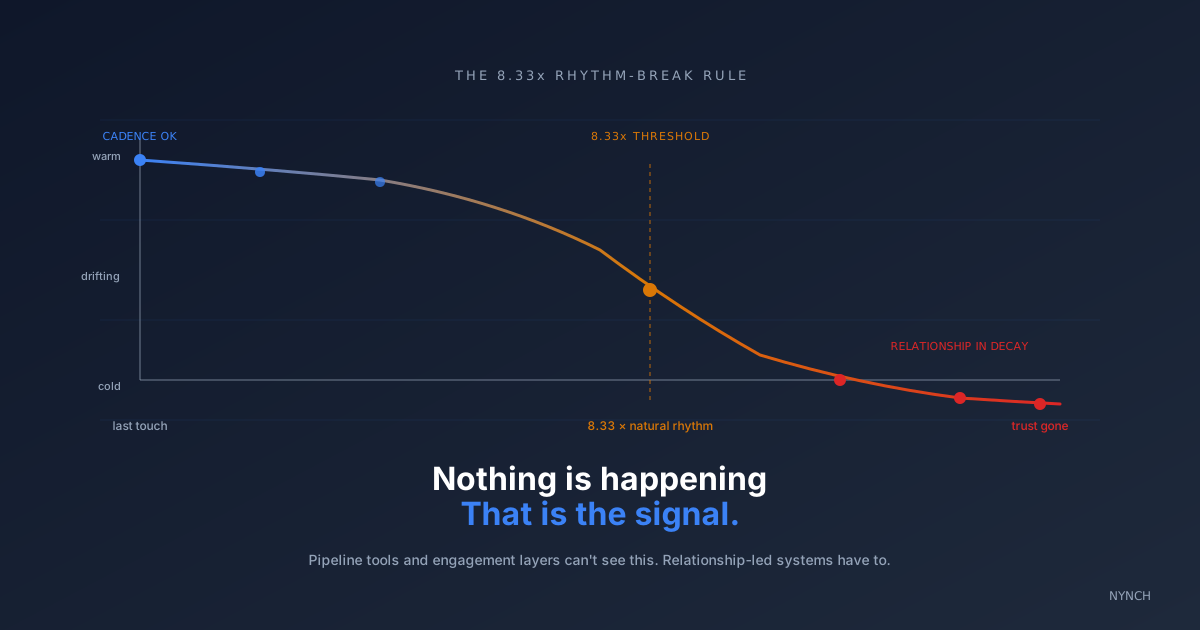
I use a simple model for this: every relationship has its own rhythm, and silence far past that rhythm means trust is decaying even though nothing visible is happening. If you used to be in touch monthly and you have gone eight months silent, the relationship is on a clock you cannot see from inside a deal tool.
3. “Engagement” has to mean something specific.
When an SDR talks about engagement, she means email opens, replies, meetings booked inside a 30 day window. When a fractional executive talks about engagement, she means: did this person who matters to my career and revenue actually hear from me in a way that registered, in a window that fits the rhythm we have built? Those are different concepts wearing the same word.
Most “AI for sales” tools quietly use the SDR definition because that is what their training data looked like. For relationship-led pros it is almost always wrong.
4. Governance built in, not pushed onto you.
Most AI revenue tools hand you a blank canvas. You define what a deal is. You define what engagement means. You decide which metrics are canonical. You configure how the AI should reason over them.
Almost nobody does this work. Almost nobody has the time. So the AI features run on the customer’s definitional vacuum and produce confident-sounding output that nobody quite trusts. That gap in how AI is governed is something engagement-layer tools have largely inherited from the CRMs they are trying to fix.
5. Evidence under every claim.
When an AI tells you “this deal is at risk” or “this relationship is decaying”, you need to be able to click through to the specific signals it used. Two emails. A skipped call. A LinkedIn job change. Without that, you are trusting a black box. With it, you are trusting your own eyes.
Relationship-led pros are too senior and too sceptical to trust the first kind.
What that actually looks like
The shape of what relationship-led pros need is a system where:
- Every meaningful person in your professional life sits in the graph, not just the ones currently in a deal
- Each relationship has a natural cadence and the system knows when the rhythm has broken
- Dormant value is quantified before it dies, not after
- The AI proposes the next action, and every claim it makes is backed by deterministic compute plus an evidence link
- The deal list still exists, but it is a view derived from the network, not the system of record
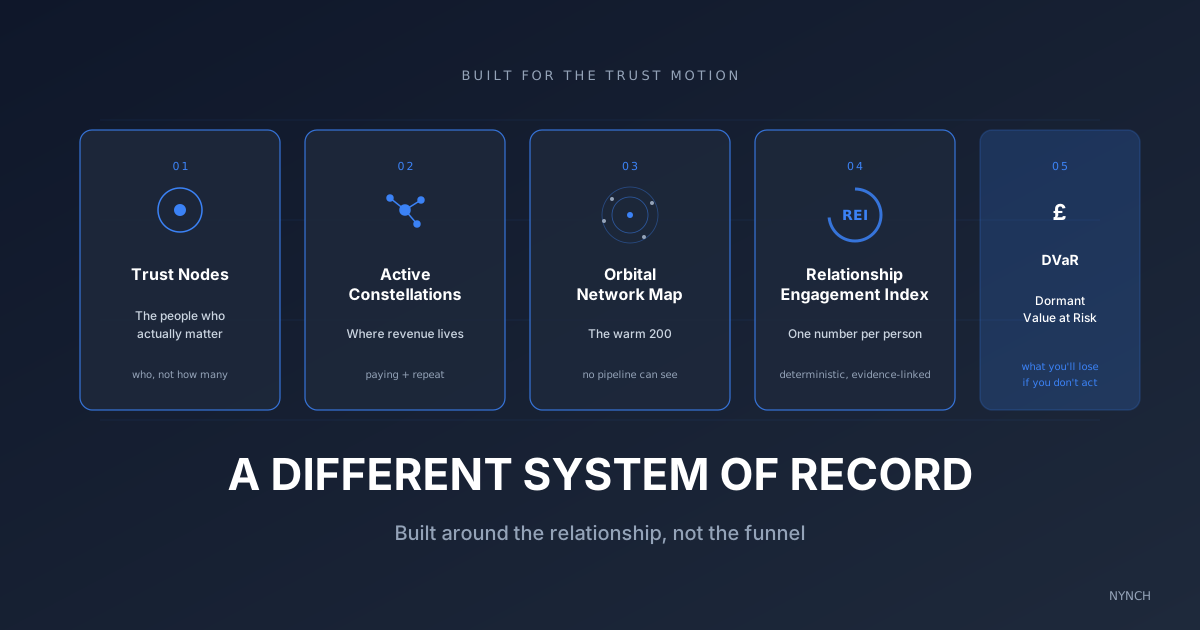
Inside Nynch, that maps to trusted connectors (the people who matter), active revenue relationships (the ones currently producing revenue), warm-network maps (the warm 200 you forgot to keep warm), a single engagement score for how a relationship is doing, and Dormant Value at Risk (a money estimate for what you stand to lose if you do not act). Treat those last two as models that make silence visible, not as clinical findings.
None of these things make sense inside a deal-stage view. All of them are required if your business runs on trust over time.
So who is the engagement layer actually for?
It is for the SaaS sales team running a high-volume motion. The category exists for a reason. If your unit economics demand thirty meetings a week per rep and a 45 day average sales cycle, you do need real-time deal context, you do need to recover the hour a day reps lose to admin, and you do need the AI riding shotgun on every live conversation. An engagement layer on top of HubSpot is a real product for a real customer.
It is not for the consultant whose last four engagements all came from people she has known for three years.
It is not for the fractional CRO who has not been on a discovery call with a stranger since 2018.
It is not for the boutique advisory whose active work list is twelve people deep but worth £4M, where losing any single relationship is a five-figure mistake.
For all of those people, the answer is not “fix the CRM by adding a layer”. It is “stop using a deal tool as the operating system for a relationship business”. The system of record itself has to change shape.
The honest one-liner
The CRM-is-a-graveyard essay is correct about the disease. The cure it prescribes works for high-volume sales teams running volume motions. For relationship-led professionals running trust motions, the cure is to rebuild the system of record around the relationship, with AI governance native to the architecture.
That is what an AI CRM for consultants, fractionals, and professional services means in practice. Not another layer on top of a tool that was always pointed at the wrong unit of work. A different system, built around the only asset that actually matters to a relationship business: the network of people who already trust you.
If you have spent any time wondering why “modernising your CRM” never seems to fix the thing you actually need fixed, this is why. You do not need a faster deal process. You need a system that knows the deal list is downstream of the relationships, and treats those relationships as the asset.
What this looks like inside Nynch
The answer to “context dies in the CRM” inside Nynch is the Assist Context Layer. It is the structured map of your relationships that the AI reads before it answers. Four one-click prompts (Brief me on a relationship, Find open loops, Draft my monthly digest, What changed this month?) replace the prompt-engineering ritual most AI tools still ask you to perform. Read-only, user-scoped, audit-logged. The assistant gets more powerful without becoming reckless.