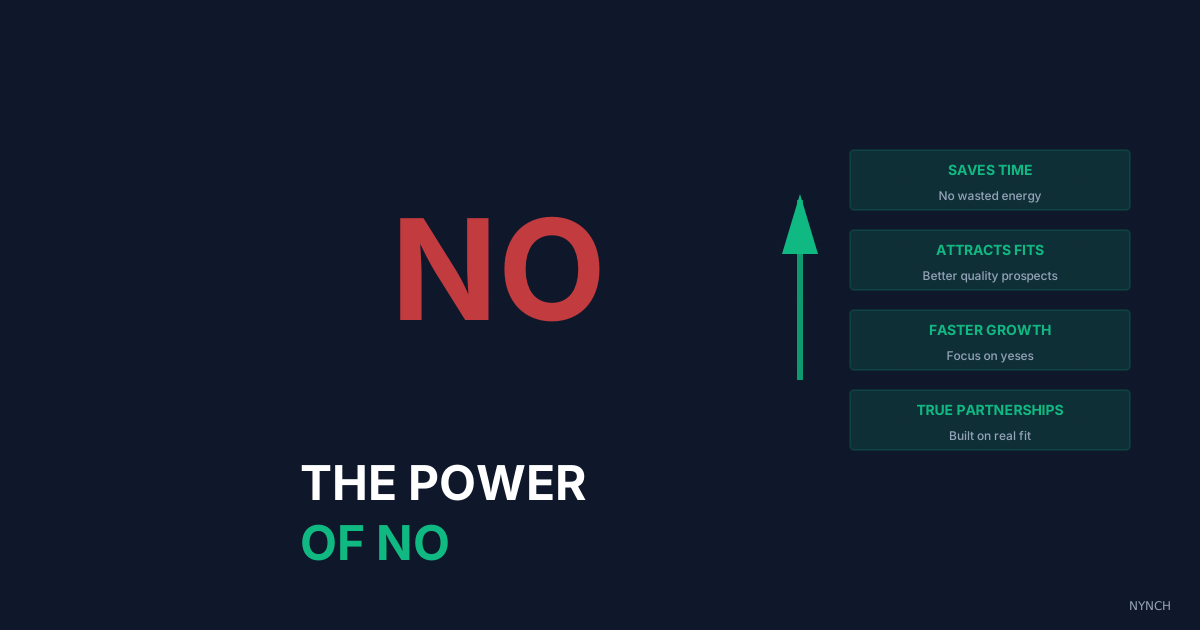
A fast “No” is the second most valuable answer in sales, after “Yes.” It frees the attention and calendar time that a long “Maybe” burns. It often surfaces the real reason for hesitation so you can come back at the right moment. And it filters out the indecisive clients who tend to be hardest to work with once hired.
Five opportunities have sat on your list for three months. Not yes. Not no. Maybes. You keep them because the forecast looks full and full feels safe.
Maybe is the worst answer in sales. It eats attention. It demands follow-up. This is why opportunities drift away slowly: you hold false hope instead of forcing clarity. You spend hours chasing people who will never buy, and that time is stolen from people who are ready.
The best answer is “Yes.” The second best is a fast “No.”
Here is why you should go looking for the No.
1. Clarity Creates Focus
When a contact says no, you stop thinking about them.
The mental load lifts. You archive the opportunity. You stop wondering whether to email again. That energy goes straight into finding a new yes. You cannot catch a new ball if both hands are full of old ones.
2. “No” Protects Your Margin
The client who drags their feet for six months is usually a hard client.
They are indecisive. They are price-sensitive. If they eventually say yes, the project often costs more in stress than it pays in fee. A fast no saves you from a low-margin, high-friction engagement. It is a quality filter, not a failure.
3. “No” Often Means “Not Now”
When you force a decision, you often get the real reason.
“No, we cannot do it because we are moving office.” Good. Now you have a date. You can put them in a nurture list and leave them alone until the move is done. A vague maybe becomes a structured later, which you can act on without weekly second-guessing.
4. The Respect Factor
Clients respect consultants who do not beg.
When you say “It sounds like this is not a fit right now, so I am going to withdraw the proposal,” you signal that you have other work. This is the same break-up email technique used in reviving ghosted opportunities. It triggers loss aversion and often prompts a reply. You show you do not need their money. Oddly, that often makes them want you more. Pushing for a no is not aggression. It is professional clarity.
I will concede the uncomfortable bit: forcing a no can feel rude if you grew up treating every open conversation as precious. It is not rude. Leaving someone in maybe-limbo for months while you both pretend is ruder, and more expensive.
How Nynch Helps You With This
You need something that rewards a clean list, not a padded one.
Nynch is built to encourage that clean-up.
Stalled opportunities: Nynch flags deals that have sat in maybe for too long and suggests a break-up email so you can force the no.
Lost reason: when you mark an opportunity as no, Nynch captures why (price, timing, competitor) so rejection becomes data you can use next time.
Focus view: once the maybes are cleared, you see only the live, high-probability work. That is where the day should go.
Read next
- The intent radar, exactly who to call today, read buying signals so your pipeline runs on intent, not guesswork.
- When To Use A Kanban Pipeline View Vs A Relationship-Centric View, Pipeline Kanban boards are right for stage-based decisions and wrong for daily relationship work.
- The client command centre, the dashboard consultants actually open every morning to spot risk and expansion early.
Frequently Asked Questions
Why is a fast “No” better than a slow “Maybe” in consulting sales?
A fast “No” frees your attention immediately. A prolonged “Maybe” consumes mental bandwidth, requires repeated follow-up, and often ends in the same rejection - three months later. The time spent managing five stalled maybes is time stolen from finding three genuine yeses. Clarity has a higher ROI than false hope.
How should a consultant force a decision from a contact who won’t commit?
Send a break-up email that withdraws the proposal. Something like: “It sounds like the timing isn’t right - I’m going to wrap this up for now, but happy to reconnect when the situation changes.” This triggers loss aversion and either produces a definitive No (which is valuable) or prompts re-engagement. Either outcome is better than indefinite drift.
What does a “No” tell you that a “Maybe” doesn’t?
A “No” almost always contains the real reason: budget, timing, internal politics, a competing priority. That reason is actionable - it tells you when to re-engage, what objection to address next time, or which type of opportunity to avoid. A “Maybe” tells you nothing except that the contact hasn’t prioritised you.
How do you clear a stalled consulting network to focus on real opportunities?
Set a hard rule: any opportunity with no forward movement in 14 days gets a break-up email. Archive everything that does not respond. What remains is your real network - the opportunities that are actually alive. A shorter, honest network is more valuable than a long one padded with wishful thinking.