Opportunities rarely die in a single moment. They fade through repeated delays, missed follow-ups, and gaps between meetings with no next step booked. The hard lessons after watching good work drift away are simple: track how fast something is moving, not only how large it is. Manage the buying process instead of waiting for the client to drive it. Treat silence as a soft rejection that needs a response, not more patience.
Did you lose the opportunity, or did you just run out of time?
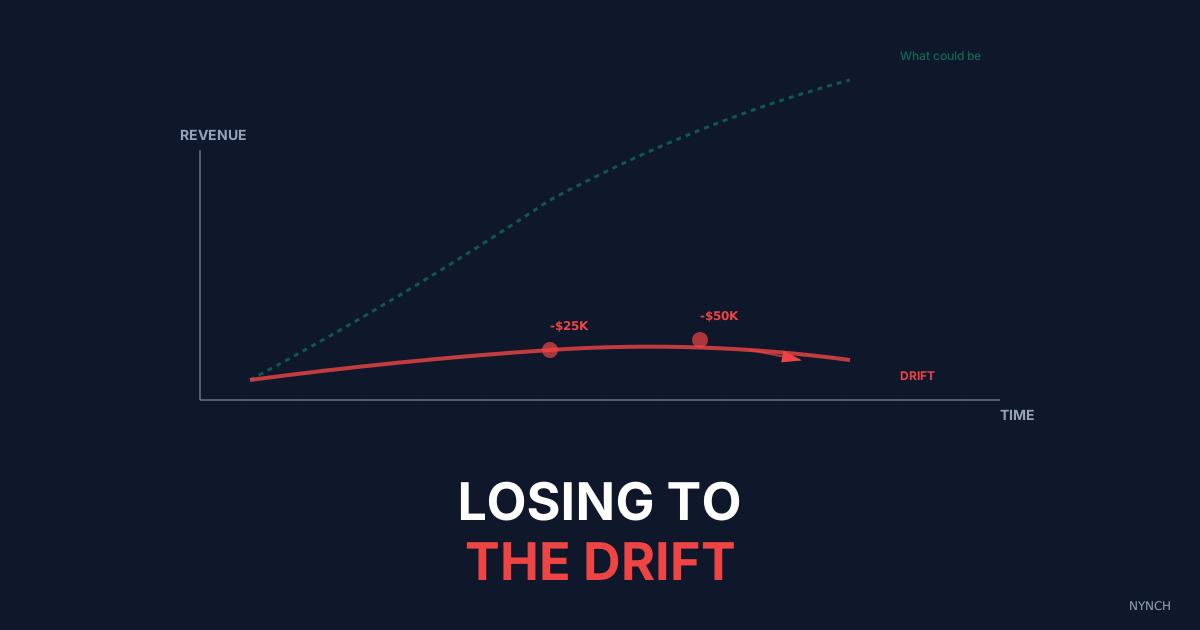
A £50k engagement sits on the table. The client is enthusiastic. Then they say “Let’s pick this up in two weeks.” You agree. It feels safe. Two weeks later they delay again. Then they stop replying. The opportunity did not die because a competitor took it. It died because nothing moved.
I call that the drift. It is the quiet way consulting revenue disappears. The longer an opportunity takes, the lower the odds of getting it over the line. Enthusiasm has a half-life. Every day without a concrete next step lets doubt, budget cuts, and other priorities crowd it out. That is why knowing when contacts are about to ghost you matters. You need to act while there is still momentum.
Here is what I learned the hard way about stopping it.
1. Momentum Is The Only Metric
I used to track “likelihood to win.” Now I track velocity: how recently did this opportunity move stage?
If an opportunity is moving, it is alive. If it stops, treat it as dead until you restart it. It does not matter how much they like you. If the next step is not booked within 48 hours, you are already in the drift. Prioritise speed over perfection. A short email today beats a perfect proposal next week.
2. You Must Be The Project Manager Before You Are Hired
Clients are disorganised. If you wait for them to drive the process, you will drift.
I learned that I have to manage the buying process for them. I send the calendar invites. I send the summaries. I chase the stakeholders. I treat the sale as the first module of the project. Taking charge keeps the momentum high, even when their side is messy.
3. Silence Is A “No” Until Proven Otherwise
I used to give clients the benefit of the doubt. “They are busy.”
Now I treat silence as a rejection until proven otherwise. That forces me to act. If they go quiet, I escalate. I call. I find another stakeholder. I provoke a reaction. I would rather get a hard “no” today than a soft drift for three months. A “no” frees me to find a “yes.”
4. Always Book The Next Meeting In The Current Meeting
The biggest cause of drift is ending a call with “I’ll email you.”
Once you hang up, your ability to set a date drops sharply. I never leave a Zoom call without the next date in the calendar. This approach is central to booking faster meetings and shortening your sales cycle.
“Let’s book the review slot now while we have our diaries open.” That sentence creates a bridge over the gap.
How Nynch Helps You With This
You cannot fight the drift if you are not watching the clock.
Nynch tracks how fast each opportunity is moving.
It highlights any opportunity that has not moved stage in ten days, so the stagnant ones are hard to ignore.
It rates your network on speed as well as value, so a slow opportunity cannot hide behind a large number.
It prompts you to book the follow-up while you are still writing the call notes, so you do not hang up empty-handed.
Read next
- The intent radar, exactly who to call today, read buying signals so your pipeline runs on intent, not guesswork.
- 5 Ways To Know If You Are About To Be Blindsided In A Client Meeting, Stop walking into ambushes.
- The client command centre, the dashboard consultants actually open every morning to spot risk and expansion early.
Frequently Asked Questions
What is opportunity drift and how does it kill consulting revenue?
Opportunity drift is the slow fade that happens when a promising engagement loses momentum through repeated delays rather than a definitive rejection. Enthusiasm has a half-life - every week that passes without a concrete next step allows competing priorities, budget reviews, and internal politics to erode the client’s readiness to proceed. Most large consulting opportunities that are lost are lost to drift, not to competitors.
How do consultants prevent opportunities from stalling between meetings?
The single most effective prevention is booking the next meeting before ending the current one. Once you hang up or leave the room, your use to set a date drops dramatically. Book the follow-up call or meeting in the diary while both parties have their calendars open, and treat the gap between meetings as actively managed time rather than passive waiting.
How should a consultant treat silence from a contact mid-engagement?
Treat silence as a soft rejection that requires immediate escalation rather than patient waiting. If a client goes quiet, call rather than email, reach out to a secondary stakeholder, or send a break-up email that forces a decision. A hard “no” today is more valuable than three months of slow drift that ends the same way.
What metrics should consultants track to monitor opportunity health?
Track opportunity velocity - how recently each opportunity moved stage - rather than just likelihood to win or engagement value. an opportunity that has not progressed in ten days is at high risk of drift regardless of the client’s stated enthusiasm. Flagging stagnant opportunities early allows you to intervene while you still have use to restart momentum.