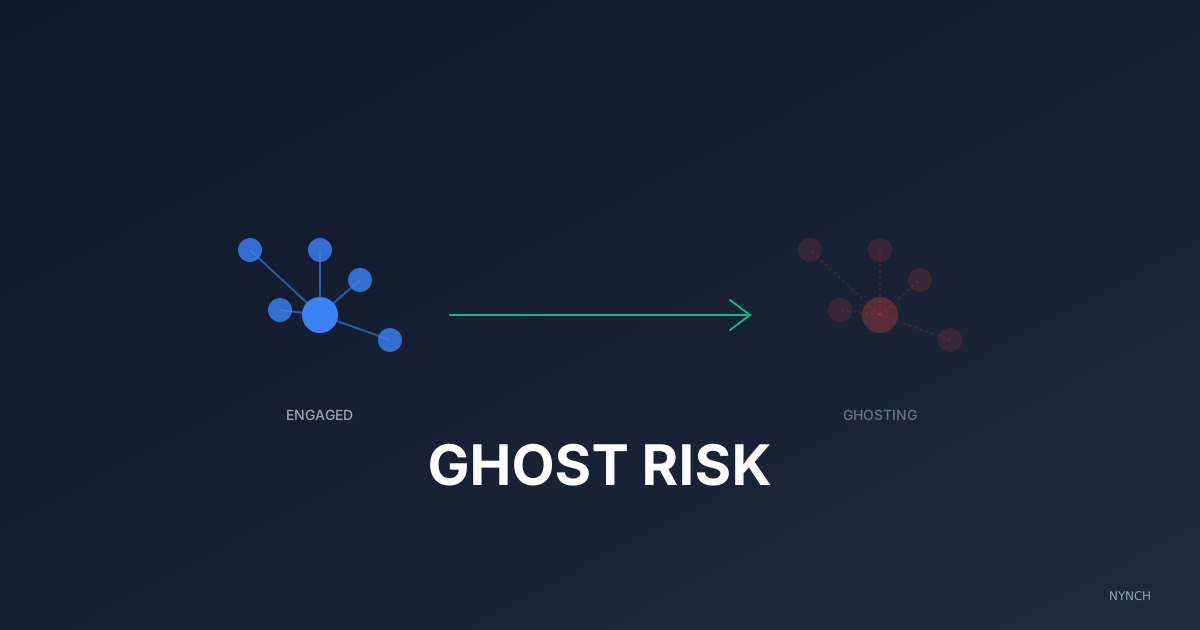
Ghosting is not a sudden event. The warning signs show up days earlier, and if you catch them you still have a window to intervene. The consultants who rarely get ghosted are not luckier. They are more disciplined about owning the next step and refusing to leave a meeting without a specific date in the calendar.
You know the pattern. The discovery call went well. The contact seemed keen. You sent the proposal. Then the replies got slower. The tone got shorter. You have a bad feeling, but you keep hoping. You tell yourself they are busy. You invent excuses because admitting they may not be interested is uncomfortable.
I will be honest about the weak point here: some opportunities die for reasons you cannot control (budget freeze, reorg, your champion leaves). Spotting early signals does not fix every case. It does stop you refreshing your inbox for three weeks on something that was already dead.
Ghosting almost never arrives out of nowhere. If you can read the early patterns, you can prevent opportunities from going dark before silence becomes the only thing left. If you ignore them, you burn energy on a conversation that ended ten days ago. Spot them early and you can either revive the work or kill it cleanly and move on.
Three signals show up again and again.
1. “Send Me Info” Is Usually a Polite Goodbye
When a contact says “This sounds great, just send me some info and I will review it,” it feels like progress. It is usually a dismissal.
In consulting work of any real size, “send me info” is the polite way to end the call without rejecting you to your face. Someone who is genuinely interested does not want a generic PDF. They want specific answers. They want the next meeting in the diary. They want to introduce you to their boss. Asking for a deck buys them time and puts the ball in your court so they can ignore it later.
To stop this, you have to refuse the brush-off without being awkward. Pivot from “sending info” to “scheduling a next step.” If they leave the call with no calendar commitment, you have already lost control. From that point you are chasing.
Action Step: The next time a contact asks for info, say something like:
“I can send a deck, but those tend to be generic. To make sure I send the right thing, what specifically are you trying to solve in the next 30 days?” If they cannot answer, they are not buying. If they do answer, follow with:
“That is specific enough that a walkthrough will help more than a PDF. Can we book 15 minutes next Thursday so I can take you through that part of the proposal?“
2. “Next Week” Without a Calendar Invite Is Already Ghosting
Look at your last exchange with a supposedly warm contact. Did you agree a specific date and time for the next conversation?
If you left it at “Let’s touch base next week,” you are already half-ghosted. “Next week” is not a time. It is a vague future that never becomes a Tuesday at ten. Without a calendar invite there is no social contract. A busy executive can ignore a vague promise without effort. Ignoring a specific diary hold is harder.
The difference is simple. Amateurs leave meetings with good vibes. Professionals leave with calendar holds. If you rely on the client to remember to book the time, you are relying on luck. Own the logistics.
Action Step:
Go through your active conversations. Find every opportunity that does not have a future calendar event. Email them with one clear option or a booking link:
“Hi [Name], we left it loosely that we would speak this week. To save the back-and-forth, does Tuesday at 10am work to finalise the scope?“
3. One Champion Means One Point of Failure
If you are only talking to one person at the company, the whole opportunity sits on a single point of failure. When that person gets busy, goes on leave, gets overruled, or leaves the business, the work dies with them.
Ghosting often has nothing to do with you personally. Your contact tried to sell the idea internally, their boss said no, and now they do not know how to tell you. So they hide. That is embarrassing for them and expensive for you.
Building relationships with three or more people in the account is insurance. If your main contact goes quiet, you can still reach a peer or a more senior stakeholder who is affected by the same problem. Single-threaded opportunities are high risk for exactly this reason.
Action Step: On LinkedIn, find the boss or a peer of your current contact. Send a short connection note:
“Hi [Name], I am speaking with [Contact] about [Project]. Wanted to say hello as this will touch your area too.” If your main contact goes quiet, you can then ask:
“I have not heard back from [Contact]. Is the project still a priority for the team?”
How Nynch Helps You With This
Optimism is a terrible risk sensor. You want the opportunity to be real, so you underweight the early warning signs.
Nynch tracks engagement patterns: if someone who usually replies in two hours suddenly takes two days, the opportunity gets flagged as at risk. It also pushes you to set a next action date when you update a record, so “next week” cannot sit as a permanent non-decision. On larger pieces of work it shows you how thin your stakeholder map is. One contact on a £50k engagement is a red flag until a second person appears.
The point is not to automate charm. It is to notice drift while you can still do something about it.
Read next
- The intent radar, exactly who to call today, read buying signals so your pipeline runs on intent, not guesswork.
- 5 Ways To Spot ‘Invisible’ Opportunities And Add Qualified Conversations To Your Diary, Opportunities aren’t always obvious.
- The client command centre, the dashboard consultants actually open every morning to spot risk and expansion early.
Frequently Asked Questions
Why do contacts ghost consultants after a great first call?
Ghosting is rarely about disinterest in your services - it is almost always about friction, distraction, or a lack of committed next steps. If the opportunity ended with vague language like ‘let’s touch base next week’ rather than a specific calendar invite, the contact had no social contract and nothing to break.
How do I stop a contact from going silent after sending a proposal?
Book a specific proposal review call before you send the document, not after. When a contact has a calendar event to discuss the proposal, the proposal is a prerequisite for that conversation rather than a document they have to find time to review independently.
What does it mean when a contact says ‘just send me some info’?
‘Send me info’ is a polite dismissal in most consulting contexts. Genuinely interested contacts ask specific questions or request the next meeting - they do not ask for a generic PDF. Treat this phrase as a signal to push for a concrete next step rather than sending a brochure.
How do I multi-thread a consulting engagement to prevent ghosting?
Build relationships with at least three people in the contact account at different levels. If your primary contact goes quiet, reach out to a peer or senior stakeholder who is also affected by the project scope. Single-threaded opportunities are high-risk because one person’s silence kills the entire opportunity.