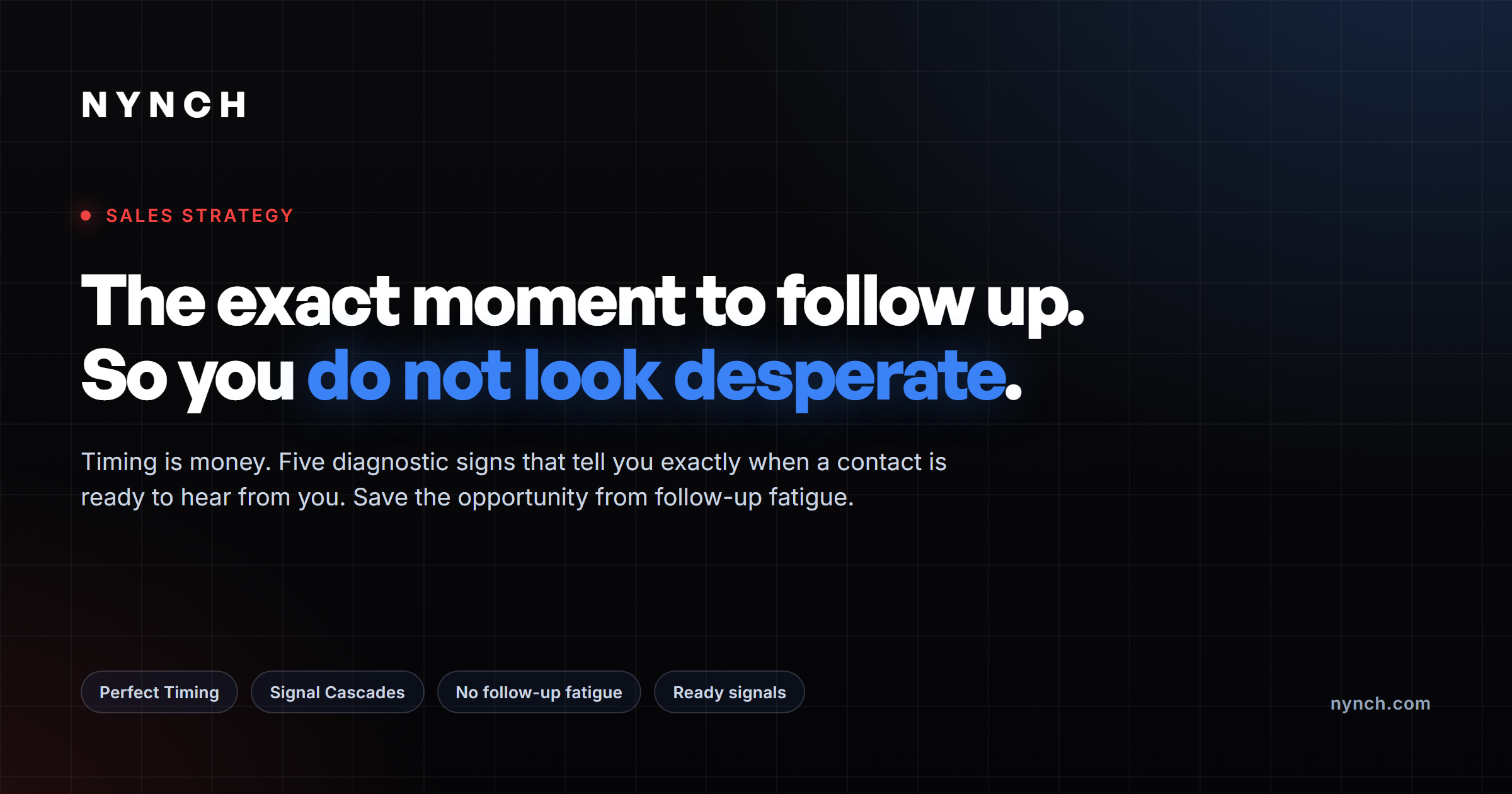
Most consultants follow up when they feel nervous, not when the contact is ready. That is the whole problem. Following up because someone opened your proposal, came back to your pricing page, or broke a silence they created is professional. Following up because three days have passed and you are fretting about the revenue is desperation, and contacts can tell the difference.
I have watched this pattern for years. You send a proposal. Silence. You wait three days. You wonder if you should email. You wait another day. Then you panic and send something. No reply. Now you feel awkward. You have spent a week of mental energy on timing and still got it wrong.
Follow up too soon and you are annoying. Follow up too late and you are forgotten. A lot of consultants make critical mistakes when contacts go silent because they treat timing as a feeling instead of a rule. The cost of getting this wrong is the opportunity itself.
You do not need a magic radar. You need a fixed cadence and a short list of behaviour signals that tell you when the person is actually thinking about the work. Five places that go wrong most often:
1. You Follow Up Based on Anxiety, Not a Schedule
If you follow up because you feel anxious, your cadence will be erratic. You will chase hard one week and disappear the next. Anxiety is not a strategy. When you break your own rules because you are nervous about the money, the client smells it.
A schedule removes that. You are not deciding in the moment whether you look keen. You are executing a rule you already agreed with yourself when you were calm.
Action Step: Write down a standard cadence and stick to it.
Day 3: a short bump. Day 7: something useful (a case study, a relevant insight). Day 14: a break-up note that closes the loop. Run it the same way every time so your emotions never set the calendar.
2. You Send a Second Email Before They Reply to the First
Two emails in a row with no reply is almost always a mistake. A second message that says “Did you see my last email?” signals that you need the opportunity more than they do. It reads like junior sales behaviour, and for a consultant that is a status hit you do not recover from easily.
If the first email got no answer, the fix is not more email. It is a different channel, or a real reason to write again (news about their company, a useful article, a date you already agreed). Chasing for the sake of chasing is the behaviour that creates the “desperate” label in the first place.
Action Step:
If they do not reply, switch channels. Comment on a LinkedIn post. Or wait until you have a genuine reason to reach out. Do not send another email that only exists to soothe your nerves.
3. You Follow Up Before the Date They Asked For
If they said “We are buried until Tuesday” and you email on Monday, you have proved you do not listen. You put your need for a reply ahead of the boundary they gave you. That is not proactive. It is rude.
Following up on the exact date they named shows competence. It says you heard them, wrote it down, and came back when you said you would. That is rare enough to stand out.
Action Step: When a client gives a date, schedule the email for that morning. Open with:
“As promised, circling back on Tuesday…“
4. You Miss When They Open Your Proposal Repeatedly
If they opened your proposal five times yesterday, that was the moment. They were reading it, thinking about it, and probably talking about it with someone else. Wait another day and the heat is gone. The conversation has moved on without you.
Document tracking is useful here for one reason only: timing. You are not spying. You are noticing when the work is in front of them so you can be helpful while it still is.
Action Step: Use document tracking. If you get an alert that the proposal is open, wait fifteen minutes, then email:
“I was just thinking about our project. Did any final questions come up on the scope?” Do not say “I saw you opened it.” Be timely without performing surveillance.
5. You Keep Chasing Someone Who Has Not Replied in 60 Days
If someone has not replied in sixty days, stop. They are not playing hard to get. They are not interested, or the project is dead, or you are no longer a priority. Continuing to chase costs you dignity and attention you could put on live conversations.
Knowing when to stop is part of the craft. A clean exit frees the mental space and, oddly, often gets a reply that endless chasing never did. Withdrawal is clearer than another “just checking in.”
Action Step:
Send a break-up email. Something like: “Hi [Name], I am going to assume this project is not moving for now so I will close the file and stop pestering you. If it comes back to life, you know where to find me.” You leave the door open without begging.
How Nynch Helps You With This
You cannot watch every contact all day. You have to sleep, deliver work, and live a life.
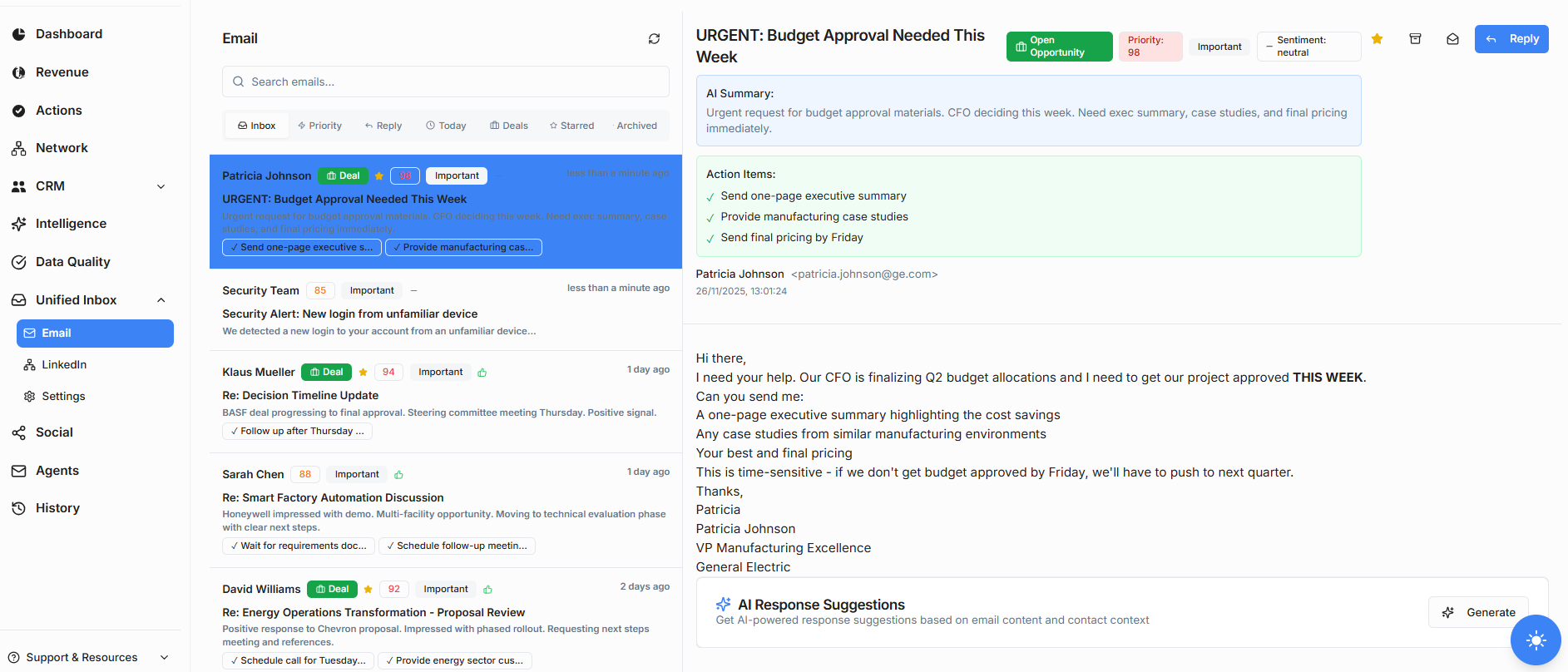
Nynch surfaces the signals you would otherwise miss: email opens, document views, site visits. When someone is reading your proposal at four o’clock, you get a prompt to follow up while that interest is still warm. The routine cadence (the day-three bump, the promised date, the break-up note) can sit in the system so you are not deciding under anxiety whether today is the day.
That does not replace judgment. It stops you guessing in the dark.
Read next
- The intent radar, exactly who to call today, read buying signals so your pipeline runs on intent, not guesswork.
- 3 Ways To Know If A Contact Is Likely To Ghost You (And How To Stop It), The silence is the worst part of sales.
- The client command centre, the dashboard consultants actually open every morning to spot risk and expansion early.
Frequently Asked Questions
How do I know when to follow up on a proposal without seeming desperate?
Follow up based on behaviour signals, not anxiety. If a contact opens your proposal or revisits your website, that is the moment to reach out - not because a day has passed and you are nervous. A documented cadence rule eliminates guesswork: bump on day three, add value on day seven, send a break-up email on day fourteen.
What is a standard follow-up cadence for consulting proposals?
A reliable cadence is: Day 1 - send the proposal. Day 3 - a one-line bump if no reply. Day 7 - a value-add email with a relevant case study or insight. Day 14 - a break-up email that wins the file unless they respond. Following this robotically removes emotion from the timing and prevents both double-tapping and going completely silent.
Why does following up too often damage a consulting engagement?
Over-chasing signals desperation, which shifts the power dynamic in the contact’s favour. If you send two emails without a reply, the contact knows you need the opportunity more than they need you. This either invites negotiation on price or disqualifies you entirely as someone who lacks social awareness. One touch per interval, with a reason each time, is the professional standard.
What should I do if a contact goes completely silent after showing strong interest?
Switch channels before doubling up on the same platform. If email has gone quiet, try a LinkedIn comment on their content or a short voice note. After three attempts across different channels with no response, send a break-up email. This approach preserves your dignity, wins the loop professionally, and often prompts a reply precisely because you are withdrawing.