I have walked into meetings expecting a renewal and walked out without the work. The worst part was not the decision. It was realising, on the drive home, that every warning had been sitting in plain sight for a week.
Being blindsided in a client meeting is almost always avoidable. The signals show up in the days before the call: an unknown name on the invite, a document you never opened, company news you skipped, a decision made without you, a sudden chill in their emails. Consultants who treat pre-meeting preparation as non-negotiable walk in ready. The rest walk in optimistic and leave speechless.
You join the Zoom smiling, update deck open. The faces on the other side are not smiling. Someone asks a sharp question you did not prepare for. You stumble. Then the line lands:
“We’ve decided to go in a different direction,” or “We’re cutting the budget.”
It feels like an ambush. It rarely is. The signs were there for weeks. You missed them because you were watching your own optimism instead of the evidence. I am not saying every difficult meeting is your fault. Some clients are genuinely chaotic. But most “out of nowhere” cancellations leave a trail, and if you check the weather before you fly, you stop flying into storms by accident.
Here is what I check before any high-stakes client call.
1. An Unknown Name Appears on the Calendar Invite
You glance at the invite an hour before the call. A new name is on the list. You do not recognise them. You assume admin, or a junior taking notes, and move on.
That is a mistake. In a high-stakes meeting, a name you do not know is often a risk. It might be procurement, brought in to pressure the fee. It might be a new decision-maker who wants their own vendor. It might be a technical specialist hired to find holes in your work.
If you walk in without knowing who they are, you are already behind. They have usually looked you up. If you have not looked them up, they hold the information advantage. You need their background, their role, and a guess at their agenda before you say hello.
Action Step:
Check every calendar invite thirty minutes before the call. If there is a name you do not know, look them up on LinkedIn immediately. Read their job history. Finance or procurement means prepare a budget conversation. A new head of department means be ready to re-explain your value from scratch, not from where you left off with their predecessor.
2. You Missed the Document They Sent Before the Call
“Did you read the report I sent on Sunday?”
If the honest answer is no, you have lost the room in the first minute. Clients often send the real context at odd hours: a new strategy doc, a competitor report, an internal memo. If it vanishes into your inbox unread, you look disengaged. You look like someone outside the work, not inside it.
This is competence theatre as much as diligence. They want to know whether you are on it. Asking them to summarise a document they already sent you wastes their time and signals you are not keeping pace.
Action Step:
Before any major review call, search your email for the client’s domain. Check attachments from the last seven days that you never opened. Read the executive summaries at minimum. Walk in knowing what they already told you in writing.
3. You Missed Company News That Changes the Context
Imagine pitching an expensive growth plan the morning after their share price dropped ten per cent. Or walking through a hiring proposal the day they announced layoffs in the press.
You look tone-deaf. You look like someone who only cares about the project, not the business around it. That happens when your preparation stops at your own deliverables. If their house is on fire, do not open with new curtains.
I will concede the weak version of this advice: most weeks, nothing material shows up in the news tab. The habit still pays, because the one time it does, it changes the entire tone of the meeting.
Action Step:
Google the company name under the News tab five minutes before the call. Look for layoffs, earnings, leadership changes. If the news is bad, open with that, not your agenda:
“I saw the news this morning. How is the team holding up?” That pivot alone can save the relationship for the next twenty minutes.
4. They Open With a Decision, Not a Discussion
They start with a conclusion, not a conversation.
“We’ve decided to pause the project.”
If they made that call without consulting you, your status has already shifted. Advisors get consulted before the decision. Vendors get informed after. Being blindsided by a decision means you were not in the room, or the email chain, where it formed. The useful question is why you were left out, not how to look composed while you absorb it.
Action Step:
Do not accept the decision in the first breath. Ask context questions. “I understand. Can you walk me through the factors that led to that decision so I can help you manage the transition?” Try to reopen the discussion by becoming useful on the way out. “We’ve decided to pause” is rarely the final word. It is often an opening about what would need to be true to restart.
5. Their Emails Went From Warm to Formal
They used to sign off with “Thanks!” or “Great work!” Now it is “Regards.” Replies used to run three sentences. Now they are one word.
People leak emotion in how they type. When the warmth drops out of the writing, trust has often dropped out of the relationship. A sudden turn to formality can be the emotional distance they need before a cancellation or a legal step. They are making the hard conversation easier on themselves.
Tone reading is imperfect. A busy week can look like coldness. Still, a clear shift over several messages is worth treating as a signal, not noise.
Action Step:
Read the last three emails from the client. Does the tone feel colder? If yes, do not open with a standard agenda. Open with a relationship check. “I’ve sensed things have been a bit heavier lately. I want to make sure we are still aligned on the value I’m delivering.” Name it early so the air is clear before the real work starts.
How Nynch Helps You With This
You cannot read minds. You can read the data that was already sent to you.
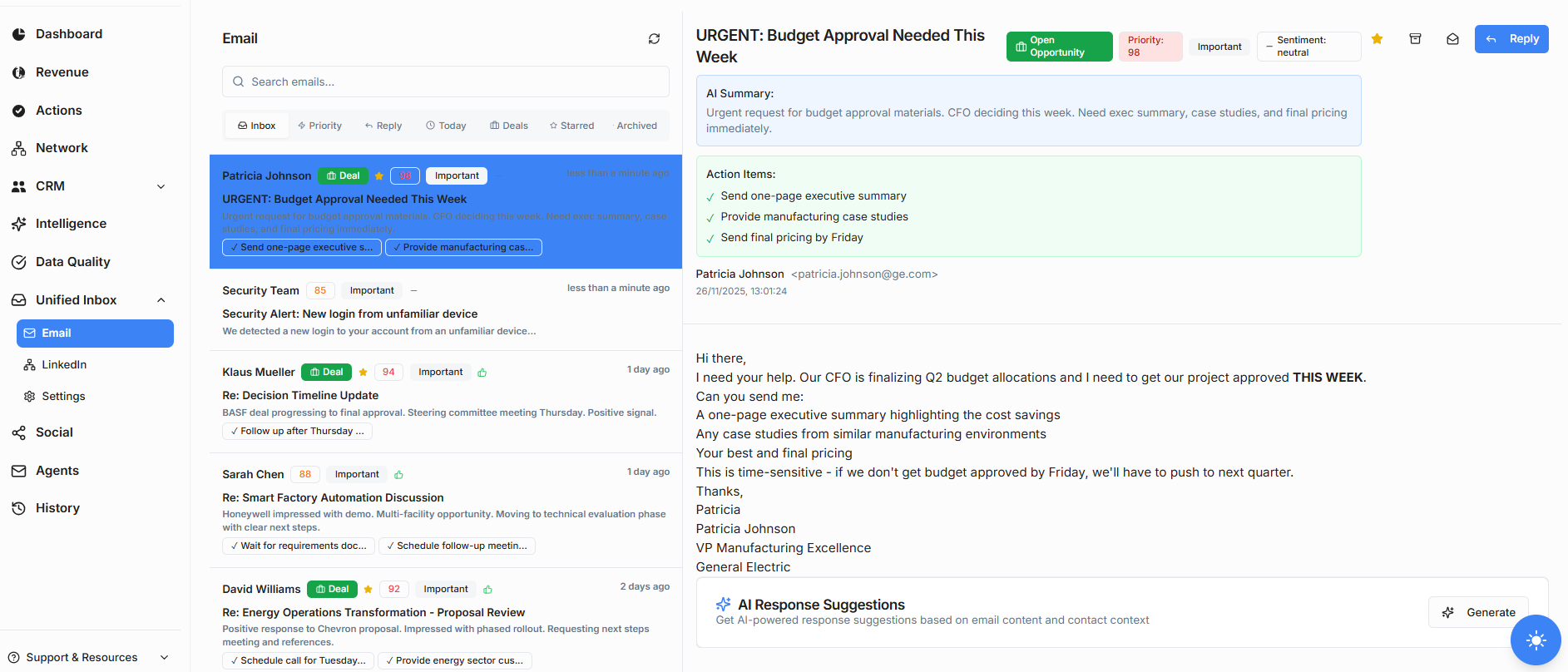
Nynch acts as an early warning layer around the meetings you already have booked.
The Meeting Brief: A short briefing before each call. Attendees listed, new names flagged with LinkedIn context, recent documents summarised, latest company headlines pulled in so you are not the last person in the room to know.
The Sentiment Watch: Looks at the tone of recent client email. If messages turn more negative or formal, you get a risk alert before you join the call, not after you leave it.
The Stakeholder Map: Shows who holds power on the account, so you do not ignore the person who can veto the engagement while you keep pitching the champion who already likes you.
You can run the manual version of this for every important call: LinkedIn the room, search the inbox, check the news, reread the last three emails. That discipline alone will catch most ambushes. The ceiling is time. Once you have a dozen live clients, the pre-meeting sweep becomes the thing you skip on the busy morning, which is exactly when you needed it.
Prevent being blindsided by retrieving relationship history instantly and using AI summaries for complete intelligence.
Read next
- The intent radar, exactly who to call today, read buying signals so your pipeline runs on intent, not guesswork.
- 5 Ways To Automate The ‘Nudge’ To Maintain Presence Without Breaking Your Deep Work Flow, You don’t have to be at your desk to be in their inbox.
- The client command centre, the dashboard consultants actually open every morning to spot risk and expansion early.
Frequently Asked Questions
What are the warning signs that a client meeting is going to go badly?
The five most reliable signals are: an unknown person added to the calendar invite, a recent document from the client that you have not read, negative news about the company that you are unaware of, a decision made without consulting you, and a noticeable drop in the warmth of the client’s written communication. Each of these alone is worth investigating - multiple together is a strong warning.
How do I prepare for a difficult client review call?
Run a 30-minute pre-meeting brief: LinkedIn every attendee you do not know, search your inbox for any documents or attachments sent in the last seven days, check the company news tab, and review the tone of their last three emails. Arriving with this intelligence means you can address problems directly rather than reacting in real time.
What does it mean when a client adds someone from procurement to a meeting?
A procurement or finance stakeholder added late in an engagement is almost always a signal that the relationship has moved from ‘trusted advisor’ to ‘vendor under review.’ Stop selling the vision and start selling the business case - ROI calculators, outcome data, and cost-of-not-acting arguments are what this audience responds to.
How do I handle a client who drops bad news at the start of a meeting without warning?
Do not accept the decision passively. Ask context questions to understand the factors behind it and reposition yourself as a partner in managing the transition. ‘We’ve decided to pause’ is rarely final - it is an opening for a conversation about what would need to be true to restart. Advisors get consulted before decisions. if you were not, ask why and work to restore that position.