Former clients are the fastest route to high-margin referrals because the trust is already earned. The key is to re-engage with a reason that serves them: checking on project outcomes, seeking their expert opinion, or inviting them into a small group of peers, so the conversation feels like customer service, not a sales call. Consultants who build a structured follow-up rhythm with past clients spend far less time winning over strangers.
Why is it that the people who love your work the most are the ones you speak to the least?
You delivered a strong project six months ago. They gave you a glowing testimonial. Since the final invoice, you have not exchanged a single word. You assume they are busy. You worry that reaching out looks like you are fishing for more money. So you stay silent, and your calendar stays empty.
If you ignore past winners, you walk away from the easiest revenue in your business. Also learn how to use project success while it is still fresh. You force yourself to win over strangers who need weeks of convincing, instead of asking people who are already sold.
The fix is a structured way to circle back that still feels like customer service. Four approaches work especially well.
1. The “Close the Loop” check-in to validate long-term value
Consultants get accused of hit-and-run work: come in, make a change, leave before the long-term effects show up. Reconnecting to check on the result of your work defeats that stereotype. It proves you care about the outcome, not just the invoice.
A close-the-loop check-in is a low-pressure way to restart the conversation. You are not asking for a new project. You are asking whether the old project is still working. If it is going well, they feel good about you. If it is sliding, they may need you back. Either way, you re-enter the relationship as someone who follows through.
Often this surfaces phase-two work that was never scoped. A client will say the system you built is fine, but now they have a new problem with X. That is your next contract, handed over without a pitch deck.
For example: you helped a client restructure their sales team.
Action Step: Find a client you finished with six months ago. Send this email:
“Hi [Name], I set a reminder to check in on how the new Sales Structure is settling in. Are the team sticking to the new KPIs, or have old habits crept back in? Happy to jump on a 15-min call to troubleshoot if things are sliding.”
2. The “Ego-Bait” interview to gather intelligence
People love being asked for their opinion. Former clients are often experts in their field, and treating them as such is a genuine compliment. If you reach out for their take on a market trend, you position them as a thought leader, not a sales target.
The ego-bait interview is simple: ask for 15 minutes to get their view on a specific issue for a piece of content you are writing, or for your own market research. Once you are on the call, the conversation often drifts to what they are working on now.
This re-establishes rapport without a commercial agenda. It gets you face time. Once you are talking, the natural human instinct is to ask how they can help you too.
For example: you want to know how AI is affecting the legal sector. You call a former client who is a General Counsel.
Action Step: Email a former senior client:
“Hi [Name], I’m writing a short piece on how [Trend] is impacting our sector. I value your opinion more than most - could I steal 10 mins to get your raw take on it? No sales, just want to sanity check my thinking.”
3. The “Peer-to-Peer” ask to bypass the awkwardness
Directly asking “Do you have any work for me?” is uncomfortable. Asking “Do you know anyone else who needs help?” is cleaner. The peer-to-peer ask accepts that your former client may not have budget right now, but they likely have peers who do.
By using their network, you reach contacts you would never reach cold. A referral from a trusted peer can shorten the path to a useful first conversation, though it still needs context and a proper fit check. When the introduction is relevant, you get to strategy sooner.
The key is specificity. Do not ask “Do you know anyone?” That is too broad. Ask “Do you know any other [Job Title] in [Industry] struggling with [Specific Problem]?”
For example: you solved a logistics issue for a Retail Director.
Action Step: Send this note to a happy past client:
“Since we solved the Logistics bottleneck for you, I have capacity to help one other retailer before Christmas. Is there anyone in your peer group facing that same supply chain headache who I should speak to?“
4. The “Private Invite” to foster community
If you want to stay top of mind without sending empty “checking in” emails, invite past clients to something exclusive. A small dinner, a webinar, or a curated WhatsApp group all work.
A private invite changes the dynamic. You are the host. You are the connector. You give them access to other smart people (your other clients). They attend because they want the room. You get the credit for creating it.
Get your best clients in a room together and they talk about the work you did. It validates their decision to hire you and reminds them to hire you again. That is how referrals start without a formal ask.
For example: you host a Fractional Execs Roundtable once a quarter on Zoom.
Action Step:
Plan a 45-minute market update Zoom call for next month. Invite your top five past clients. Subject line:
“Private Roundtable: What I’m seeing in Q4.” Tell them it is invite-only for your alumni.
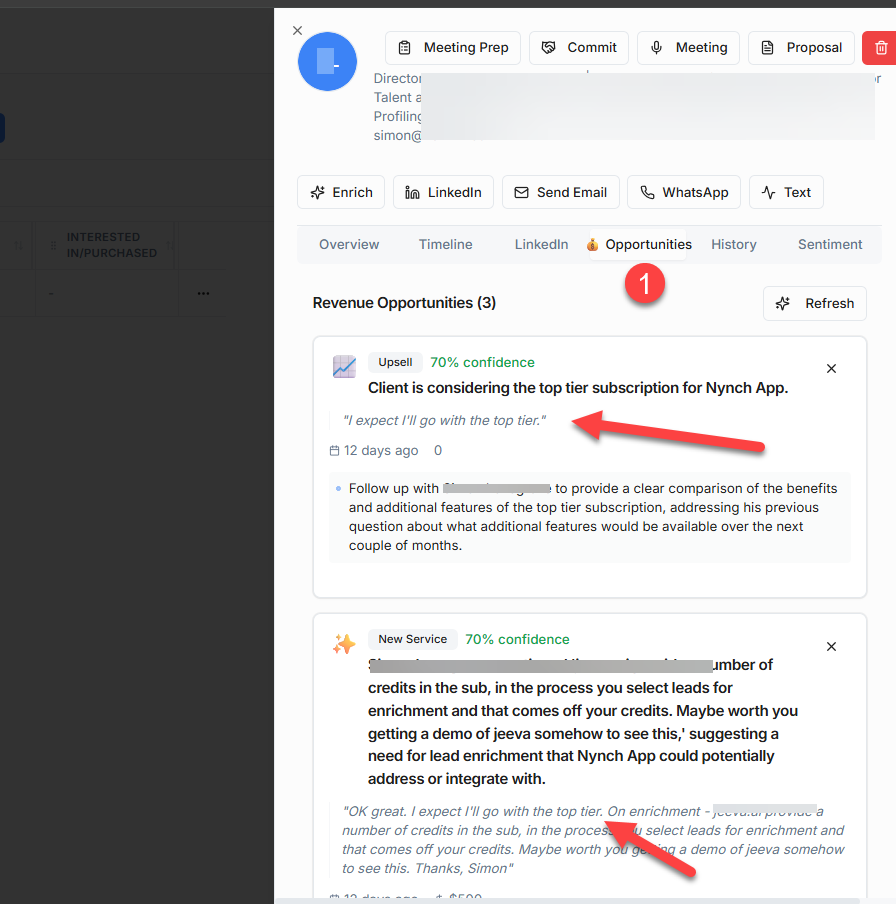
How Nynch Helps You With This
Reconnecting means tracking dates and swallowing a bit of pride. It often feels easier to do nothing than to risk an awkward email.
Nynch removes some of that friction.
Cycle prompts: Nynch automatically sets a close-the-loop reminder three and six months after a project ends.
Drafted asks: The AI suggests referral email text, tailored to the project you delivered, so you are not staring at a blank screen.
Network tracking: Nynch shows who your clients are connected to, so you can ask for specific introductions rather than generic ones.
Your past work already created the trust. The system just stops that trust going quiet.
Read next
- The client command centre, the dashboard consultants actually open every morning to spot risk and expansion early.
- 5 Ways To Schedule Review Calls To Align On Goals For The Next Term, The renewal meeting is the most important call of the year.
- Nynch for fractional leaders, how fractional CFOs, CMOs, and COOs build proactive pipeline, protect against cancellation and create more value for clients.
Frequently Asked Questions
How do I reconnect with a former client without looking like I’m fishing for work?
Frame your outreach around the outcome of the work you delivered, not your current availability. A ‘Close the Loop’ check-in - asking how the project is performing six months later - signals genuine care rather than desperation. This positions you as a trusted advisor, not a vendor hunting for their next invoice.
What is the best way to ask a former client for a referral?
Be specific rather than asking broadly. Instead of ‘Do you know anyone who needs me?’, ask ‘Do you know other [Job Title]s in [Industry] who are struggling with [Specific Problem]?’ A targeted ask is easier to answer and signals that you know exactly who you help.
How often should consultants follow up with past clients?
A structured check-in at three months and again at six months after project completion is a professional cadence that feels like good customer service rather than sales pressure. After that, quarterly contact through events, insights, or brief notes is enough to stay top of mind.
What is the most effective way to generate consulting referrals?
The most effective referral strategy combines a specific ask with a relevant context. Reference the problem you solved, identify who else in their network faces that same problem, and make the introduction easy for them. Clients who are happy with your work want to help - they just need a clear and easy path to do so.