The most profitable relationships in a consulting business are rarely strangers you have not found yet. They are opportunities that stalled, proposals rejected on timing, and scopes signed incomplete. Mining that dormant history almost always returns more than starting from zero with people who have never heard of you.
And yet when the diary looks thin, most consultants panic in the same direction. You stare at an empty sales network and immediately hunt for “new” business. LinkedIn strangers. Cold emails. Networking events. You act as if the firm started this morning, and ignore five years of history, hundreds of past conversations, and dozens of proposals that nearly crossed the line.
If you ignore that past, you are voluntarily playing on hard mode. Start by waking up your dormant network systematically. You are choosing people with zero trust over people who already know you, already priced you, and simply got the timing wrong. That is dormant revenue sitting on the table while you chase the shiny new object.
Stop hunting for a moment and harvest what you already planted. Water the conversations from six months ago before you plant more seeds with strangers. Here are four places that money usually hides.
1. You Archive Lost Opportunities Instead of Keeping Them Warm
The single most expensive habit I see in consulting businesses is the archive-and-forget reflex. When a contact says no, or an opportunity goes quiet, the first impulse is to hide it. You mark it lost (or delete the thread) because looking at it stings. It feels like a failure on the screen. You want it gone so you can chase the dopamine of something fresh.
That habit turns your contact list into a graveyard when it should be a waiting room. In B2B consulting a “no” is rarely permanent. It is almost always “not now.” They did not hire you because the budget vanished, the boss quit, or a merger ate the agenda. Those blockers are temporary. Six months later the budget is back, the boss is replaced, and the merger has settled. The problem you solved is still there, and it is often worse than before.
By archiving without a way to resurface the opportunity, you rely on the client to remember you. They will not. They are busy. When the problem becomes acute again, they will not search their inbox for your name. They will ask a colleague for a recommendation or browse LinkedIn. You lose work you already did the hard part for, simply because you were not present when the timing finally aligned. The sale was half won. Silence finished the job against you.
Action Step:
Go to your lost opportunities that died between six and nine months ago. Select three of them. Send this exact email to re-open the loop:
“Hi [Name], I was just reviewing my notes from last year and realised we left things when [Reason for rejection, e.g., the budget was frozen]. I imagine you are deep in Q3 planning now - has that blocker cleared enough for us to revisit the solution, or is it still on ice?“
2. You Treat “No” as Rejection Instead of “Not Now”
It is easy to tell yourself a story that a rejected proposal is a rejection of you. You take the no as a verdict on your competence or your price. That belief creates a mental block. You become afraid to reach out again because you do not want to hear it twice. You assume that because they said no in January, they will be annoyed by an email in July. You project your own insecurity onto them, and assume they remember the rejection as vividly as you do.
The truth is kinder and more commercial. The client probably does not remember rejecting you at all. To them it was a logistics call on a Tuesday between four other meetings. They did not think “I hate this consultant.” They thought “we cannot afford this right now” or “I do not have bandwidth to manage another project.” That sentiment does not last forever. Treating no as a personal brand mark stops you acting like a professional. Circumstances change. Polite persistence is a signal of reliability, not desperation.
If your ego keeps you from circling back, you are making a business decision on feelings rather than facts. You are walking away from someone who is already qualified, already knows your pricing, and already understands how you work. That is a warm contact by any definition. The only thing between you and a contract is the fear of hearing no again.
Action Step:
Identify one contact who rejected you specifically because of internal politics or lack of bandwidth. Those are the softest rejections. Send a value-drop email that needs no reply but keeps you on their radar:
“Hi [Name], saw this article on [Topic] and it reminded me of the conversation we had about your internal bottlenecks. Thought you might find the section on ‘Team Alignment’ useful given what you are trying to build.”
3. You Miss the Callback Date They Gave You
How many times has a contact said “contact me in the new year” or “we will look at this after the summer holidays”? And how many times did you actually contact them on that date? If you are like most consultants I coach, the honest answer is rarely. You make a mental note. January arrives. A current project eats the week. You remember in March, by which time they have hired someone who did call in January.
This happens when you never turn the date they gave you into a concrete task. When a client gives you a date, they are giving you permission to sell to them later. They are handing you the keys with a time delay. Miss the window and you look disorganised. Call two months late and you look sloppy. Email on the exact day they named and you look competent. You signal that you run your practice the way they wish their suppliers would.
The conversion rate on these follow-ups is high for a simple reason: you are not interrupting cold. You are following instructions. You can open with “you asked me to contact you this week,” which creates a light obligation to reply. You are holding them to their own timeline.
Action Step:
Search your email inbox for the keywords “next quarter,” “September,” “January,” or “after the break.” Find three emails where a contact deferred you to a future date that has now passed. Email them immediately:
“Hi [Name], you mentioned back in [Month] that I should circle back with you this week once [Event] was out of the way. Is this still a good time to pick that thread up, or do you need another week to clear the decks?“
4. You Forget the Upsells You Already Pitched
When you write a proposal, you often include phase-two items or optional extras. Maybe you pitched strategy plus training, and they only bought strategy. You deliver, invoice, and move on. You forget that you diagnosed a training problem that still exists. You solved half the problem. Because you forgot the other half, you never asked for the second fee.
Forgetting those earlier pitches leaves money on the table with your happiest clients. You already did the hard work of winning trust. They already paid you. They are using your work. Because they cut training six months ago to save budget, you assume they never want it. That assumption is usually wrong. They cut for cash flow or political bandwidth at the time, not because the need vanished.
Six months later the strategy is often gathering dust because nobody was trained on how to use it. The pain of the missing piece is now acute. The client may even be slightly embarrassed that adoption stalled. You are the person who can name the gap without making them feel foolish, because you put it on the original roadmap together.
Mining old proposals for leftover scope is the easiest commercial work you can do. You do not need a new pitch deck. You need to remind them of a problem you already diagnosed. Frame it as a review or a check-in if that feels cleaner. What you are really doing is finishing the work you both agreed was necessary last year.
Action Step:
Open the signed contract or final proposal for your top three current (or recent) clients. Look at the options or exclusions section. Find one significant item they removed from the scope. In your next status call or email, ask:
“I was looking at our original roadmap and realised we parked the [Service, e.g., Team Training] module to keep the budget down. Now that the core system is live, are you finding the team is struggling to adopt it? We could spin that module up pretty quickly if you need to plug that gap.”
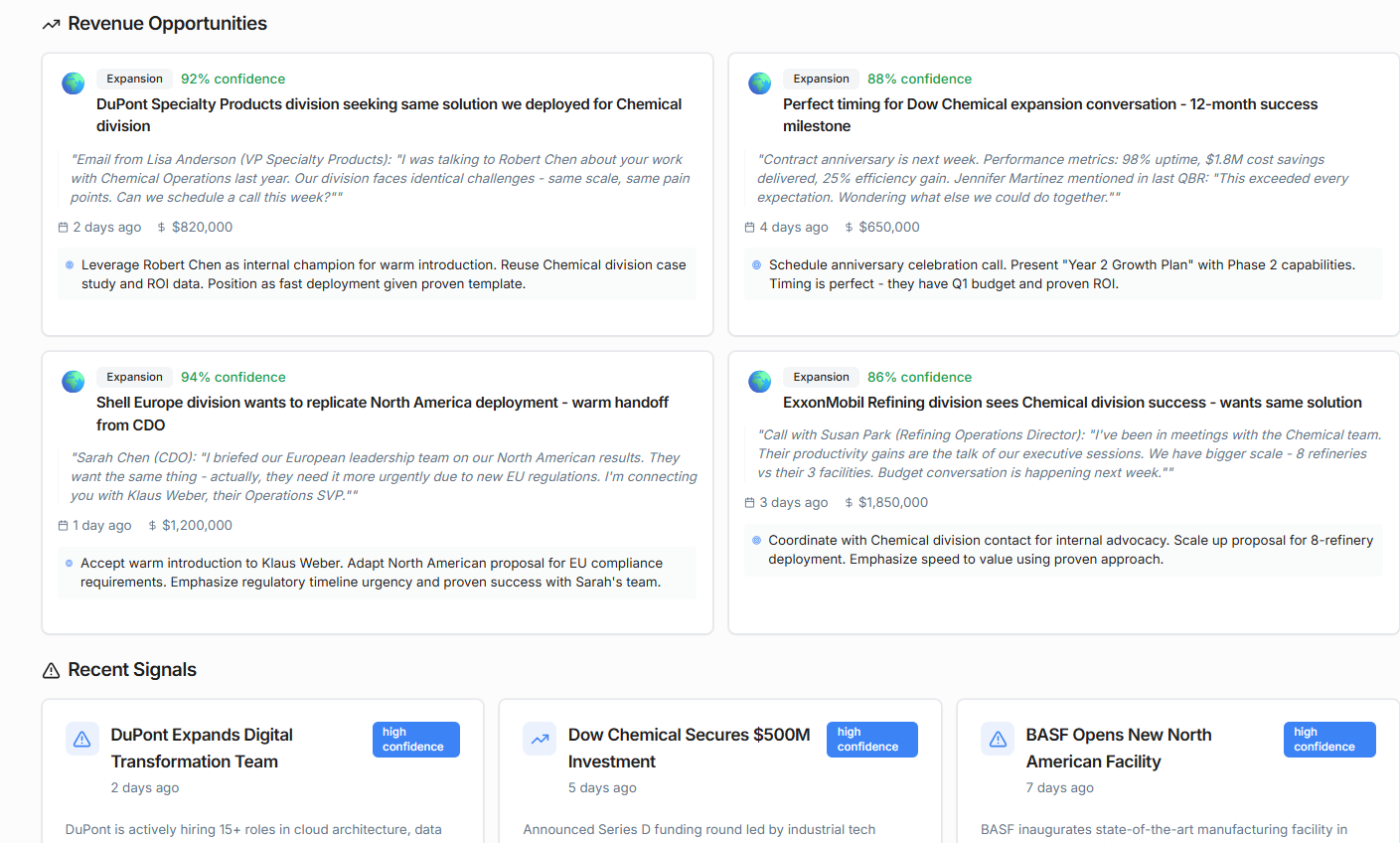
How Nynch Helps You With This
You are a consultant, not a data archaeologist. You do not have time to dig through two years of email for the one person who said “call me in September.”
Nynch’s Opportunity Miner does that dig for you.
Surface the “not nows”: Scan email history for phrases that signal a time delay (for example, “contact me in Q3”). Create a task for that date so the contact appears on your dashboard when it is ripe.
Track the rejections: When you mark an opportunity lost, capture why. If the reason is timing or budget, set a reminder to revive the conversation in six months rather than letting it rot in the archive.
Mine the scope: Compare the initial proposal against the final invoice. Where services were pitched but not bought, flag an expansion conversation for the next quarterly review.
Stop letting past effort go to waste. Your history is often a better source of revenue than a fresh cold list.
Read next
- Wake up your dormant network, fill your week with warm conversations from people you already know.
- The 3 Biggest Mistakes Consultants Make Relying On Their “Mental Rolodex” (And Why It Costs You Referrals), You think you will remember them, but you won’t.
- The intent radar, exactly who to call today, read buying signals so your pipeline runs on intent, not guesswork.
Frequently Asked Questions
How do I know if I have untapped revenue in my existing contact list?
Check three things: how many opportunities you marked ‘lost’ in the last 12 months without a follow-up date, how many contacts gave you a future timeline that you never tracked, and how many signed clients never received the full scope you originally proposed. Any of these gaps represents dormant revenue you can reactivate without a new pitch.
How do I re-open opportunities that went cold 6-12 months ago?
Email referencing the specific reason the opportunity stalled - budget, timing, internal politics - and ask whether that blocker has cleared. Starting with ‘I was reviewing my notes from last year and noticed we left things when the budget was frozen’ is direct without being pushy, and gives the contact a clear hook to re-engage.
Why do consultants keep losing opportunities to timing rather than competition?
Because most consultants do not capture time-based objections as trackable follow-up tasks. When a contact says ‘call me after the summer’, they are giving permission to sell - but only on that specific date. Without a system that surfaces those dates automatically, the window wins and the opportunity dies quietly.
What is ‘scope forgetfulness’ and how does it cost consultants money?
Scope forgetfulness is when you deliver part of an agreed project scope but forget to follow up on the components the client cut to save budget. Those unpurchased items represent problems you already diagnosed, for a client who already trusts you. Revisiting them 6 months into delivery is not a new sale - it is completing the roadmap you both agreed was necessary.