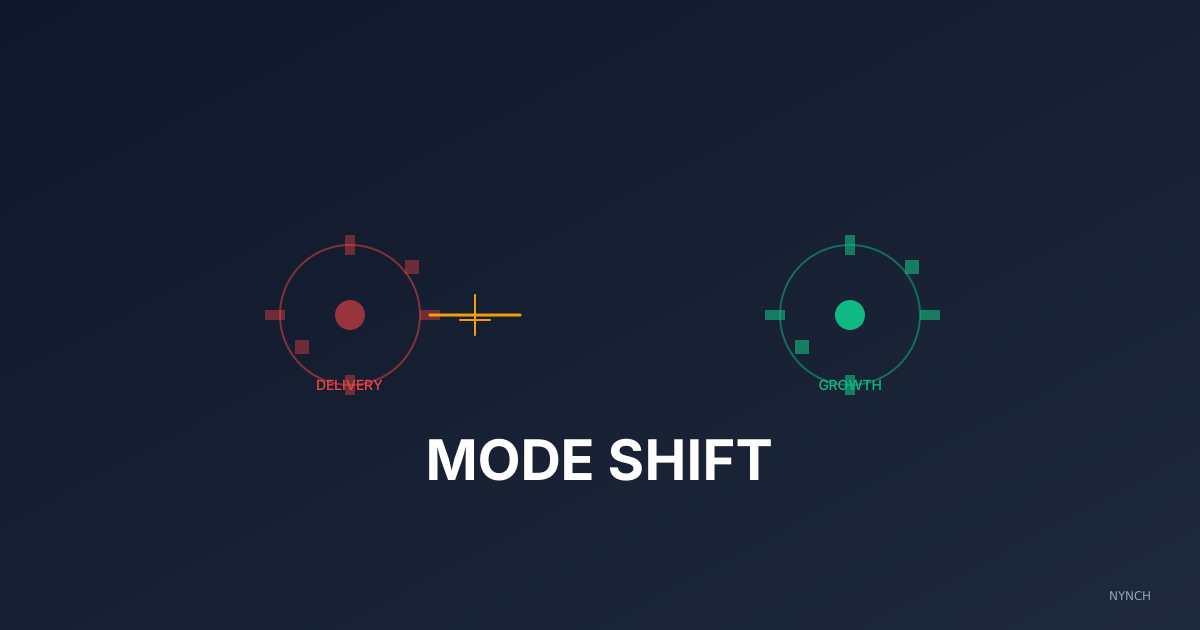
The context switch from delivery to sales is not a willpower problem. It is an environment problem. If you keep the same tabs open, stay in the same chair, and try to shift mindset on command, you will fail consistently. Change the environment first, and the mindset shift follows.
Why does opening your sales tools feel physically painful when you are in the middle of a client project?
I know the scene. You have been deep in a spreadsheet or a slide deck for three hours. You are in the flow. Then your calendar pings. It is 2:00 PM:
“Business Development Hour.” You stare at the notification with dread. Your brain is wired for solving problems, not starting conversations. The jump from an introvert activity (analysis) to an extrovert one (outreach) feels too big. So you dismiss the reminder and keep working on the client deck.
If delivery wins every time, you are choosing present comfort over future safety. The client work feels urgent. The sales work is important. Skip the sales block often enough and you build a revenue gap three months out. That is not a character flaw. It is what brains do when one task has a deadline and the other does not.
Instead of fighting your own head, use a few small triggers that force the switch. The transition does not need to feel dramatic. It needs to be automatic enough that you stop negotiating with yourself every afternoon.
1. The “Physical Reset” to break the delivery loop
You cannot switch modes while sitting in the same chair, looking at the same screen, with the same tabs open. Your environment is still telling your brain it is delivery time. To change your brain, you have to change your body first.
A physical reset means leaving your workspace for two minutes before the sales block starts. Stand up. Get water. Walk to the window. When you sit back down, you are not the person who just finished the financial model. You are the person about to look after the future of the practice.
The point is clarity. You wash away the client problem long enough to focus on human connection instead of deliverables.
Concrete example: you finish a financial model at 1:59 PM. Stand up. Walk to the kitchen. Drink water. Sit back down at 2:03 PM ready to reach out.
Action Step:
Set an alarm on your phone for five minutes before your sales block. Label it “Move.” When it rings, you must stand up.
2. The “Review, Don’t Do” start to lower the friction
The hardest part of sales is the cold start: opening a blank email when your head is still full of client complexity. If you try to do that immediately after deep consulting work, you will procrastinate. Almost everyone does.
A “review, don’t do” start eases you in. Spend the first ten minutes of your growth block simply reviewing your list or reading industry news. You are not writing yet. You are absorbing. That warms up the market half of your brain without the pressure of performance.
Momentum follows. Once you are reading about a contact, the desire to message them often shows up on its own. You removed the cold start. You did not force a perfect email out of a tired brain.
Concrete example: do not open “Compose Email” first. Open LinkedIn and scroll through activity from the people you care about for ten minutes.
Action Step: Create a bookmark folder called “Warm Up.” Put Nynch and LinkedIn in it. Open that folder first.
3. The “Single Tab” rule to burn the boats
If your client email and your client Slack are open in the background, you will switch back to them the second sales anxiety appears. That is not weakness. That is an escape hatch left open on purpose.
The single-tab rule is blunt but effective. Close every window related to delivery. Leave only Nynch or your outreach sheet open. You cannot multitask your way through this block.
Focus is the payoff. If the only thing on your screen is a contact’s name, you will eventually message them, if only because boredom is worse than a short email.
Concrete example: close Outlook. Close Slack. Close Excel. Open Nynch.
Action Step: Download a tab suspender or focus app. Set it to block your client tools for 60 minutes.
How Nynch Helps You With This
Switching contexts burns willpower, and willpower runs out by mid-afternoon.
Nynch is built to lower the activation energy of that switch.
A quieter focus view: When you open Nynch, you see a simplified view of the few people you need to contact, not a dashboard full of everything.
A built-in warm-up: It surfaces the latest news about your contacts first, so you can review before you write.
Protected growth time: You can block growth time in your calendar in a way that keeps the block from dissolving into client noise.
You still have to show up for the block. No tool can stand you up and walk you to the kitchen. What it can do is make the work on the other side of that reset feel smaller and more specific than a blank inbox and a guilty calendar invite.
Once you’ve balanced delivery and growth, execute micro-outreach in just 15 minutes daily and learn how to avoid neglecting your network for today’s fires.
Read next
- Build a £500k consulting practice on relationship capital, the operational rhythm that turns a roster of contacts into a compounding business.
- Even If You Hate Admin, You Can Build A Flawless Database With This 3-Step “Zero-Type” Protocol, Data entry is the reason you procrastinate on outreach.
- Wake up your dormant network, fill your week with warm conversations from people you already know.
Frequently Asked Questions
How do I switch from delivery mindset to sales mindset during a busy consulting period?
Use a physical state change as a circuit breaker between modes. Standing up, getting water, and returning to a cleared desk - even for two minutes - interrupts the delivery brain pattern and signals a context shift. Staying in the same chair with the same tabs open makes the transition nearly impossible.
Why do consultants struggle to do business development when they are busy?
Because delivery feels urgent and concrete while sales feels abstract and risky. The client work has a deadline and a deliverable. the sales work has neither. Without external pressure, the brain defaults to the certain task over the uncertain one. Scheduled, protected growth blocks apply the same urgency structure to business development that clients apply to delivery.
How do I make a habit of doing business development every day?
Lower the activation energy. Instead of starting your growth block by writing emails, start by reading about your contacts for 10 minutes. Warming up the market brain through review naturally generates the impulse to reach out - you are removing the cold start problem that causes most consultants to procrastinate.
What is the ‘single tab’ rule for consultant business development?
win every window related to delivery - email, Slack, project files - before starting a growth block. The single tab rule means only your contact list or outreach list is visible on screen. When distraction is unavailable, the work in front of you becomes the only option. It is a deliberate removal of the escape hatch.