The moment you are busiest is the moment you are most financially vulnerable. If you stop building relationships because you are buried in delivery, you will face a revenue cliff the moment the current project ends. Feast and famine is not an industry condition. It is a discipline failure, and it is preventable.
Here is the trap I see over and over. You are swamped. Three deadlines this week. Working late. You feel productive because every hour is billable. You tell yourself you do not have time for business development right now. You will get back to sales once this project ships. The project ships. Another crisis lands. The sales block gets pushed again.
That is why learning how to shift from delivery mode to growth mode matters for anyone who wants steady work rather than a rollercoaster. The busiest week is exactly when you are most exposed. If you stop nurturing relationships while you process current work, the machine runs dry in roughly ninety days. You are choosing a crisis in three months so you can have comfort today. You are trading future security for present busyness.
I will not pretend this is easy. Client deadlines are real, and saying no to a fire so you can book a coffee feels irresponsible in the moment. The alternative is worse. Growth work has to run in parallel with delivery, not as a switch you flip when things go quiet. A little structure in the background is enough. Here is how to tell if yours has stopped.
1. Next Month’s Calendar Is Still Blank
Flip your calendar forward to next month. What do you see?
If you see a wall of blank white space, you have a problem. A healthy consulting business has a calendar that mixes delivery (today’s revenue) and discovery conversations (tomorrow’s revenue). If your future calendar is empty, you have zero momentum. You are driving at seventy miles an hour toward a cliff, assuming the road will appear when you get there.
A blank calendar is a lagging indicator of activity you failed to do two weeks ago. Sales cycles in consulting are long, often six to twelve weeks. If you do not have a first meeting booked for next month right now, your revenue can drop to zero the moment your current project concludes. You cannot spin up a new engagement overnight. The time to book those meetings was when you were busy.
Treat discovery calls as mandatory project milestones. They are not optional extras. They are how the firm stays alive. Protect slots in your future calendar for sales activity with the same ferocity you protect client workshops. If the slot is blank, you are unemployed in about sixty days.
Action Step:
Open your calendar for four weeks from today. Create three recurring slots called “Discovery Buffer.” If they are not filled with contact calls by the time you get there, use them for warm engagement. Never delete them.
2. Every Outbound Email Goes Only to Existing Clients
Go to your sent folder. Scan the last twenty emails you wrote. Who were they to?
If every outbound message went to people who have already hired you, you are in maintenance, not growth. You have mentally shifted from business owner to employee of your clients. Your entire attention span is dictated by people who already pay you.
That bias feels good because it is low risk. Current clients are safe. They like you. They pay you. New conversations are awkward. Someone might say no. But safety of that kind is dangerous. If you lose one current client and you have not been talking to anyone new, you have nowhere to land. Diversifying who you speak to diversifies your risk. This is also why maintaining boundaries with clients matters, so growth time does not get eaten alive.
Audit your communication diet. A healthy split, in my experience, is roughly 80 per cent delivery and 20 per cent growth. If you are at 100 per cent delivery, you are malnourished. Force yourself to send one email a day to someone who does not pay you yet. Consider executing micro-outreach in just 15 minutes if you need a version that fits a full delivery week without blowing up the schedule.
Action Step:
Before you open your inbox to reply to client demands tomorrow morning, draft one email to a wishlist contact. Do not hit send on the client work until the contact email is gone. Pay yourself first.
3. You Have Stopped Planting Work That Pays Off Later
When was the last time you planted something that will not pay for six months?
I mean a coffee with someone who knows everyone in your niche and might refer you next year. Or applying to speak at a conference that happens in the autumn. Or writing a piece that establishes your authority. These activities do not pay you today. They might not pay you next month. They are often the reason you get paid next year.
If you are not planting slow-growing work, you will starve when the market cools. You are relying entirely on quick wins rather than anything that compounds. Quick wins work when demand is hot. When it turns, only people who built assets earlier keep getting inbound. You need a layer of long-game activity underneath the daily firefighting: relationships, writing, speaking, referrals that take months to mature.
This requires a bit of faith. It means spending an hour writing an article when you could bill an hour of consulting. That article is an asset that keeps working between client reviews. The billable hour is gone the moment you spend it. The long game is how you avoid needing a miracle every time a project ends.
Action Step:
Identify one long-game activity you have been putting off (updating case studies, scheduling lunch with a peer, writing a thought leadership piece). Block two hours on Friday afternoon for it. Treat it as a client project where you are the client.
How Nynch Helps You With This
It is hard to think about the future when the present is screaming at you. You need something that forces you to look up from the weeds.
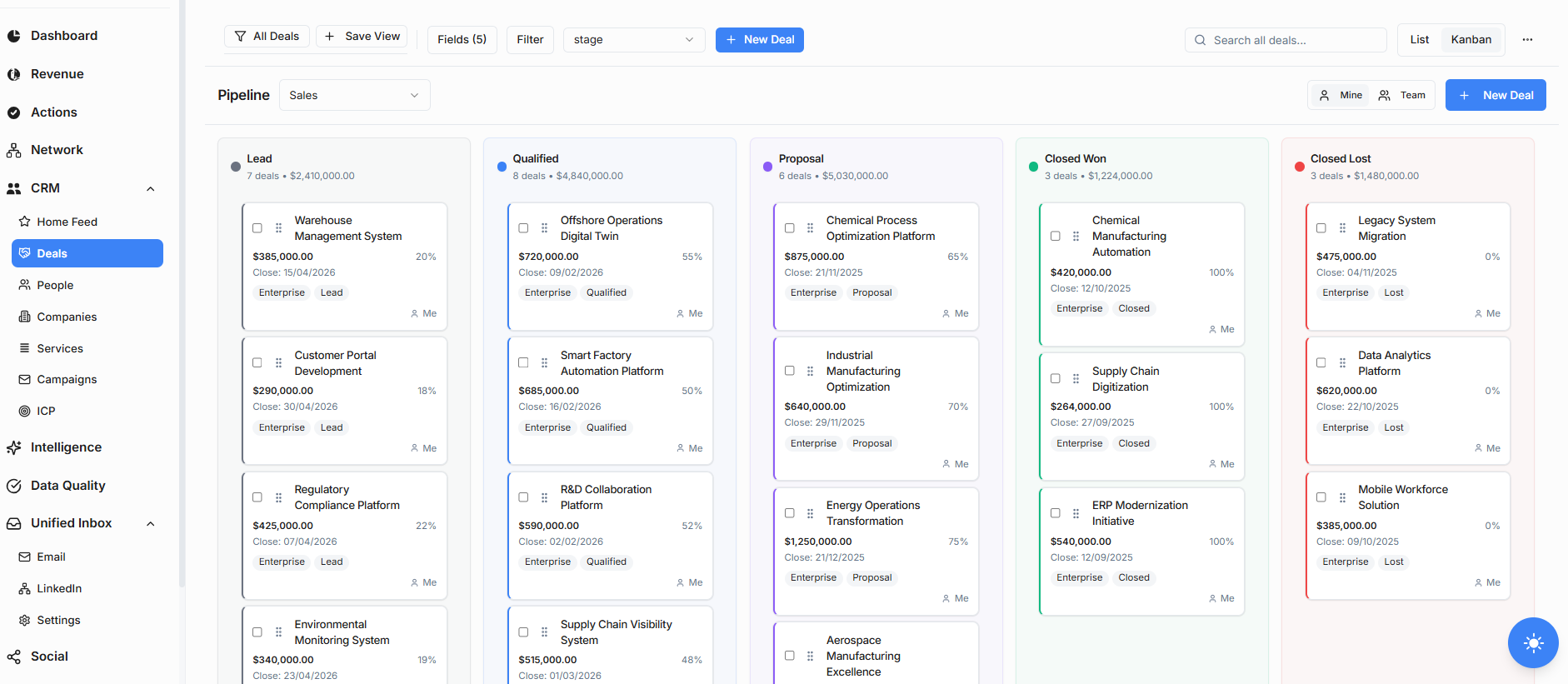
Nynch nags you to do the future work.
See the gap: A revenue forecast chart projects income three, six, and nine months out. When a cliff edge is approaching, it turns red so you know you need meetings now, not after the current project ends.
Keep planting when you are busy: Prompts to connect with people even in heavy delivery weeks. A daily growth task (commenting on a contact’s post, for example) that takes a couple of minutes and keeps the engine from stalling.
Balance the diet: Activity analysis that warns you if external outreach has dropped to zero for too long, so you do not wake up trapped in the “now” again.
Stop sacrificing the next quarter for this week’s comfort. Keep one eye on the horizon even when the inbox is on fire.
Read next
- The intent radar, exactly who to call today, read buying signals so your pipeline runs on intent, not guesswork.
- 4 Ways To Verify Previous Touchpoints To Avoid The Embarrassment Of Repeating Yourself, Nothing kills credibility like sending the same email twice.
- The client command centre, the dashboard consultants actually open every morning to spot risk and expansion early.
Frequently Asked Questions
How do I know if I’m neglecting my consulting network?
Look at your calendar four weeks from today. If you have no discovery calls or contact meetings booked, you have a network problem - because sales cycles in consulting take 6-12 weeks, the work you do not do today will produce zero revenue in three months.
How do consultants avoid the feast-or-famine revenue cycle?
Treat business development as a non-negotiable daily activity rather than something you do when delivery slows down. Block recurring time for outreach and protect it with the same discipline you apply to client deadlines. Even one outreach email a day to a non-paying contact prevents your network from running dry.
How much time should a consultant spend on business development vs client delivery?
A sustainable split is roughly 80% delivery and 20% growth activity, even during busy periods. Dropping to 0% growth time because you are busy is the most common cause of revenue gaps - the relationships you build today fund the business three months from now.
What are the signs of ‘delivery mode tunnel vision’ for a consultant?
Check your sent folder: if every outbound email for the past two weeks went to someone who already pays you, you are in delivery mode. You have mentally shifted from business owner to employee of your clients, and your future revenue is at risk.